How a no-pull harness actually works
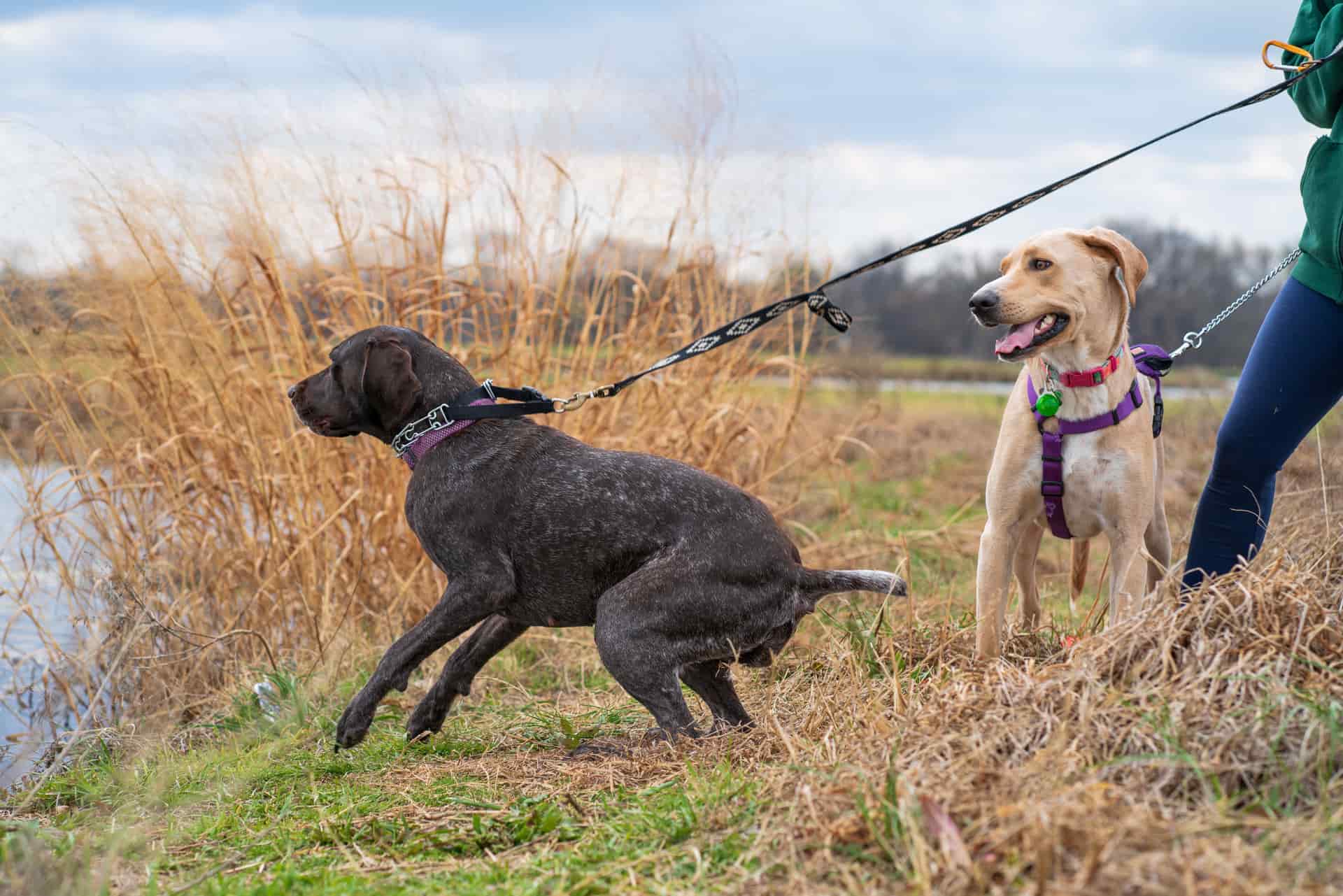
A dog pulls because it works: lean into a back-clip harness or a collar and the dog still moves forward, so the behavior is rewarded every few seconds. Clip the leash to a ring on the chestinstead and the physics flip. When the dog surges, the leash gently rotates its shoulders back toward you, so forward pressure turns into a turn rather than progress. That’s the whole trick — it makes pulling stop paying off, which is exactly what your training is trying to teach.
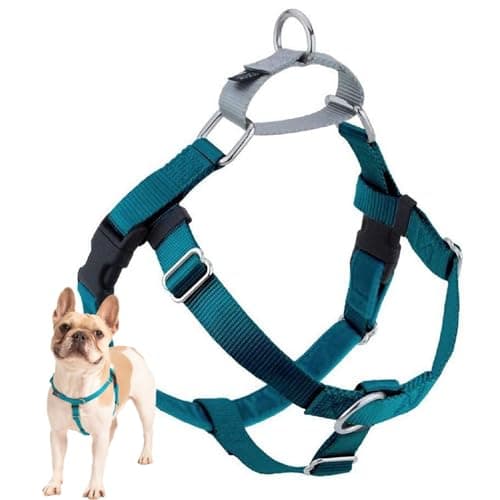
The 2 Hounds Freedom takes it a step further with a martingale loop on the back that cinches slightly on a surge, so it redirects from two points at once. A plain front-clip like the PetSafe Easy Walk does the same core job for less money, with the trade-off that it can rotate on a deep-chested dog.
How to choose the right one
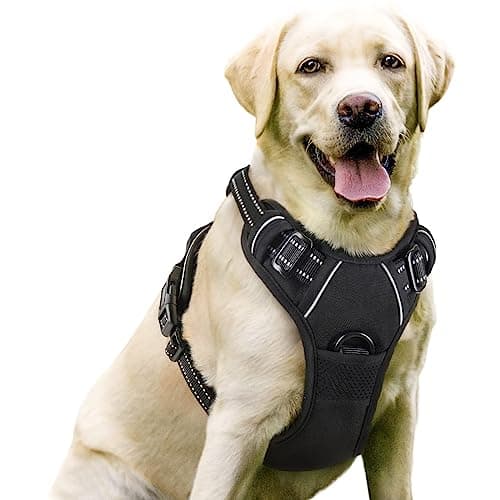
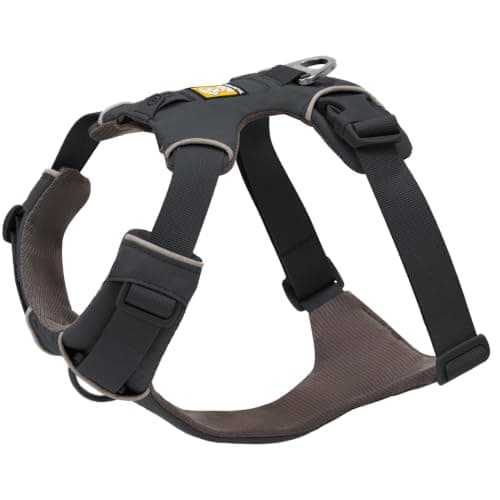
Work backwards from your dog. If you have a strong, determined puller, prioritize a dual-clip design and a snug, non-rotating fit — the Freedom or the Kurgo (see our Ruffwear vs Kurgo comparison for the everyday alternative). If you just want the cheapest thing that works, the Easy Walk or rabbitgoo will get you there. If your dog is active and you want one harness for walks and hikes, pay up for the Ruffwear Front Range — our rabbitgoo vs Front Range comparison weighs budget against build. Whatever you pick, the fit matters more than the brand: measure the girth, follow the size chart, and check our harness sizing guidebefore you buy. A great harness fitted loose still lets a dog pull — and lets some dogs escape. For picks tuned to your dog, see our roundups for medium dogs, Labradors and Huskies, or narrow by feature with our dual-clip and reflectiveharness guides. We also break it down by breed — Golden Retrievers, Boxers, Rottweilers, Beagles, Dachshunds, Corgis, Great Danes, Dobermans, Australian Shepherds, Border Collies, Goldendoodles and Labradoodles, Pugs and Bulldogs— and if a hard puller is rubbing, our padded harness picks spread the load. For the dog that leans its full weight in whatever its size, see our picks for strong pullers, and for an older dog our senior-dog picksput comfort first. We cover the giants too — Mastiffs and giant breeds— the deep-chested Greyhounds and sighthounds, the curly-coated Poodles, and the toy breeds where a delicate windpipe rules out a collar — Yorkies and Chihuahuas. And if you run or jog with your dog, we have the secure, non-chafing picks for that too. We keep adding breeds — the gentle-giant Bernese Mountain Dog, the feather-coated Cocker Spaniel, the athletic Vizsla, the high-drive Australian Cattle Dog, and the small, flat-faced breeds where a delicate airway rules out a collar — Shih Tzus, Cavaliers and Boston Terriers. And we keep going — the sleek Weimaraner, the giant Cane Corso, the high-drive Belgian Malinois, the low, long Basset Hound, the thick-coated Akita, the deep-chested Rhodesian Ridgeback and the field-bred Pointer. We keep expanding the breed list too — the sled-bred Samoyed and Alaskan Malamute, the giant Saint Bernard and Newfoundland, the birdy Springer Spaniel, and the small but strong Shiba Inu and Jack Russell Terrier. And when the harness has a job to do beyond the breed, we cover the breathable picks for hot weather and the no-choke harnesses that keep pressure off the throat.
A few situations deserve their own shortlist rather than a breed page. If you need to hold or steady your dog at a crossing, very few no-pull harnesses actually have a back handle — our harnesses with a handle page covers the honest shortlist. For dark afternoons, road salt and a coat under the straps, see the winter picks; they are the cold-season counterpart to the hot-weather picks. And if your dog has been diagnosed with a collapsing trachea, where a vet’s advice is a harness rather than a collar, our collapsing-trachea harness picks explain which designs keep every tightening part away from the windpipe. If you walk two dogs at once, that is its own equipment problem rather than two of the same purchase — our harnesses for walking two dogs page follows the AKC’s rules for a pair and explains why the coupler most people buy first is the wrong first buy. On price, our guide to what a dog harness costs sets out what the extra money buys at each tier — and what it does not.
Two questions that come before the shortlist. If your dog can physically out-pull you, the fix is leverage rather than grip — my dog is stronger than me sets out the equipment order for a handler who is outmatched. And if you are weighing a harness against a rope lead at all, slip lead vs harness covers where the force lands in each case, which is the whole argument.
Three more things worth reading before you buy. Whether the myth is true at all is covered in do harnesses cause pulling; the two body shapes are compared in Y-shaped vs H-shaped harnesses; and if your dog hates having something lifted over its head, step-in vs overheadis the one to read first. Powerful working breeds get their own page too — the German Shepherd picks are the template for a strong, athletic, committed puller.
One thing a harness is not is a substitute for the training itself. It manages the pulling so walks are bearable while you teach a loose leash. If your dog also lunges and barks at other dogs, start with our reactive-dog gear; if it backs out and bolts, you want an escape-proof harness instead.
If you want the mechanism before the shortlist, start with how no-pull harnesses work — three genuinely different designs are sold under one name, and knowing which one you are buying is most of the decision. And if you are shopping for a matched set, read harness and leash combinations before you buy a boxed one.