Chest-clip leverage for a springy puller
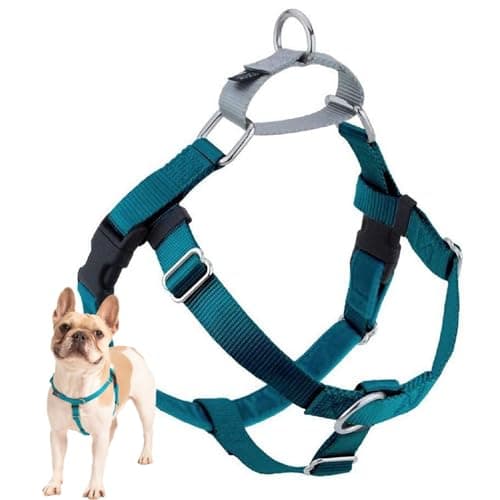
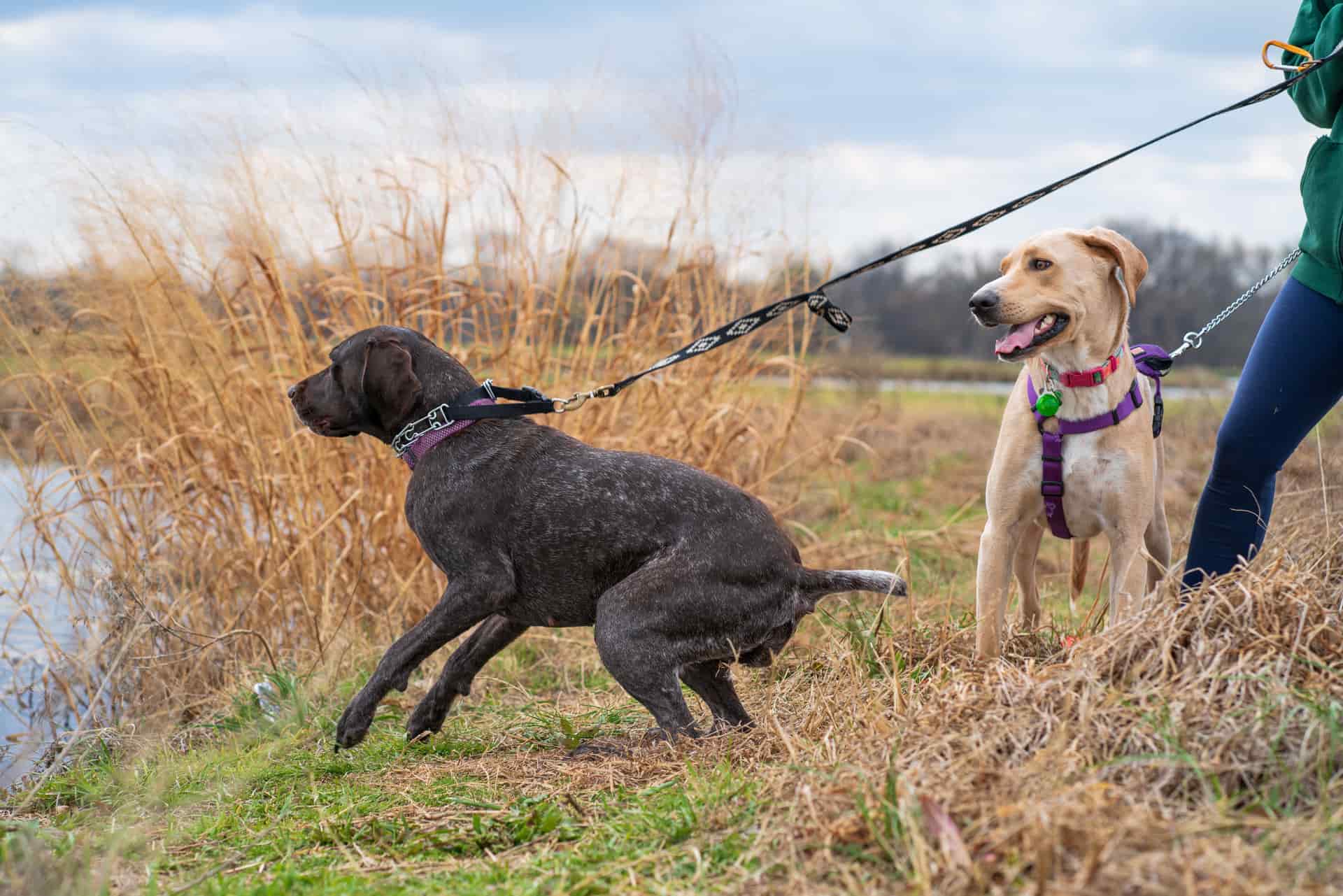
The problem with a Boxer’s burst is timing: by the time the dog is leaning into a back ring, the lunge already has momentum and you’re just holding on. Move the attachment to the chestand you catch the surge earlier — the first hard step rotates the shoulders back toward you instead of adding speed. That’s why our top pick is the 2 Hounds Freedom: a front chest ring plus a back martingale loopthat tightens gently on a surge gives you two points of redirection on a double-ended leash, which is the setup that actually interrupts a bouncy, unpredictable puller. The honest trade-off is that it costs more than a basic front-clip and works best with a double-ended leash you buy separately, so it’s not the pick for someone who wants the cheapest single-clip tool. Its martingale action has a second benefit that suits Boxers, who can be wrigglers: it snugs down on a surge rather than opening up. There’s a health reason to favor a harness over a collar for this breed, too: Boxers are brachycephalic — short-nosed — so keeping steady pressure off the throat and airway matters, and a chest harness does exactly that while a collar does the opposite on a dog that lunges. Our harness vs collar guidecovers why that trade leans so hard toward a harness for a dog like this. Whichever harness you choose, remember it only manages the walk — reward-based training is what teaches a Boxer to stop launching in the first place, and our harness sizing guide is worth reading before you buy for a chest this deep.
Build and fit for a deep chest, plus the car
Fit is where most harnesses fail a Boxer, because the barrel chest and tucked waist give a two-strap design room to rotate. The Ruffwear Front Rangeis our build pick here: four adjustment points let you tune it to a deep chest, and the padded, foam-lined panels spread the pressure of a burst across the body instead of concentrating it on a short-coated dog’s skin. The honest caveat is that it’s a comfort harness first — the front clip helps, but a truly relentless puller may want the dedicated leverage of the Freedom, and it’s priced well above budget vests. If your Boxer is hard on gear or rides in the car a lot, the Kurgo Tru-Fit is the heavy-duty crossover: five adjustment points and a steel nesting buckle for a strong dog, plus a seat-belt tether so it doubles as a car harness. Be precise on the wording though: Kurgo crash-tested it themselvesto the FMVSS 213 child-restraint standard — a real test, but not the same as an independent certification from the Center for Pet Safety. If crash protection is the point, read our car-safety guide for the certified options first.
Which pick for which Boxer
If your Boxer is a hard, bursty puller, start with the Freedom and a double-ended leash — two points of control is what interrupts a launch mid-spring. If yours has a notably deep chest and a short coat that rubs, the Front Range’s padded panels and multi-point fit are the comfortable everyday buy. If your dog is tough on hardwareor spends real time in the car, the Kurgo is the heavy-duty crossover — just buy it clear-eyed about the brand-tested-not-certified distinction, and knowing its full-vest fit is fiddlier than a simple walking harness. And if budget is tight, the rabbitgoogives you a front-and-back harness with a grab handle at a budget price; it does the job on day one, but expect a muscular Boxer to work the fit looser over time and to replace it sooner than a premium vest. Whatever you choose, measure the chest girth at the widest point just behind the front legs and buy to the chart, not by weight — on a barrel chest that measurement is the whole game.