A harness protects the long back a collar puts at risk
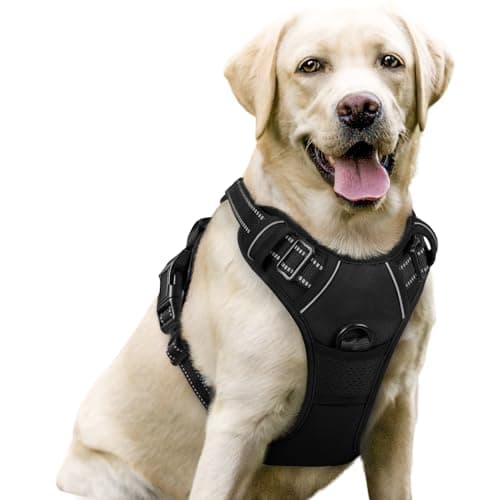
Start from the spine, because on this breed it decides everything. A Dachshund’s long back is famously vulnerable, and the last place you want to concentrate force is the neck, where a collar puts it. Clip a leash to a collar and every time the dog hits the end — or you reel it in past a distraction — that force lands on the throat and the top of the spine. A body harness spreads the same force across the broad area of the chest instead, which is exactly why we favor one here; our harness vs collar guide lays out the trade-off in full. The next decision is where the leash attaches. A back-only clip on a low, stubborn dog just hands it a point to lean into, and a Dachshund leaning is surprisingly hard to move. A front chest clip flips that: a pull rotates the dog gently back toward you rather than rewarding forward motion. Our top pick, the rabbitgoo, gives you both a front and a back ring plus a padded vest, so you can redirect when it matters and clip to the back on a calm stroll. If your dog is a committed puller, the 2 Hounds Freedom adds a martingale loop that tightens gently on a surge, which is the softest form of self-correction you can put on a delicate dog.
Fit is everything on a deep, narrow chest
Because a Dachshund’s chest is deep but the whole dog is small, fit is where most harnesses fail this breed. Measure the chest girth at its widest point, just behind the front legs, and buy to that number on the brand’s chart — never by weight, which is meaningless on a body this shape. Our harness sizing guide walks through the measurement. Then look for adjustment, because the odds of an off-the-rack harness fitting a long, low dog perfectly are slim. The rabbitgooearns its top spot partly here: four adjustment straps let you snug it to a narrow ribcage so it doesn’t rotate, and a top handle gives you a gentle way to steady a low dog near a curb. The Freedomgoes further on precision — it is sized by exact chest girth rather than a rough small-medium-large, so the fit is measured rather than guessed, and a velvet-lined belly strap keeps a snug fit from chafing. Be honest about the simplest option: the PetSafe Easy Walk sits across the shoulders, and on a deep-chested dog that design can loosen and rotate, so it needs watching and re-snugging on a Dachshund more than it would on an average build.
Which pick for which Dachshund
For most Dachshunds we’d start with the rabbitgoo: it is a budget-priced padded vest with a front clip for redirection, a back clip for easy walks, a handle and enough adjustment to fit an odd shape. The honest catch is durability — its buckles and webbing aren’t premium, and a strong, determined dog can work the fit looser over time, so keep an eye on the straps. If your dog pulls hard or is the stubborn type, step up to the 2 Hounds Freedomfor its gentle martingale redirection and girth-exact fit; it costs more than a basic front-clip and gets the most out of a double-ended leash, which is an extra buy. If you want the plainest, cheapest thing that works and your Dachshund isn’t a heavy puller, the Easy Walkis a fair front-clip starting point — just accept it has no back attachment and can rotate on a deep chest. And if comfort is your priority, the padded, foam-lined Ruffwear Front Range is the plushest fit here, though it is priced well above the others and is a comfort harness first rather than a dedicated anti-pull tool. Whichever you choose, remember the harness only manages the walk; pairing it with reward-based training is what actually teaches a Dachshund to stop pulling.