Size a Corgi by chest girth, not by weight
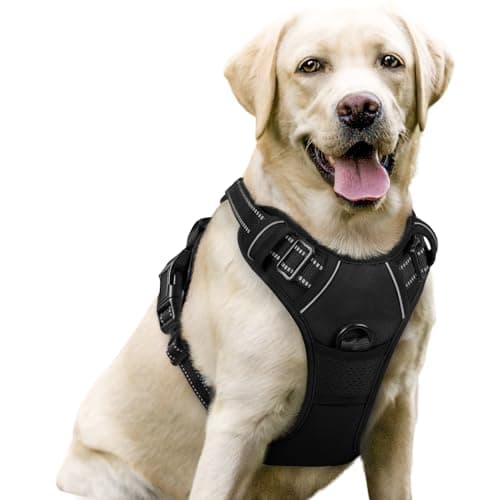
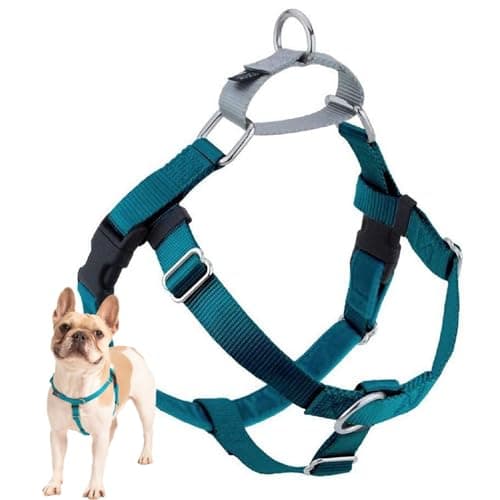
The single most common mistake with a Corgi harness is buying to the number on the scale. A Corgi is compact but deep-chested, so its girth — the measurement around the ribcage just behind the front legs — runs larger than the dog looks and larger than a weight-based chart predicts. Measure that girth first and buy to it; our harness sizing guide shows exactly where the tape goes. Then favor adjustability, because a long dog on short legs almost never matches a chart perfectly. Our overall pick, the rabbitgoo, is strong here: four adjustment straps let you close it snugly around a barrel chest so it won’t rotate or ride forward, and a padded vest keeps that snug fit comfortable. The 2 Hounds Freedomis the most precise of all, sized by exact chest girth instead of a rough size band, which suits a Corgi’s deceptive proportions. Watch one detail unique to the breed while you fit it: a Corgi’s legs are so short that the belly strap ends up close behind the elbows, so you want a design whose chest panel and girth strap you can position to clear the front legs rather than saw against them as the dog trots. The simplest option, the PetSafe Easy Walk, sits across the shoulders and can loosen or rotate on a deep chest, so if you choose it, plan to re-check the fit often.
Redirecting a herding dog’s pull
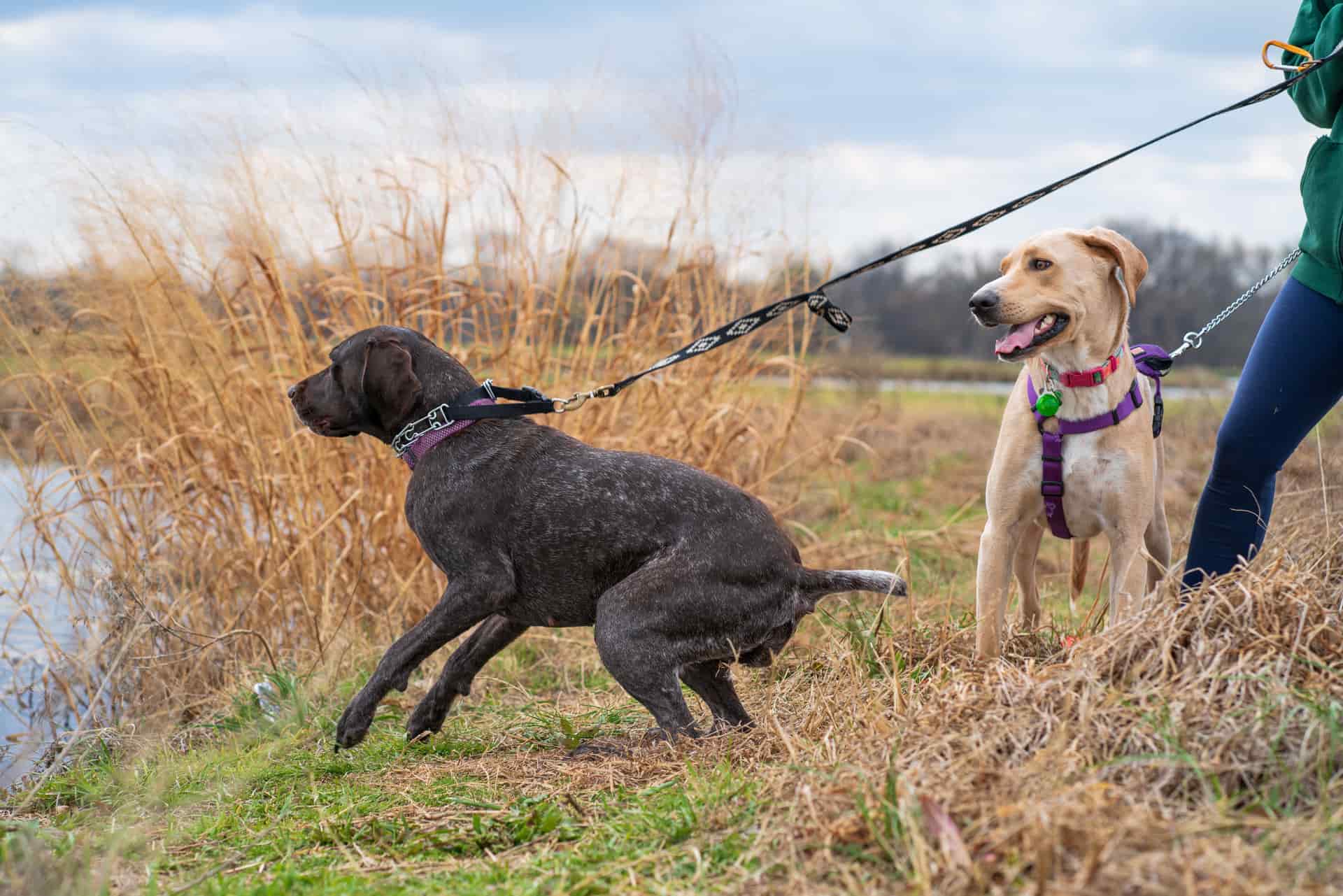
A Corgi pulls with intent. Herding breeds are wired to push forward and cover ground, and a Corgi is low enough that when it sets those short legs and leans, it has real leverage against you. A back clip only feeds that; a front chest clip is what turns the leverage around, steering a surge back toward you with almost no force. For a genuinely stubborn puller, the 2 Hounds Freedom is our pick because it doesn’t rely on a single point: a front ring plus a back martingale loop that gently cinches on a surge gives you two ways to redirect one pull on a double-ended leash. That is the setup that lets a normal-sized person stay in charge of a determined herder. It matters on this breed because a Corgi is not a sprint-and-quit dog — a herding engine has the stamina to keep leaning for a whole walk, so the redirection has to be something you can maintain comfortably rather than an arm-tiring tug-of-war that both of you lose. The trade-offs are honest — it costs more than a basic front-clip harness and gets the most out of a double-ended leash, which is an extra purchase. Whatever you clip to, the harness only manages the walk in the moment; reward-based training is what teaches a Corgi to stop leaning into the leash for good.
Which pick for which Corgi
For most Corgis we’d buy the rabbitgoofirst: a budget-priced padded vest with both a front and a back clip, a grab handle and the adjustment to fit a stocky, deep-chested dog. Be realistic about durability — its buckles and webbing aren’t premium, and a strong, determined Corgi can work the fit looser over time, so check the straps regularly. If yours is a hard, stubborn puller, spend up on the 2 Hounds Freedomfor its gentle martingale redirection and girth-exact fit. If you just want the plainest, cheapest front-clip and your Corgi isn’t a heavy puller, the Easy Walkdoes the core job — accept that it has no back attachment and can rotate on a deep chest. And for an active, outdoorsy Corgi that hikes and needs one comfortable harness for everything, the padded, hard-wearing Ruffwear Front Rangeis the plushest, most durable pick, though it’s priced well above the others and is a comfort harness first rather than a dedicated anti-pull tool. Fit still decides everything on this breed: snug behind the front legs, two fingers under every strap, the chest panel sitting clear of those short legs, and the whole thing re-checked as your Corgi leans on it and works it looser. Get the measurement right and any of these picks will redirect the pull; get it wrong and even the best harness rotates around a deep, barrel chest.