What padding actually does — and what it doesn’t
Think of padding as pressure management. A leash pull is a fixed amount of force; padding can’t reduce it, but it can decide whether that force lands on a thin strap or across a broad, cushioned panel. Spread over the chest and shoulders, the same pull feels far gentler to the dog and stops the thin-edge chafing that makes a puller hate its harness. That is the case for a padded no-pull harness in one sentence. What padding cannotdo is rescue a harness that fits wrong. If it sits too loose it slides and the padded panel rubs as it moves; if it sits over the shoulders it can still rotate; if it’s too tight the padding presses instead of cushioning. So before you judge any harness on comfort, fit it: measure the chest girth, buy to the chart, and keep two fingers under every strap. Our guide to harness rubbing and chafing covers the fixes, and our harness sizing guide covers the measurement. Get those right first, then padding does its job.
What to look for: placement, width and breathability
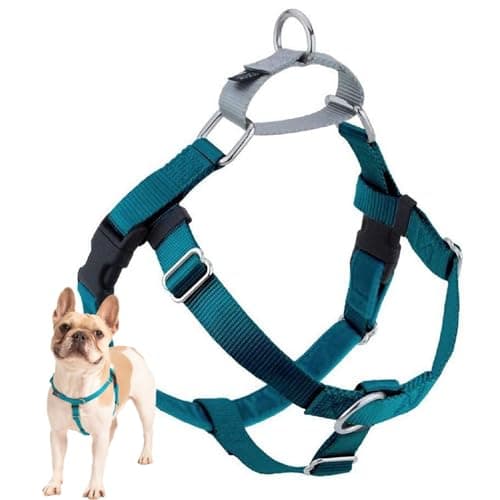
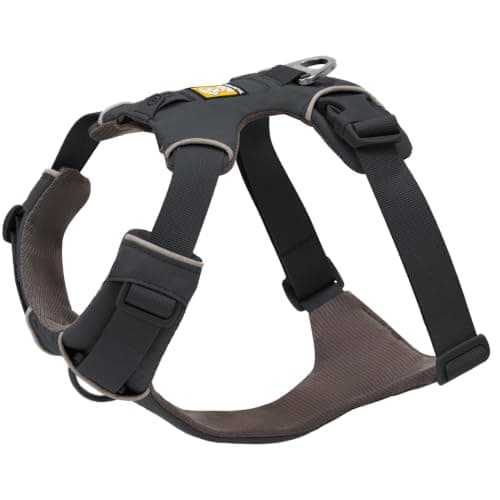
The best padded harness isn’t the one with the most foam — it’s the one with foam in the right places. Our top pick, the Ruffwear Front Range, is the model for this: padded, foam-lined chest and belly panels sit exactly where a pull lands, four adjustment points let you spread the load evenly, and reflective trim comes along for low-light walks. It is priced well above budget harnesses and is a comfort harness first rather than a dedicated anti-pull tool, but for everyday padded comfort it’s the one to beat. On a tighter budget, the rabbitgoodelivers a padded nylon-oxford vest with a front clip, a back clip and a handle for a fraction of the premium price — the honest catch is that its buckles and webbing aren’t as durable and a strong puller can work the fit loose over time. For a dedicated puller, the 2 Hounds Freedom takes a different route: a velvet-lined belly strap cushions the exact spot a snug, self-cinching martingale would otherwise chafe, so the harness can tighten gently on a surge without rubbing raw. It costs more than a basic front-clip and gets the most out of a double-ended leash. Breathability is the criterion people forget until a summer walk: a thick foam panel that traps heat against the chest is its own kind of discomfort, so on a dog that runs hot a ventilated or mesh-backed lining beats a solid slab of foam, even if it looks less plush on the shelf.
Which padded pick for which dog
For most dogs the Ruffwear Front Range is the padded harness to buy: comfortable, hard-wearing and dual-clip, with the padding where it counts. If money is tight, the rabbitgoogives you a genuinely padded vest and a front clip on day one — just expect to replace it sooner than a premium harness. If your dog is a hard puller and chafing is the whole reason you’re here, the 2 Hounds Freedom pairs gentle martingale redirection with that cushioned belly strap, which is the combination that keeps a snug harness comfortable. And if you have a strong dog and want comfort that survives real abuse, the Kurgo Tru-Fitis the heavy-duty pick: a five-point vest spreads leash force across the whole chest rather than a couple of narrow straps, and a steel nesting buckle holds up to a dog that destroys plastic. Be honest about it — its comfort comes from that full-coverage, adjustable vest rather than the plush foam of the Ruffwear, and it’s heavier and fiddlier to fit, with the bonus that it doubles as a brand crash-tested car harness. Our rabbitgoo vs Ruffwear Front Range comparisonputs the budget padded vest and the premium one side by side. One honest trade-off runs through all of them: padding adds bulk, and on a very small or thin dog a thickly padded vest can feel like more harness than dog and add warmth a light coat doesn’t need, so match the amount of padding to the size of the animal. Whatever you pick, the padding only pays off on a harness that fits — snug, level and two fingers of room under every strap.