Guides & Comparisons
Start with the problem, not the product. How to stop pulling, harness vs collar, front-clip vs back-clip, sizing, and how to keep a dog from backing out.
Gear only gets you halfway. The other half is understanding the problem — why your dog pulls, whether a harness or a collar is right, which clip position actually curbs pulling, and how to fit a harness so a dog can’t back out of it. These guides start with the problem you typed and give you a plain, cited answer, then point you to the gear that helps.
None of this is training or veterinary advice — we’re a gear site, and for a reactive, aggressive, or medical issue you want a qualified professional. But for the everyday questions every dog owner runs into, these are the answers we wish the pulling article had given us, written the way we’d explain them to a friend.
Everything in Guides
How to Stop a Dog Pulling on the Leash
The method and the gear that actually work together — a step-by-step you can start on tonight's walk.
Read the guideHarness vs Collar for a Dog That Pulls
Why a harness beats a collar for pullers, when a collar is still fine, and what a vet would tell you about the trachea.
Read the guideFront-Clip vs Back-Clip Harness
Which clip position does what, and why the front ring is the one that curbs pulling.
Read the guideHow to Stop a Dog Backing Out of a Harness
Why dogs reverse out of harnesses, how to fit one so they can't, and the designs built to prevent it.
Read the guideHow to Size a Dog Harness
Measure the girth, read the chart, and get the two-finger fit right — with a printable step-by-step.
Read the guideDo Harnesses Make Dogs Pull More?
The opposition-reflex myth, what a back-clip really does, and why the fix is the clip position, not the harness.
Read the guideWhy Does My Dog Pull So Hard on the Leash?
The real reasons dogs pull — reward history, the opposition reflex, energy and more — and what each one changes about the fix.
Read the guideHow to Choose a Dog Harness
Front-clip, back-clip, escape-proof or car — how to match the harness type to your dog's problem, then get the fit right.
Read the guideHow to Introduce a Head Halter to Your Dog
The slow, treat-first method that gets a dog to accept a Gentle Leader or Halti — and the one mistake that makes a dog hate it.
Read the guideHow to Leash Train a Puppy
Start loose-leash manners before pulling ever becomes a habit — the gentle, reward-based steps for a puppy's first walks.
Read the guideHow to Use a Long Line for Recall Training
A long line gives a dog real freedom while you teach a reliable recall — the method, the safety rules, and where never to use one.
Read the guideWhy Retractable Leashes Are Bad for a Dog That Pulls
The constant tension trains a dog to pull, the thin cord injures, and the lock fails when you need it — why a fixed leash wins.
Read the guideHow to Put On a Dog Harness
Step-in or over-the-head, which loop is which, and the two-finger check that gets the fit right the first time — plus the leg-hole mistake to avoid.
Read the guideWhy Your No-Pull Harness Isn't Working
Wrong clip, loose fit, or no training behind it — the five reasons a no-pull harness still lets a dog pull, and how to fix each one.
Read the guideHow to Stop a Dog Chewing the Leash
Why dogs bite and tug the lead, how to redirect it, and the chew-resistant leash materials that survive a mouthy dog.
Read the guideWhat Is a Martingale Harness?
How the self-cinching loop redirects a pull and resists a backing-out escape — the mechanism behind the 2 Hounds Freedom, explained.
Read the guideHow to Stop Leash Lunging
The distance-and-reward method that reduces lunging over time, plus the control gear that keeps you safe while you do the work.
Read the guideCar Harness vs Crate vs Carrier
The three ways to restrain a dog in the car, what the crash testing actually shows for each, and how to choose by your dog's size and your vehicle.
Read the guideHow to Stop a Harness Rubbing and Chafing
Why a harness rubs the armpits raw, how to adjust or re-size it so it stops, and the padded designs that prevent it.
Read the guideAre No-Pull Harnesses Cruel or Bad for Dogs?
The honest answer on whether front-clip and no-pull harnesses hurt a dog — what the concern gets right, what it gets wrong, and how to fit one so it never does harm.
Read the guideHead Halter vs Harness: Which Does Your Dog Need?
The two tools for a strong puller or a reactive dog, compared on control, acceptance and safety — when a head halter earns its keep and when a harness is the better call.
Read the guideHow to Use a Double-Ended Leash
A leash clipped to both the chest and back rings gives you power-steering on a puller — how to set the length, hold it, and use both points to redirect.
Read the guideHow to Get a Dog Used to a Harness
For the dog that freezes, ducks or bolts at harness time — the slow, treat-first steps that turn the harness into a good thing, not a fight.
Read the guideWhy Your Dog Pulls on Walks but Not in the Backyard
It's not defiance — it's the environment. Why the sidewalk unleashes a pull the backyard never does, and how to close the gap between the two.
Read the guideHow Tight Should a Dog Harness Be?
The two-finger rule, where each strap should sit, and how to tell a snug harness from one that rubs or one a dog can back out of — the fit that makes a no-pull harness work.
Read the guideCan a Dog Wear a Harness All Day?
Whether it's safe to leave a harness on, when to take it off, and the rubbing and matting risks of round-the-clock wear — plus what to do for a dog that hates the on-and-off.
Read the guideHow to Stop a Dog Pulling Toward Other Dogs
For the friendly dog that drags you toward every dog it sees — the difference between excited greeting and reactivity, and the gear and method that fix the pull.
Read the guideHow to Walk Two Dogs Without Pulling or Tangling
Two dogs, two pulls, one tangled mess — how to set up the harnesses and leashes, whether a coupler helps, and the method for walking a pair without being dragged.
Read the guideWhy Does My Dog Stop and Refuse to Walk?
Balking, planting, lying down mid-walk — why a dog suddenly refuses to move, what gear discomfort has to do with it, and how to get the walk going again.
Read the guideHow to Choose a Dog Leash
Length, width, material and clip — how to match the leash to your dog and the job, from a traffic-handle lead for a puller to a long line for recall.
Read the guideAre Front-Clip Harnesses Bad for a Dog's Shoulders?
The worry that a chest strap restricts a dog's gait — what the concern gets right, what it gets wrong, and how a Y-front fit keeps the shoulders free.
Read the guideHow to Stop a Dog Lunging at Cars
Chasing and lunging at passing cars is a dangerous mix of prey drive and fear — the distance-and-reward method that fixes it, and the control gear that keeps you both safe meanwhile.
Read the guideHow to Stop a Dog Lunging at People
Whether it's fear, over-arousal or a friendly greeting gone wrong, a dog that lunges at people needs management now and training over time — here's both.
Read the guideHow to Clean a Dog Harness (and Leash)
A grimy harness rubs, smells and hides worn webbing — how to wash nylon, padded and biothane gear safely, how often, and the fit and safety check to do while it dries.
Read the guideHow to Teach a Dog to Heel
Heel is a formal position, not just a loose leash — the reward-based steps to teach a dog to walk at your side, and how it differs from everyday loose-leash walking.
Read the guideMartingale Collar vs Harness for a Dog That Pulls or Escapes
A martingale collar tightens to stop a dog slipping out; a harness moves the pressure off the neck entirely — which one is right for a puller, an escaper, or a sighthound.
Read the guideStep-In vs Over-the-Head Harness: Which Is Better?
Step-in harnesses go on the feet; over-the-head harnesses go on the head. The choice affects how easy the harness is to put on, how secure it is, and whether it can be a no-pull tool at all.
Read the guideY-Shaped vs H-Shaped Harness: What the Front Strap Does
A Y-front sits on the breastbone and leaves the shoulders free; a straight front strap can cross the shoulder joint. What the harness shape means for your dog's gait.
Read the guideWhen to Replace a Dog Harness (and Leash)
A harness is a safety device, and a worn one fails at the worst moment. How to check yours — webbing, buckles, hardware, stitching, fit — and the signs it's time for a new one.
Read the guideDo Head Halters Hurt Dogs?
A Gentle Leader or Halti steers the head, which makes owners worry it's harsh. What a head halter really does, the real risks, and how to use one so it never hurts.
Read the guideCan a Puppy Wear a Harness? (And From What Age)
Yes — a puppy can and should start on a harness early, but the trick is sizing for a body that's still growing. When to start, how to size for growth, and why a harness beats a collar.
Read the guideHow to Stop a Dog Crossing in Front of You
A dog that constantly cuts across your path — weaving side to side and tangling the leash — is a trip hazard and a sign it hasn't learned a side to walk on. Why it happens and how to fix it.
Read the guideMy Dog Slips Out of Its Collar: How to Fix It
A dog that backs out of its collar is one spook from the road. Why it happens, the immediate fixes, and the harness setup that makes it impossible.
Read the guideWhat Length Dog Leash Do I Need?
4 feet, 6 feet, or a long line? How leash length changes control and freedom — and how to pick the right one for city walks, training and the trail.
Read the guideBiothane vs Nylon Dog Leash: Which Is Better?
Waterproof, wipe-clean biothane against cheaper, lighter nylon — how the two leash materials compare, and which one suits your walks.
Read the guideShould I Let My Dog Sniff on Walks?
Sniffing is how a dog reads the world — and a sniffing walk can calm an over-aroused or reactive dog. When to allow it, when to ask for focus, and the gear that helps.
Read the guideHow to Stop a Dog Barking on Walks
Barking on walks is almost always reactivity or frustration, not disobedience. Why your dog barks, the distance-and-reward method, and the gear that gives you control.
Read the guideHow to Stop a Dog Jumping Up on Walks
A dog that jumps on the people it meets is over-excited, not dominant. The four-on-the-floor method, and the leash-and-harness setup that keeps it in check while you teach it.
Read the guideHow to Safely Restrain a Dog in the Car
The three safe ways to secure a dog for the drive - a crash-tested harness, a crate or a carrier - which to choose, and the step-by-step to set each one up right.
Read the guideWhere Should a Dog Ride in the Car?
The back seat, away from active airbags and out of line with heads - why the front seat, the lap and the footwell are dangerous, and how to use an SUV cargo area safely.
Read the guideIs It Illegal to Drive With a Dog Loose in the Car?
Laws vary by state and country, but a loose dog can fall under distracted-driving rules - what the law generally covers, and why safety and liability matter even where it's legal.
Read the guideAre Dog Car Harnesses Actually Safe?
What a crash-tested car harness actually does in a collision, its honest limits, and why an everyday walking harness is not rated for the car.
Read the guideWhat Does CPS-Certified Mean for a Dog Car Harness?
The Center for Pet Safety is the only independent body that runs its own crash protocol - how its certification differs from a brand's own crash test, and how to verify a listing.
Read the guideDog Booster Seat vs Car Harness: Which Is Safer?
A booster lets a small dog see out; a crash-tested harness keeps it safe in a crash. Why CPS is wary of untested booster attachment points, and when each one is the right call.
Read the guideDog Car Harness vs Seat-Belt Tether: What's the Difference?
A bare tether clipped to a seat belt is not crash protection - why a full crash-tested vest spreads force safely, and the CPS warning about zipline and extension tethers.
Read the guideHow to Fit a Dog Car Harness Correctly
A loose car harness lets a dog load into it at speed - how to measure, size, adjust and set the tether length so a crash-tested harness actually protects your dog.
Read the guideHow to Get a Dog Comfortable in the Car
The slow, reward-based steps that turn the car from a scary place into a good one - from treats by a parked car to a short happy drive, with the dog restrained the whole way.
Read the guideHow to Help a Dog With Car Anxiety
Panting, drooling and refusing to get in - the signs and causes of car anxiety, the counter-conditioning fix, and how a secure restraint can actually calm a nervous dog.
Read the guideRoad Trip With a Dog: A Safety Checklist
Everything to sort before a long drive with a dog - a crash-tested restraint, ID and water, regular stops, and the never-leave-a-dog-in-a-hot-car rule that matters most.
Read the guideHow Much Does a Dog Harness Cost?
What a dog harness actually costs at each tier, what the extra money buys, and what it does not - with today's live prices rather than a number someone typed in 2023.
Our top pick
rabbitgoo No-Pull Dog Harness
How to Stop a Dog Chasing Squirrels on Walks
Prey drive is not disobedience, which is why recall practice alone rarely fixes it. The distance-first method that works, and the gear that keeps you anchored when a squirrel appears.
Read the guideWalking a Dog at Night: Gear and Safety Rules
After dark the problem changes from control to being seen. What the AKC says about reflective leads and retractable cords, the kit that actually works, and the route rules that matter more than the kit.
Read the guideHow Long Can a Dog Travel in a Car?
There is no legal maximum, so the real answer is set by bladder, water, heat and restraint. The AKC's stop-every-few-hours rule, how to plan a long drive, and what has to be in the car.
Read the guideHow to Muzzle Train a Dog
Almost every dog hates a muzzle that appears on the day it is needed. The treat-first sequence vets teach, in two-minute sessions — plus the fit rules and the mistakes that set a dog back.
Read the guideCan a Dog Ride in a Truck Bed?
Six states restrict it outright and the rest leave it to you. What the statutes actually require, why cross-tethering is the minimum rather than the goal, and the cab setup we would use instead.
Read the guideWhat Temperature Is Too Hot to Walk a Dog?
The AKC gives a number — 85F — and a ten-second hand test that beats any number. Why asphalt hits 135F on an 86F day, and the gear that helps once you decide to go.
Read the guideWalking a Dog in the Rain
Rain is not a safety problem; it is a motivation problem plus a kit problem. The AKC's shelter-and-reward approach, and the one piece of gear that changes a wet walk.
Read the guideMy Dog Is Stronger Than Me: How to Walk It Safely
When the honest answer is that you cannot physically hold your dog, the fix is leverage and a plan — not more grip. The equipment order that gives a lighter handler control back.
Read the guideHead Halter vs Muzzle: What Each One Actually Does
They look alike on a sidewalk and do opposite jobs: one steers a dog, one stops a bite. Which you need, which you do not, and why buying the wrong one is worse than buying nothing.
Read the guideSlip Lead vs Harness: Which Should You Walk Your Dog On?
A slip lead is fast, cheap and tightens on the throat. The AKC limits it to well-trained dogs for a reason — here is what it is actually for, and what to walk a puller on instead.
Read the guideWhat Temperature Is Too Cold to Walk a Dog?
There is no single cutoff, and the AKC says so - but there are published figures for small, short-coated and double-coated dogs. The numbers, the time limits, and the gear that buys you a longer walk.
Read the guideIs It Bad for Dogs to Stick Their Head Out the Car Window?
The AKC's instruction is blunt: never. Eye and ear injuries, the jump risk, and the restraint setup that makes the question moot without ruining the ride.
Read the guideLeash Training an Adult Dog: The Method That Works on a Grown Dog
Every leash-training article is written for an eight-week-old puppy. An adult dog has years of practice pulling - here is what changes, what stays the same, and the gear that makes the first month survivable.
Read the guideHow Do No-Pull Harnesses Work?
Three different mechanisms get sold under one name: front-clip redirection, martingale cinch and head steering. What each one physically does to a pull, and which one suits your dog.
Read the guideWhat Makes a Dog Harness Escape-Proof?
Not the marketing word on the box. Strap count, where the third strap sits, whether the harness tightens or opens when the dog reverses - the four design features that actually hold a Houdini.
Read the guideWhat to Do When a Loose Dog Approaches You and Your Dog
You have about four seconds. What to say, how to make distance, when NOT to pick up a small dog - and the leash setup that lets you turn a dog away one-handed.
Read the guide
How to use these guides
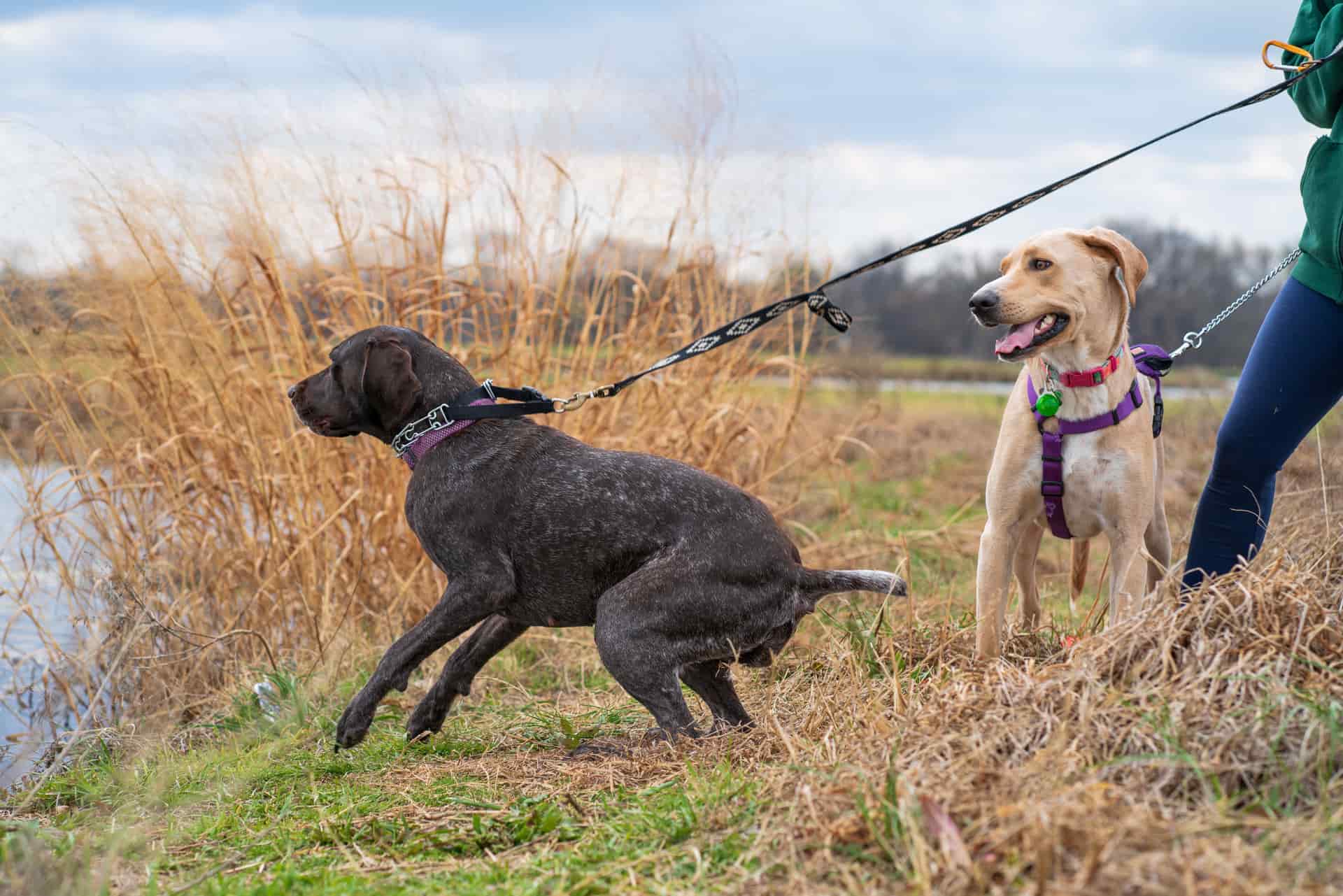
If your dog pulls, start with how to stop a dog pulling for the training method, then read front-clip vs back-clip to understand which harness actually redirects a pull. If you’re choosing between a harness and a collar at all, our harness vs collar guide covers the neck-safety side.
If your dog escapes, the fix is usually fit, not a new harness — how to stop a dog backing out and how to size a harness are the two to read. Every guide ends by pointing you to the matching gear, and every recommendation follows the same rule: we tell you what to skip, not just what to buy.
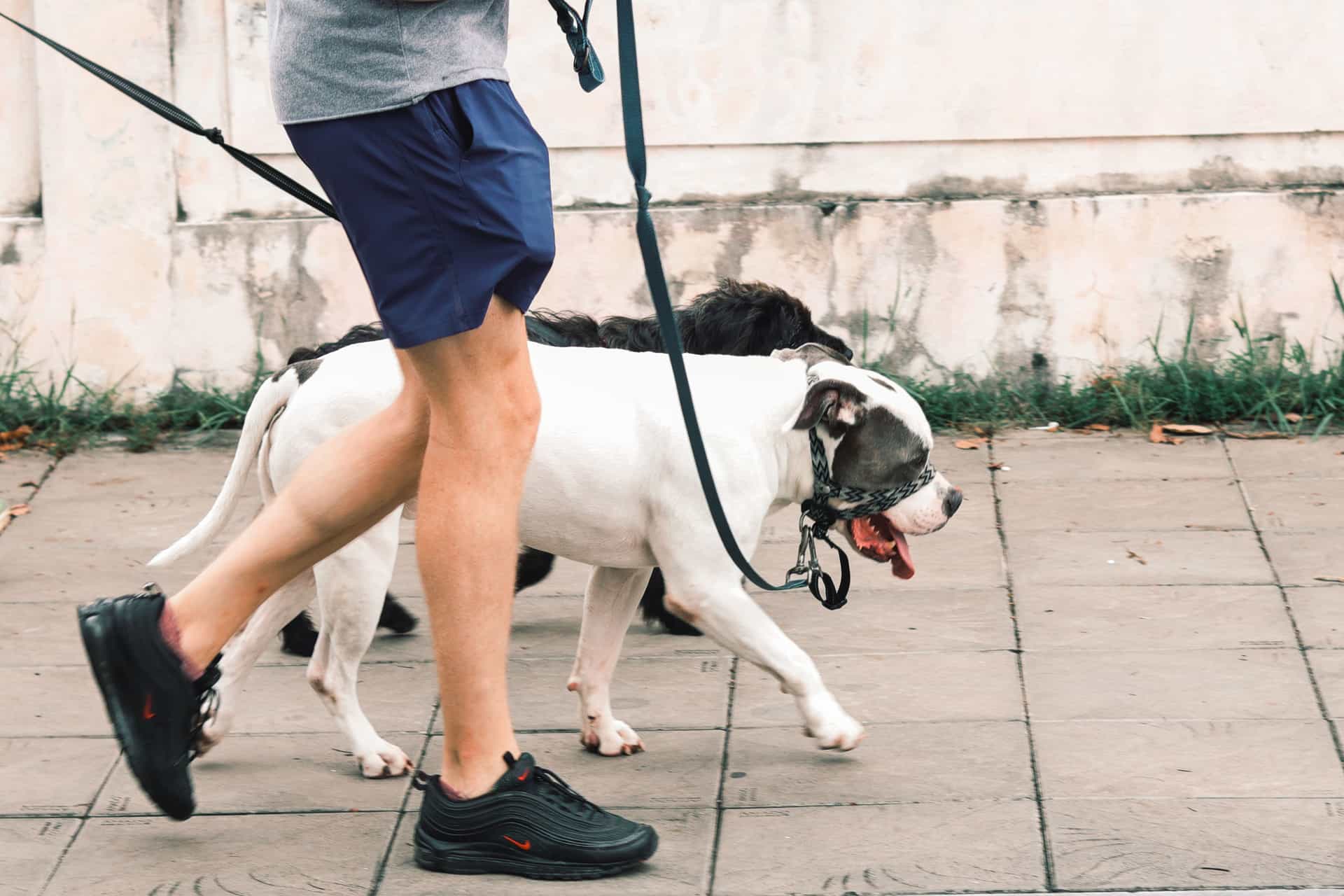
If the problem is a specific behavior on the walk, there is probably a guide for it: chasing squirrels, barking on walks, lunging at people, jumping up, cutting across in front of you and walking two dogs at once. If your dog slips its gear, read dog slips out of collar alongside the backing-out guide. And whether a harness causes pulling in the first place is answered in do harnesses cause pulling.
Three practical questions we get asked constantly now have their own pages: how much a dog harness costs (with live prices rather than a stale range), walking a dog at night, and, for the car, how long a dog can travel in a car plus the law on dogs riding in truck beds. On gear shapes, the two worth understanding before you spend anything are step-in vs overhead and Y-shaped vs H-shaped, and if you are weighing a head halter, start with do head halters hurt dogs.
And if the thing you are managing is a bite risk or a dog that eats things on walks, that is its own skill: how to muzzle train a dog lays out the treat-first sequence vets teach, in two-minute sessions, long before the day you need it — and our basket-muzzle picks cover the three worth buying, including the one a veterinary school names by name. If you are not sure whether what you need is a muzzle at all, head halter vs muzzle separates the two — they look alike on a sidewalk and do opposite jobs — and Baskerville Ultra vs Classic settles which of the two basket muzzles fits your dog’s nose and your dog’s problem.
Weather decides more walks than gear does. Before a summer walk, what temperature is too hot to walk a dog gives you the AKC’s number and the ten-second hand test that overrules it, and walking a dog in the rain explains why the AKC’s advice is to spend more time out in it, not less.
Two questions we get asked in almost the same words. My dog is stronger than me is about leverage rather than grip — the equipment order that gives a lighter handler control back — and slip lead vs harness explains what a slip lead is genuinely good for, and why it is the wrong tool for the dog most people buy one for.