LEASH LOAM

Best Gear for Reactive Dogs

For the dog that lunges and barks at other dogs, bikes, or the mail carrier. The control gear that buys you the half-second to get distance — head halters and front-clip harnesses, compared.

By Stephen V.Last verified How we pick

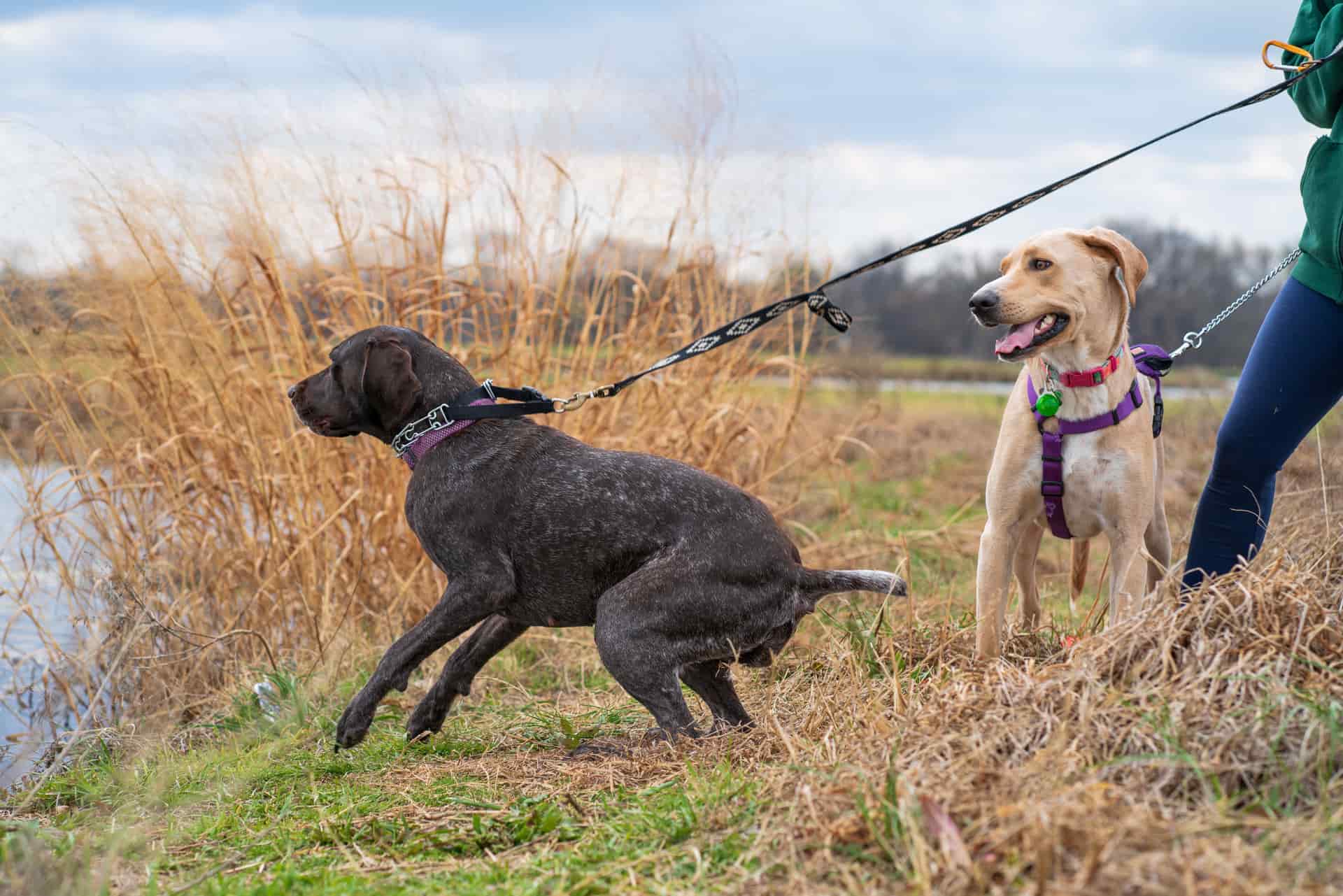
Walking a reactive dog is exhausting, and it is not your fault. When your dog lunges and barks at a trigger, the gear’s job is narrow but vital: give you enough control to create distance and stay safein the moment, without hurting the dog or making the fear worse. It manages the outburst so you can do the real work — distance, patience, and reward-based counter-conditioning — which is what actually reduces reactivity over time.

Two tools do the heavy lifting: a head halter, which steers the head so you can turn a lunge, and a front-clip harness, which redirects the body. The head halter gives the most control for a strong lunger; the harness is what most dogs will accept without a fight. We compare them on exactly that trade-off. None of this replaces a professional — for genuine reactivity, a qualified trainer or veterinary behaviorist is the difference-maker, and Cornell’s guidance on managing reactive behavior is a good place to start reading.

How this is funded:we earn a commission if you buy through our links, at no extra cost to you. It never changes which product we recommend, and we’ll tell you plainly when we’d skip one. Full disclosure.

Quick picks

Ranked on design, published specs and buyer fit. Select a row to jump to the full write-up. We have not hand-tested these — here is exactly what we do instead.

#ProductBest forPrice
1
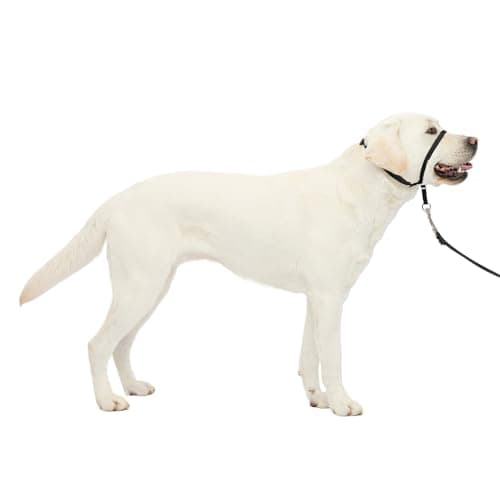
PetSafe Gentle Leader Headcollar

PetSafe Gentle Leader Headcollar

The most control you can get without force: the loop sits around the muzzle (not the throat), so where the head goes the dog follows. For a strong, reactive dog that lunges, it's the tool that lets a smaller handler stay in charge — but it needs slow, positive introduction.

Best for maximum control
$14.95 · View on Amazon

Price as of July 22, 2026. #ad How we’re funded

2
PetSafe Easy Walk Harness

PetSafe Easy Walk Harness

The front-clip baseline for a reactive dog that isn't ready for a head halter. Clipping at the chest turns a lunge sideways and buys you the half-second to get distance and reward. Less control than a Gentle Leader, but far easier for the dog to accept.

Best front-clip for reactive dogs
$22.19 · View on Amazon

Price as of July 22, 2026. #ad How we’re funded

3
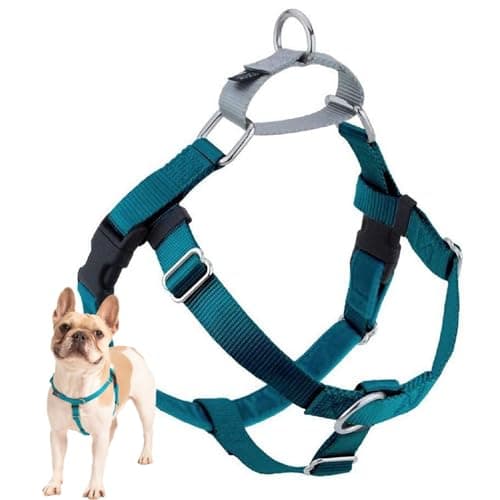
2 Hounds Design Freedom No-Pull Harness

2 Hounds Design Freedom No-Pull Harness

The best harness-only option for a reactive dog: run a double-ended leash to the front ring AND the back martingale and you get two points of control on one lead, which is enough leverage to turn most lunges without going to a head halter.

Best two-point harness setup
$34.98 · View on Amazon

Price as of July 22, 2026. #ad How we’re funded

4
The Company of Animals Halti Headcollar

The Company of Animals Halti Headcollar

The main alternative to the Gentle Leader, with a padded nose band some dogs tolerate better and a safety link that clips to the collar as a backup. Same head-steering principle; the difference is fit and which one your dog will accept.

Best Gentle Leader alternative
$24.85 · View on Amazon

$26.998% off

Price as of July 22, 2026. #ad How we’re funded

The picks in full

#1Best for maximum control

PetSafe Gentle Leader Headcollar

The most control you can get without force: the loop sits around the muzzle (not the throat), so where the head goes the dog follows. For a strong, reactive dog that lunges, it's the tool that lets a smaller handler stay in charge — but it needs slow, positive introduction.

Strengths

  • Steers the head, so it redirects a lunge a body harness can't
  • Loops the muzzle, never tightens on the throat
  • Lets a lighter person manage a big, reactive dog

Trade-offs

  • Most dogs paw at it at first — it takes patient desensitization
  • Not for short-nosed (brachycephalic) breeds; PetSafe steers them to the Easy Walk harness
TypeHead halter (muzzle loop)
AttachmentUnder-chin ring
FitsPetite–Large
MaterialNylon straps, padded nose loop
Best forMedium–large lungers; not brachycephalic breeds

Specs read from the product listing, on July 22, 2026. “Not published” means the brand does not state that figure.

#2Best front-clip for reactive dogs

PetSafe Easy Walk Harness

The front-clip baseline for a reactive dog that isn't ready for a head halter. Clipping at the chest turns a lunge sideways and buys you the half-second to get distance and reward. Less control than a Gentle Leader, but far easier for the dog to accept.

Strengths

  • Front clip turns a lunge back toward you
  • No muzzle loop, so most dogs accept it immediately
  • Cheap enough to pair with a double-ended leash

Trade-offs

  • Less leverage than a head halter on a big, determined lunger
  • Can rotate on deep-chested dogs mid-lunge
TypeFront-clip no-pull harness (chest ring)
AttachmentFront (chest martingale ring)
FitsPetite–XL
MaterialNylon webbing
Best forAll sizes

Specs read from the product listing, on July 22, 2026. “Not published” means the brand does not state that figure.

#3Best two-point harness setup

2 Hounds Design Freedom No-Pull Harness

The best harness-only option for a reactive dog: run a double-ended leash to the front ring AND the back martingale and you get two points of control on one lead, which is enough leverage to turn most lunges without going to a head halter.

Strengths

  • Two attachment points give real steering on a double-ended leash
  • Martingale tightens gently on a lunge rather than choking
  • More comfortable long-term than a head halter

Trade-offs

  • Two points of control means learning to handle a double-ended leash
  • Still less absolute control than a head halter on the strongest dogs
TypeDual-clip no-pull harness with martingale
AttachmentFront (chest) & back (martingale loop)
FitsXS–XL · sized by chest girth
MaterialNylon webbing, velvet-lined belly strap
Escape securityMartingale loop cinches gently on a surge
Best forAll sizes, especially strong reactive pullers

Specs read from the product listing, on July 22, 2026. “Not published” means the brand does not state that figure.

#4Best Gentle Leader alternative

The Company of Animals Halti Headcollar

The main alternative to the Gentle Leader, with a padded nose band some dogs tolerate better and a safety link that clips to the collar as a backup. Same head-steering principle; the difference is fit and which one your dog will accept.

Strengths

  • Padded nose band is more comfortable for some dogs
  • Includes a safety link to the collar as a backup connection
  • Same head-control leverage as other halters

Trade-offs

  • Needs the same patient introduction as any head halter
  • Fit varies by muzzle shape — some dogs do better on the Gentle Leader
TypeHead halter (padded nose band)
AttachmentUnder-chin ring + collar safety link
FitsSizes 0–5
MaterialNylon straps, padded nose band
Best forMedium–large lungers; not brachycephalic breeds

Specs read from the product listing, on July 22, 2026. “Not published” means the brand does not state that figure.

Head halter or front-clip harness?

A front-clip harnessturns a lunge sideways by redirecting the chest — enough control for many dogs, and almost every dog accepts it immediately. A head halter(Gentle Leader or Halti) gives you far more leverage because where the head goes, the dog follows, so a small handler can manage a big, determined dog. The catch is acceptance: most dogs paw at a head halter at first and need slow, positive introduction over days, not minutes. VCA’s head-halter training guidance covers doing it gently — and you must never jerk a leash attached to a head halter.

The two-leash setup

The setup many force-free trainers reach for is a dual-clip harnesswith a double-ended leash: one end on the front chest ring, one on the back. That gives you two points of control on a single lead — enough steering to turn a lunge without the head halter’s acceptance hurdle. It’s a good middle ground for a reactive dog that won’t tolerate a halter.

Gear is management, not a cure

No harness or halter fixes reactivity; it makes the walk survivable while you change how your dog feels about its triggers. The evidence-based approach is reward-based — the American Veterinary Society of Animal Behavior recommends against aversive tools, which tend to increase fear and fallout in already-anxious dogs. Keep distance from triggers, reward calm, and get a qualified trainer involved. And skip the retractable leash entirely for a reactive dog: you want a fixed, controllable length. See our leash picks for the right lead, and our loose-leash guide for the mechanics.

Do the work alongside the gear

Frequently asked questions

What's the best harness for a reactive dog?

A front-clip or dual-clip harness that lets you redirect a lunge, paired with a double-ended leash for two points of control. For maximum control on a strong lunger, a head halter gives more leverage — but it needs patient, positive introduction. Gear manages the behavior; distance and reward-based training reduce it.

Is a head halter cruel?

No, when used correctly. It loops the muzzle, never tightens on the throat, and steers rather than chokes. The keys are a gradual, reward-based introduction and never jerking the leash — a sharp pull on a head halter can hurt the neck. Some dogs simply won't accept one, and a front-clip harness is the fallback.

Should I use a prong or shock collar for a reactive dog?

No. The American Veterinary Society of Animal Behavior recommends against aversive tools; on an already-fearful dog they tend to make reactivity worse by adding pain and fear to the trigger. Use management gear plus reward-based counter-conditioning, and involve a qualified trainer or veterinary behaviorist.

Will a no-pull harness stop my dog reacting?

It won't stop the reaction — that's a fear or arousal response, not a pulling habit — but it gives you the control to turn your dog and create distance from the trigger. That distance is what lets the training work. Think of gear as buying you the half-second you need.

Sources

Keep reading