Start with a front-clip harness
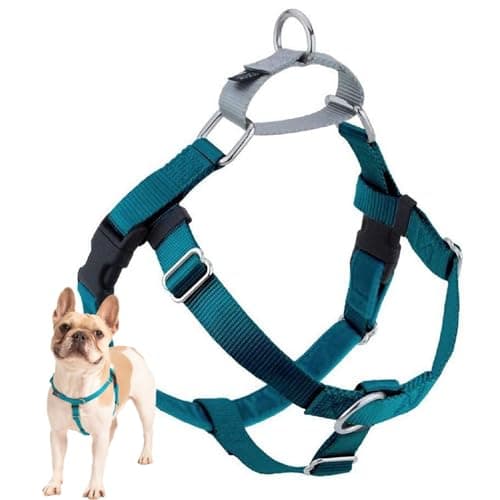
For most small reactive dogs the right first tool is a front-clip harness, not a head halter. Clipping the leash at the chest turns a lunge sideways and back toward you instead of letting the dog dig in, and it spreads what little pressure there is across the body rather than the throat — the whole point on a small dog. Our overall pick is the 2 Hounds Freedom: it has a front chest ring for exactly this redirection plus a back martingale loop, so with a double-ended leash you get two gentle points of control on one lead, and it is sized by exact chest girth rather than S/M/L guesswork, which matters when you are fitting a little dog. If you want the simplest possible version, the PetSafe Easy Walkis a plain front-clip that comes in petite sizes and that most dogs accept immediately, with no training curve; its honest limit is that it clips only at the front and can rotate on a deep, narrow chest. Both give a small dog the accessible entry point — enough control to create distance, without asking the dog to accept anything on its face. Our front-clip harnesses for reactive dogs page goes deeper on this category.
When you need more: a petite head halter
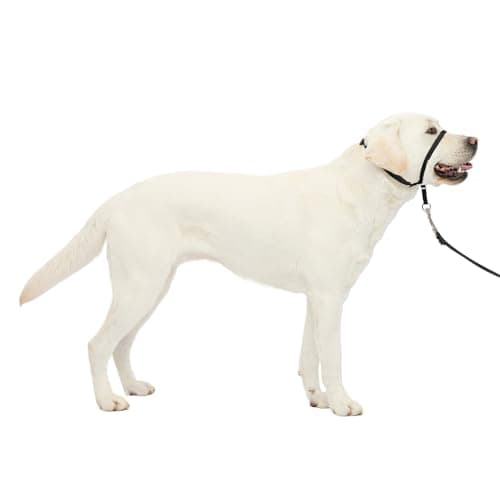
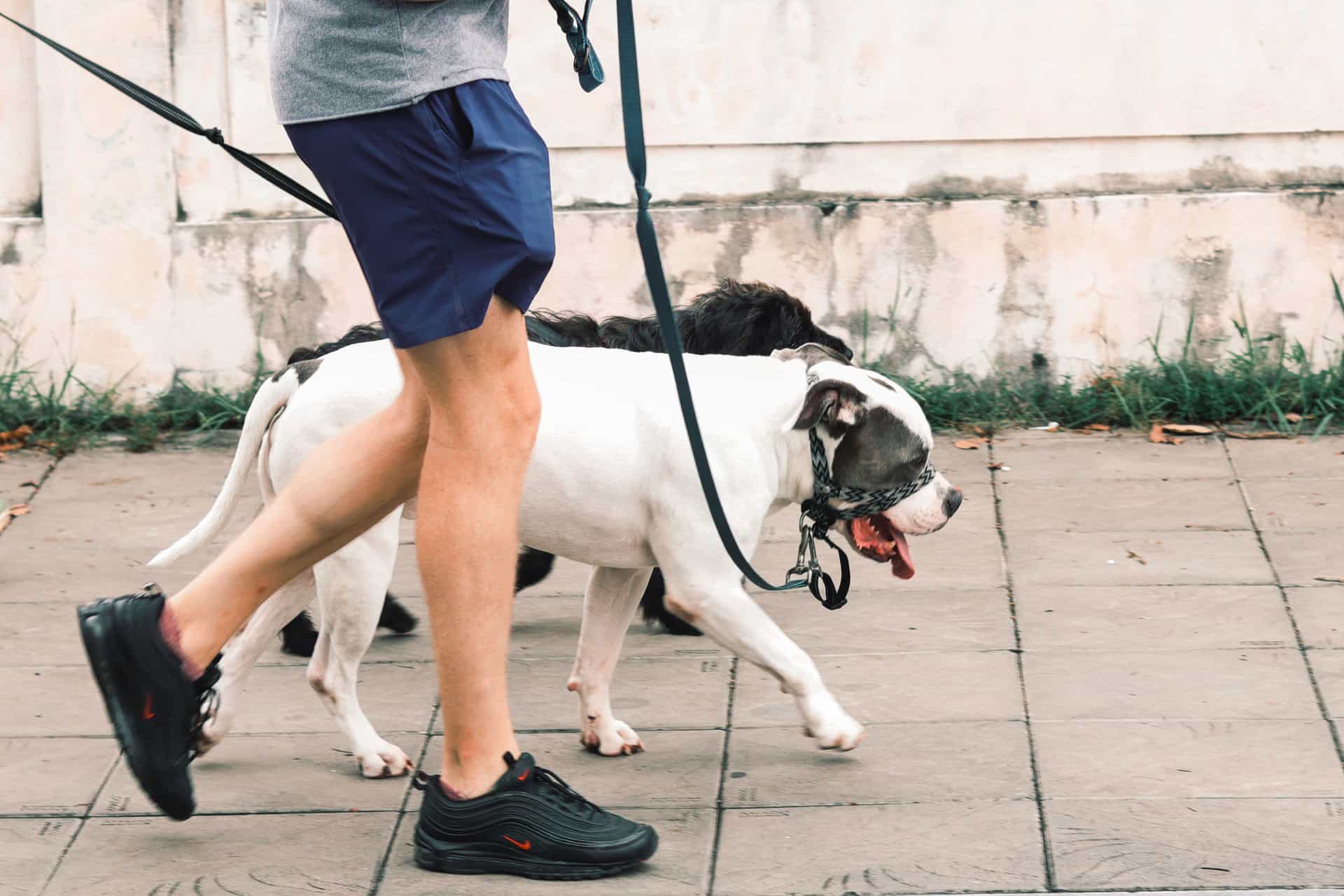
If a front-clip harness isn’t giving you enough control — a small dog that is an especially determined lunger, or one strong for its size — the step up is a head halter in a petite size. The Gentle Leader comes in a petite fit and gives the most control of anything here, because it loops the muzzle so that where the head goes the body follows. Two honest caveats come with that leverage on a small dog. First, a head halter is not a muzzle— the dog can still pant, drink and take treats; it steers, it does not clamp shut — but it looks like one, and many small dogs resist head gear and paw at it hard at first, so it needs a slow, treat-first introduction over days. Second, it is not for short-nosed (brachycephalic) breeds like Pugs or Shih Tzus, which have too little muzzle to hold the loop; for those dogs PetSafe itself steers you back to the front-clip harness. The Halti is the main alternative, with a padded nose band some dogs tolerate better and a safety link that clips to the collar as a backup; it works on the same head-steering principle, so the pick comes down to fit and which one your dog will accept. Our Gentle Leader vs Halti comparison and our Gentle Leader vs Easy Walk comparison weigh the trade-off between maximum control and what a small dog will wear, and our guide to introducing a head halter covers the gradual method that gets a dog to accept one willingly.
The gear is management — the real work is distance and reward
No harness or halter fixes reactivity; it only turns the outburst down so you can do the thing that actually reduces it. That work is distance from the trigger and rewardfor calm before your dog tips over threshold, so the sight of another dog slowly comes to predict good things instead of a fight — reward-based counter-conditioning, which is what the evidence supports. Aversive tools like prong and shock collars tend to make a fearful dog worse by stacking pain onto the trigger, and on a small dog they are especially risky. Two small-dog rules matter most. Never jerk a leash attached to a head halter — a sharp pull can hurt the neck, and you guide the head, you do not yank it. And keep the leash on the harness or the halter, never a collar at the throat during a lunge, because a hard hit on a small neck is a real injury risk. Our guide to stopping leash lunginglays out the distance-and-reward method step by step. If the reactivity is intense, frequent, or getting worse, get a qualified trainer or a veterinary behaviorist involved early — the gear keeps the walks safe while a professional builds the plan that changes how your dog feels.