LEASH LOAM

Best Reactive-Dog Gear for Boxers

A reactive Boxer is strong, bouncy and short-nosed — which rules out the head halter most reactive-dog guides reach for. These are the front-clip and dual-clip harnesses that turn a Boxer's lunge and keep pressure off its airway.

By Stephen V.Last verified How we pick

A reactive Boxer poses a specific gear problem: it’s strong, athletic and bouncy— 60 to 80 pounds that can throw itself sideways in a lunge — but it’s also brachycephalic, short-nosed, which changes the usual reactive-dog advice. Most guides reach first for a head halter, because steering the head gives the most leverage over a lunge. On a Boxer that’s often the wrong call: there isn’t much nose to hold a muzzle loop, and the breed’s airway is already compromised, so we lead with the harnessinstead. A front or dual-clip chest harness turns a lunge sideways and buys you the half-second to get distance — with the pressure on the chest, never the throat.

We rank these on how well they redirect a strong, springy lunger and on what keeps pressure off a short-nosed dog’s airway, not on absolute head-control a Boxer can’t safely use. And we’re clear throughout that gear is management: it makes the walk safe while distance and reward-based trainingchange how your dog feels about its triggers. Reactivity is driven by fear or over-arousal, not defiance, and the tools here buy you room to work — a qualified trainer or veterinary behaviorist is worth it for a big, strong reactive dog. We haven’t tested these on a rig; we read the published specs and reasoned from how each design controls a powerful, brachycephalic dog.

How this is funded:we earn a commission if you buy through our links, at no extra cost to you. It never changes which product we recommend, and we’ll tell you plainly when we’d skip one. Full disclosure.

Quick picks

Ranked on design, published specs and buyer fit. Select a row to jump to the full write-up. We have not hand-tested these — here is exactly what we do instead.

#ProductBest forPrice
1
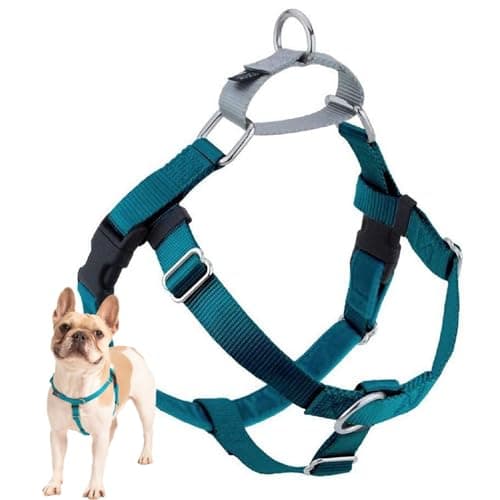
2 Hounds Design Freedom No-Pull Harness

2 Hounds Design Freedom No-Pull Harness

The best harness-only option for a reactive dog: run a double-ended leash to the front ring AND the back martingale and you get two points of control on one lead, which is enough leverage to turn most lunges without going to a head halter.

Best overall
$34.98 · View on Amazon

Price as of August 5, 2026. #ad How we’re funded

2
PetSafe Easy Walk Harness

PetSafe Easy Walk Harness

The front-clip baseline for a reactive dog that isn't ready for a head halter. Clipping at the chest turns a lunge sideways and buys you the half-second to get distance and reward. Less control than a Gentle Leader, but far easier for the dog to accept.

Best front-clip starter
$22.99 · View on Amazon

Price as of August 5, 2026. #ad How we’re funded

3
The Company of Animals Halti Headcollar

The Company of Animals Halti Headcollar

The main alternative to the Gentle Leader, with a padded nose band some dogs tolerate better and a safety link that clips to the collar as a backup. Same head-steering principle; the difference is fit and which one your dog will accept.

Only if your Boxer has the muzzle for it
$26.99 · View on Amazon

Price as of August 5, 2026. #ad How we’re funded

The picks in full

#1Best overall

2 Hounds Design Freedom No-Pull Harness

The best harness-only option for a reactive dog: run a double-ended leash to the front ring AND the back martingale and you get two points of control on one lead, which is enough leverage to turn most lunges without going to a head halter.

Strengths

  • Two attachment points give real steering on a double-ended leash
  • Martingale tightens gently on a lunge rather than choking
  • More comfortable long-term than a head halter

Trade-offs

  • Two points of control means learning to handle a double-ended leash
  • Still less absolute control than a head halter on the strongest dogs
TypeDual-clip no-pull harness with martingale
AttachmentFront (chest) & back (martingale loop)
FitsXS–XL · sized by chest girth
MaterialNylon webbing, velvet-lined belly strap
Escape securityMartingale loop cinches gently on a surge
Best forAll sizes, especially strong reactive pullers

Specs read from the product listing, on July 22, 2026. “Not published” means the brand does not state that figure.

#2Best front-clip starter

PetSafe Easy Walk Harness

The front-clip baseline for a reactive dog that isn't ready for a head halter. Clipping at the chest turns a lunge sideways and buys you the half-second to get distance and reward. Less control than a Gentle Leader, but far easier for the dog to accept.

Strengths

  • Front clip turns a lunge back toward you
  • No muzzle loop, so most dogs accept it immediately
  • Cheap enough to pair with a double-ended leash

Trade-offs

  • Less leverage than a head halter on a big, determined lunger
  • Can rotate on deep-chested dogs mid-lunge
TypeFront-clip no-pull harness (chest ring)
AttachmentFront (chest martingale ring)
FitsPetite–XL
MaterialNylon webbing
Best forAll sizes

Specs read from the product listing, on July 22, 2026. “Not published” means the brand does not state that figure.

#3Only if your Boxer has the muzzle for it

The Company of Animals Halti Headcollar

The main alternative to the Gentle Leader, with a padded nose band some dogs tolerate better and a safety link that clips to the collar as a backup. Same head-steering principle; the difference is fit and which one your dog will accept.

Strengths

  • Padded nose band is more comfortable for some dogs
  • Includes a safety link to the collar as a backup connection
  • Same head-control leverage as other halters

Trade-offs

  • Needs the same patient introduction as any head halter
  • Fit varies by muzzle shape — some dogs do better on the Gentle Leader
TypeHead halter (padded nose band)
AttachmentUnder-chin ring + collar safety link
FitsSizes 0–5
MaterialNylon straps, padded nose band
Best forMedium–large lungers; not brachycephalic breeds

Specs read from the product listing, on July 22, 2026. “Not published” means the brand does not state that figure.

Two points of control, off the airway

Our top pick is the 2 Hounds Freedom: run a double-ended leash to its front chest ring and back martingale loop and you get two points of controlon one lead — enough leverage to turn most Boxer lunges without going near the head. The martingale cinches gently on a surge rather than choking, and everything stays on the chest, which is exactly where a brachycephalic dog’s pressure should be. It’s girth-sized and strong, and it doubles as one of the best no-pull harnesses you can buy, so it earns its place on an everyday walk too. For a Boxer, this is the most control you can get while respecting the airway.

The front-clip starter, and the head-halter caveat

For a Boxer at the start of its training, or one that won’t tolerate a two-point setup yet, the PetSafe Easy Walkfront-clip is the gentle entry point — PetSafe itself steers short-nosed breeds toward the Easy Walk rather than a head halter. Clipping at the chest turns a lunge back toward you; the trade-offs are less leverage than a two-point setup on a strong lunger, and it can rotate on a deep chest, so mind the fit. We list the Halti third and with a real caveat: head halters generally aren’t the pick for a brachycephalic breed, but some Boxers have enough muzzle to carry the Halti’s padded nose band, and it includes a safety link to the collar as a backup. If — and only if — yours has the muzzle for it and accepts it after a slow introduction, it offers head-steering leverage. Never jerk a head halter; guide, don’t yank. For most Boxers, a harness is the honest answer.

Gear is management — do the work

No harness or halter fixes reactivity; it makes the walk manageable while you change how your dog feels. Keep distance from triggers, rewardcalm before your Boxer tips over threshold, and don’t march it up to the thing it’s reacting to. Reward-based methods are what the evidence supports; aversive tools like prong and shock collars tend to make a fearful, aroused dog worse. Burn the energy, too — a bouncy Boxer with nothing to do is a more reactive one — but mind the heat, since a short-nosed dog overheats fast. Our guide to stopping leash lunginglays out the method, and if your Boxer’s issue is straightforward pulling rather than reacting, see our no-pull picks for Boxers.

Control and the method

Frequently asked questions

What's the best gear for a reactive Boxer?

A front or dual-clip harness, not a head halter. The 2 Hounds Freedom is our top pick: a double-ended leash to its front and back rings gives two points of control to turn a strong, bouncy lunge, with all the pressure on the chest rather than a short-nosed dog's airway. The Easy Walk front-clip is the gentler starter. Pair either with distance-and-reward training.

Can I use a head halter (Gentle Leader or Halti) on a Boxer?

Usually it's not the best choice. A Boxer is brachycephalic — short-nosed — so a muzzle-loop head halter fits poorly, and the breed's airway is already compromised. PetSafe steers short-nosed breeds toward a front-clip harness like the Easy Walk instead. Some Boxers have enough muzzle to carry a Halti's padded band, but for most a chest harness gives control without the poor fit and airway pressure.

Why does keeping pressure off the airway matter for a reactive Boxer?

Because a Boxer's short nose means a narrowed airway that already works hard, and a lunging dog straining against anything on its neck makes that worse. A chest harness keeps the leash force on the body and, with a front clip, redirects the lunge — so you get control without adding pressure where a brachycephalic dog can least afford it. Keep the leash on the harness, not a collar.

Does a harness stop a Boxer being reactive?

No — it manages the walk so you stay safe and in control, but it doesn't change how your dog feels about its triggers. That takes distance-and-reward training over time: keep enough distance that your Boxer notices a trigger without reacting, reward the calm, and slowly close the gap. Gear plus that work, plus enough exercise, is what actually reduces reactivity. A qualified trainer helps for a strong dog.

Sources

Keep reading