LEASH LOAM

Best Dog Muzzles for Vet Visits

A muzzle for the exam room is a different brief: it has to go on a frightened dog in a hurry, leave a vet room to work, and never be the thing that makes the next visit worse.

By Stephen V.Last verified How we pick

Buy the Baskerville Ultra — it is the muzzle to bring to an appointment for most dogs, because the TPR basket can be warmed and reshaped to the individual face, so it sits still on a dog that is already tense, and the open basket leaves the mouth free to pant, drink and take treats while the vet works. It suits a standard-muzzled dog of any size. The budget pick is the Baskerville Classic: the least expensive basket muzzle we rank, with a size range that runs from toy to giant and a longer basket that suits a long-nosed breed. If the problem is that your dog looks frightening in a muzzle and the practice reacts to that, the Baskerville INVISA is transparent and keeps the face visible.

Why the exam room is its own brief. A muzzle for walks goes on a calm dog at home, in a familiar routine, for a long stretch of time. A muzzle for the vet goes on a dog that is already frightened, often in a waiting room, sometimes in a hurry, and it has to do three things at once: stay put on a head that is pulling away, leave the vet enough access to do the examination, and let the dog pant — a frightened dog thermoregulates by panting and a muzzle that prevents it is genuinely dangerous. That rules out the fabric sleeve muzzles sold as “grooming muzzles”, which hold the jaws closed. Every pick here is a basketmuzzle for that reason, and Cornell’s and the San Francisco SPCA’s guidance both land on the same conclusion.

The other half of this, and it matters more than the product: the muzzle should not be new on the day. A muzzle introduced for the first time in a waiting room becomes part of the dog’s memory of being frightened, and the next visit is harder. Buy it weeks out, pair it with food at home in short sessions, and bring a dog that already thinks the basket means chicken — our muzzle training guidehas the sequence, and the VCA’s desensitizing protocol is the source we work from. Tell the practice in advance too; most will book a longer slot or a quieter time if they know.

How this is funded:we earn a commission if you buy through our links, at no extra cost to you. It never changes which product we recommend, and we’ll tell you plainly when we’d skip one. Full disclosure.

Quick picks

Ranked on design, published specs and buyer fit. Select a row to jump to the full write-up. We have not hand-tested these — here is exactly what we do instead.

#ProductBest forPrice
1
Baskerville Ultra Muzzle

Baskerville Ultra Muzzle

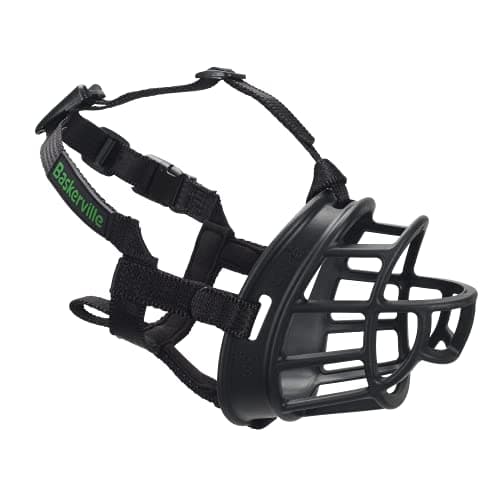
The default basket muzzle, and the one a veterinary school actually names: Cornell's Riney Canine Health Center points owners at basket designs "such as the Baskerville Ultra". It is thermoplastic rubber rather than hard plastic, Company of Animals publishes that it lets a dog pant, drink and take treats, and it can be softened in hot tap water and molded to your dog's nose like a mouthguard. The reason it wins is not that it is clever - it is that the fit can be made right, and fit is the whole game.

Best overall for the exam room
$30.99 · View on Amazon

Price as of November 12, 2026. #ad How we’re funded

2
Baskerville Classic Basket Muzzle

Baskerville Classic Basket Muzzle

The size run is the reason to buy it: ten sizes instead of six, which is what a long, narrow muzzle needs - Company of Animals recommends it for German Shepherds, Dachshunds, Greyhounds and other longer-nosed breeds. It also ships with an anti-scavenging guard layer, so it is the pick for the dog whose problem is eating things on walks rather than biting.

Budget pick, and best for long noses
$19.99 · View on Amazon

Price as of November 12, 2026. #ad How we’re funded

3
Baskerville INVISA Muzzle

Baskerville INVISA Muzzle

The clear one. Mechanically it is the same idea as the Ultra - heat-shapeable TPR, pant, drink and treats, sizes 1-6 - but the basket is transparent, which Company of Animals describes as making the muzzle "less visible on the dog". That is an appearance claim, not a performance one, and it matters anyway: the reason owners leave a muzzle in a drawer is how it looks to strangers on the sidewalk, and a muzzle in a drawer protects nobody.

Best when the face needs to stay visible
$36.00 · View on Amazon

Price as of November 12, 2026. #ad How we’re funded

The picks in full

#1Best overall for the exam room

Baskerville Ultra Muzzle

The default basket muzzle, and the one a veterinary school actually names: Cornell's Riney Canine Health Center points owners at basket designs "such as the Baskerville Ultra". It is thermoplastic rubber rather than hard plastic, Company of Animals publishes that it lets a dog pant, drink and take treats, and it can be softened in hot tap water and molded to your dog's nose like a mouthguard. The reason it wins is not that it is clever - it is that the fit can be made right, and fit is the whole game.

Strengths

  • Cornell's Riney Canine Health Center names this design among the basket muzzles to look for
  • Heat-shapeable: two minutes in hot tap water and you mold the basket to your dog's own nose
  • Brand publishes that the dog can pant, drink and eat treats while wearing it - the treats part is what makes training possible
  • Collar loop plus a headstrap, which Company of Animals strongly recommends using while a dog is still learning to wear it

Trade-offs

  • The TPR "will return to its original shape over time" in the brand's own words, so a molded fit needs redoing periodically
  • Six sizes fitted by nose length AND circumference - you have to measure, and Amazon sells each size as a separate listing
  • Wrong tool for a flat-faced breed; a standard basket has nothing to sit on
  • Does nothing about why a dog reacts - it buys you safety while you train, and that is all
TypeHeat-shapeable TPR basket muzzle
AttachmentAdjustable neck strap, collar loop and headstrap (no leash ring)
FitsSizes 1-6 · fitted by nose length and circumference
MaterialThermoplastic rubber (TPR), heat-shapeable in hot water
Escape securityCollar loop plus headstrap - brand recommends using both during acclimatization
Best forStandard-muzzled dogs across sizes 1-6; not for flat-faced breeds

Specs read from the product listing, on October 10, 2026. “Not published” means the brand does not state that figure.
#2Budget pick, and best for long noses

Baskerville Classic Basket Muzzle

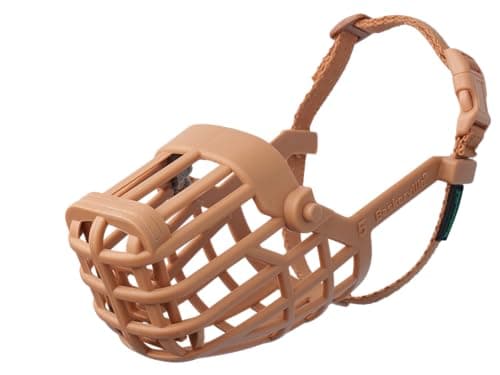
The size run is the reason to buy it: ten sizes instead of six, which is what a long, narrow muzzle needs - Company of Animals recommends it for German Shepherds, Dachshunds, Greyhounds and other longer-nosed breeds. It also ships with an anti-scavenging guard layer, so it is the pick for the dog whose problem is eating things on walks rather than biting.

Strengths

  • Ten published sizes (1-10) - the widest fit range in the Baskerville line
  • Brand-recommended for German Shepherds, Dachshunds, Greyhounds and other long-nosed breeds
  • Anti-scavenging guard layer for food and wildlife scavenging, rock eating, coprophagia and post-surgical licking
  • Padded nose piece and an easy-to-adjust neck strap; the basket lets the dog pant and drink at all times

Trade-offs

  • With the guard fitted you cannot feed treats through it - and treats are how a dog learns to accept a muzzle, so train with the guard out
  • No headstrap published, so the neck strap and collar loop are the only security
  • Ten sizes means more chance of ordering the wrong one; measure nose length and circumference first
  • A scavenging guard is management, not a cure for a dog that eats everything
TypeTPR basket muzzle with anti-scavenging guard
AttachmentSecure easy-to-adjust neck strap (no leash ring)
FitsSizes 1-10 · fitted by nose length and circumference
MaterialImproved thermoplastic rubber (TPR) with a padded nose piece
Escape securityEasy-to-adjust neck strap; no headstrap published
Best forLong-nosed breeds especially; sizes 1-10 cover toy to giant

Specs read from the product listing, on October 10, 2026. “Not published” means the brand does not state that figure.
#3Best when the face needs to stay visible

Baskerville INVISA Muzzle

The clear one. Mechanically it is the same idea as the Ultra - heat-shapeable TPR, pant, drink and treats, sizes 1-6 - but the basket is transparent, which Company of Animals describes as making the muzzle "less visible on the dog". That is an appearance claim, not a performance one, and it matters anyway: the reason owners leave a muzzle in a drawer is how it looks to strangers on the sidewalk, and a muzzle in a drawer protects nobody.

Strengths

  • Transparent basket the brand says is less visible on the dog - the honest answer to the stigma that stops people muzzling at all
  • 360-degree padded basket, and a removable guard insert for scavenging and licking
  • Brand publishes that the dog can pant, drink, take treats and even vomit while wearing it
  • Heat-shapeable in one minute of hot tap water, so the fit can be tuned to the nose

Trade-offs

  • Sits at the top of the Baskerville range on price for the same size
  • No headstrap published - the collar loop is the only backup if your dog works at it
  • "Less visible" is a claim about appearance; a stranger who looks twice still sees a muzzle
  • Same TPR caveat as the Ultra: the molded shape relaxes over time and needs redoing
TypeTransparent TPR basket muzzle
AttachmentAdjustable neck strap with a collar loop (no leash ring)
FitsSizes 1-6 · fitted by nose length and circumference
MaterialTransparent thermoplastic rubber (TPR), 360-degree padded basket
Escape securityCollar loop for added stability; no headstrap published
Best forStandard-muzzled dogs across sizes 1-6; not for flat-faced breeds

Specs read from the product listing, on October 10, 2026. “Not published” means the brand does not state that figure.

What a vet-visit muzzle has to do

  • Let the dog pant and drink. Non-negotiable. An open basket does; a fabric sleeve that closes the jaws does not, and a frightened dog in one cannot cool itself.
  • Let treats through. The whole plan for a frightened dog is to keep feeding it while something unpleasant happens. A basket with gaps you can post a piece of chicken through turns the muzzle into part of the counter-conditioning rather than a punishment.
  • Stay on. A dog that is pulling its head back needs a muzzle with a secure head strap and a basket that fits the actual muzzle length. A loose basket slides off, which is worse than no muzzle because everyone relaxed.
  • Leave the vet room to work.Ears, eyes, teeth and a thermometer are all somewhere; a basket that extends too far or straps across the forehead gets in the way. This is worth asking your own practice about — they handle muzzled dogs constantly and will tell you what they prefer.
  • Go on quickly, calmly, once. Which is a training outcome, not a product feature. See the introduction sequence above.

How the three picks differ

All three are basket muzzles from the same maker, and the differences are shape and visibility rather than quality. The Ultrais the heat-shapeable one: warm the TPR basket, press it to your dog’s face, and it holds that shape, which is why it is our default for a dog that will be wearing it while tense and still. The Classichas the longest basket and the widest published size range, so it is the one for a collie, a greyhound or any long-nosed dog the Ultra’s basket crowds — and it is the cheapest of the three. The INVISA is transparent, which does nothing mechanically but changes how people react to your dog in a waiting room, and lets a vet see the mouth and gum colour without removing it.

None of them are flat-face muzzles. A pug, French bulldog or other brachycephalic dog does not have enough muzzle for a standard basket to sit on, and needs a breed-specific short-nose design we do not currently rank — ask your practice rather than forcing a basket onto the wrong face.

What a muzzle is not

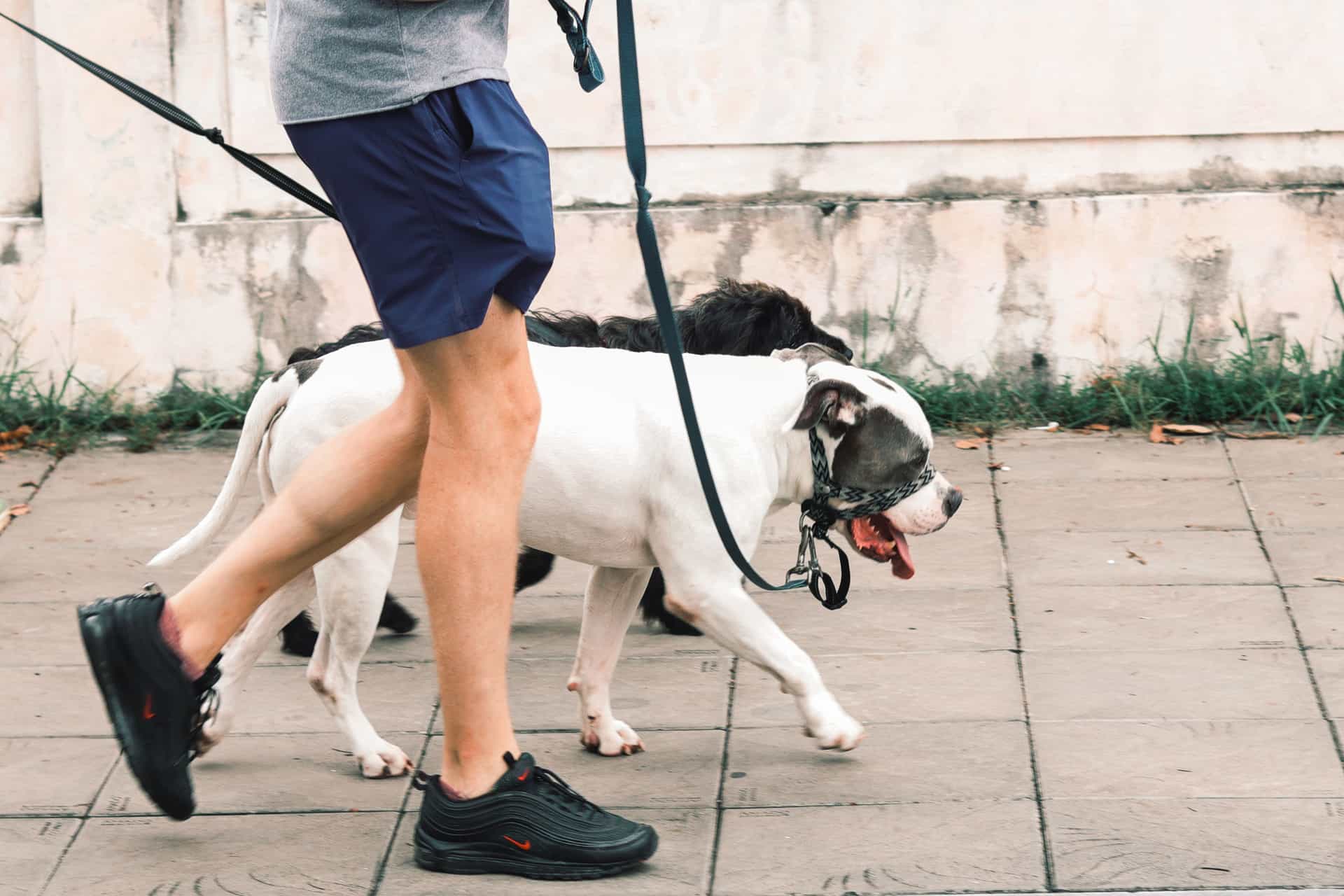
It is not a fix for fear, and it is not a walking tool. A muzzle prevents a bite; it does nothing about why the dog wants to bite, and a frightened dog in a muzzle is still a frightened dog. The work is counter-conditioning and, for a lot of dogs, a conversation with your vet about anti-anxiety medication for appointments — which is a medical decision and theirs to make, not something a gear page should opine on. It is also worth being clear that a muzzle is not a head halter: a halter steers the dog and leaves the mouth completely free, which is the opposite trade-off. Our head halter vs muzzle guide separates the two, and head halters covers the control side.

If your dog’s issue extends past the vet — lunging at dogs on walks, snapping at strangers, eating things off the pavement — those are different briefs with their own pages: muzzles for bite risk, muzzles for scavenging, and the broader reactive-dog gearroundup. Nothing here is veterinary advice; it is a gear comparison written from published specifications, and your own vet’s preference for their own exam room beats it every time.

Keep reading

Frequently asked questions

What kind of muzzle should I take to the vet?

A basket muzzle. The open basket lets the dog pant, drink and take treats while it is being examined, which matters because a frightened dog cools itself by panting and because feeding it through the appointment is the whole plan. Fabric sleeve muzzles hold the jaws shut and should not be used on a stressed dog.

Can my dog still pant and drink in a basket muzzle?

Yes, and that is the main reason to choose one. All three picks here are open TPR baskets, so the mouth opens normally — the dog can pant, drink from a bowl and take a treat posted through the gaps. A muzzle that prevents panting is genuinely unsafe on a dog that is frightened or warm.

How long before the appointment should I introduce the muzzle?

Weeks, not minutes. A muzzle put on for the first time in a waiting room becomes part of the dog's memory of being frightened, and the next visit gets harder. Buy it early, pair it with high-value food in short sessions at home, and arrive with a dog that already associates the basket with treats.

Is a muzzle cruel for a frightened dog?

A well-fitted basket muzzle that lets a dog pant, drink and eat is not cruel, and it lets a necessary examination happen safely for everyone. What is unfair is a muzzle that arrives as a surprise, one that holds the jaws closed, or one used instead of addressing the fear. The muzzle is the safety layer; the training and your vet's plan are the work.

Sources

  • Cornell Riney Canine Health Center — Basket muzzle training — Cornell's veterinary guidance: a basket muzzle is "a useful tool to humanely prevent dog bites or to prevent dogs from eating things outside that are dangerous or toxic"; "a properly fitted muzzle allows your dog to pant, drink water and accept treats while wearing it"; names basket designs such as the Baskerville Ultra and Jafco Clear Vinyl; says nylon muzzles that constrict the mouth are not appropriate for most situations; a one-to-two-finger strap fit adjusted so the muzzle cannot slip over the head; never leave a muzzle on an unattended dog; and a treat-led conditioning sequence run in 1-2 minute sessions (accessed October 10, 2026)
  • VCA Animal Hospitals — Muzzle Training for Dogs — VCA on muzzle choice: "Basket muzzles are preferred"; a snug sleeve muzzle stops a dog panting and masks warning signals such as a snarl, so it "should be used only in an urgent situation when there is no other alternative"; a suitable muzzle is sturdy enough to prevent a bite, roomy enough for panting and treats, clear of the soft nose flesh, nostrils and eyes, and secured so the dog cannot remove it; wear time is built up gradually; and muzzles "should not be used to prevent a dog from opening its mouth or as a tool to stop barking" (accessed October 10, 2026)
  • San Francisco SPCA — Basket muzzle — The SF SPCA's behavior handout: "A basket muzzle should be used in addition with a behavior modification program"; feed treats through the basket "like a horse would from a feedbag"; buckle it only once the dog is comfortable and "remove it well before your dog becomes uncomfortable and paws at it"; "Do not try to place a basket muzzle if your dog tries to bite you"; and do not "place a muzzle to avoid bites but still place your dog in the situation where he wants to bite" (accessed October 10, 2026)
  • Company of Animals — Baskerville Ultra Muzzle — The brand's own page: a thermoplastic rubber (TPR) basket "designed to allow your dog to pant, drink and enjoy treats while being worn"; heat-shapeable like a mouthguard in hot tap water for two minutes, with the caveat that "the material will return to its original shape over time"; a collar loop plus headstrap the brand "strongly recommend[s]" for security while the dog is acclimatizing; sizing by nose length and circumference, using nose length where the two disagree; and the instruction not to leave it on for extended periods and to supervise the dog while it is worn (accessed October 10, 2026)
  • Company of Animals — Baskerville Classic Basket Muzzle — The brand's own page: "available in 10 sizes" (1-10) in an improved TPR the brand calls lighter and "4x stronger" than its older plastic design; a basket that lets a dog "pant and drink at all times", with treats possible once the guard is removed; an "improved padded nose piece" and a "secure easy-to-adjust neck strap"; an additional anti-scavenging guard layer for food and wildlife scavenging, eating rocks, coprophagia and post-surgical wound licking; and a recommendation for German Shepherds, Dachshunds, Greyhounds and other longer-nosed breeds (accessed October 10, 2026)

Keep reading