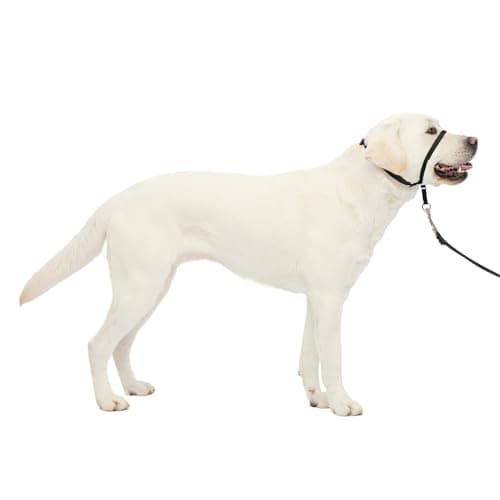
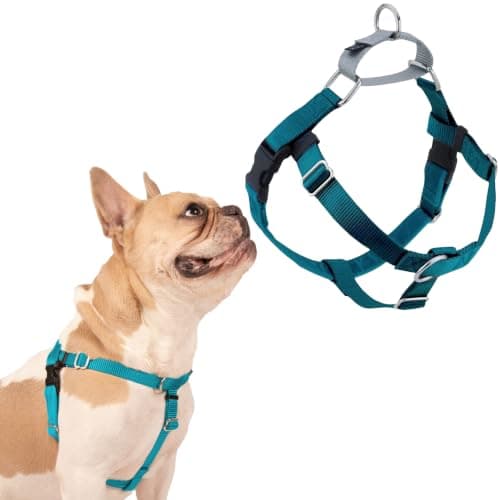
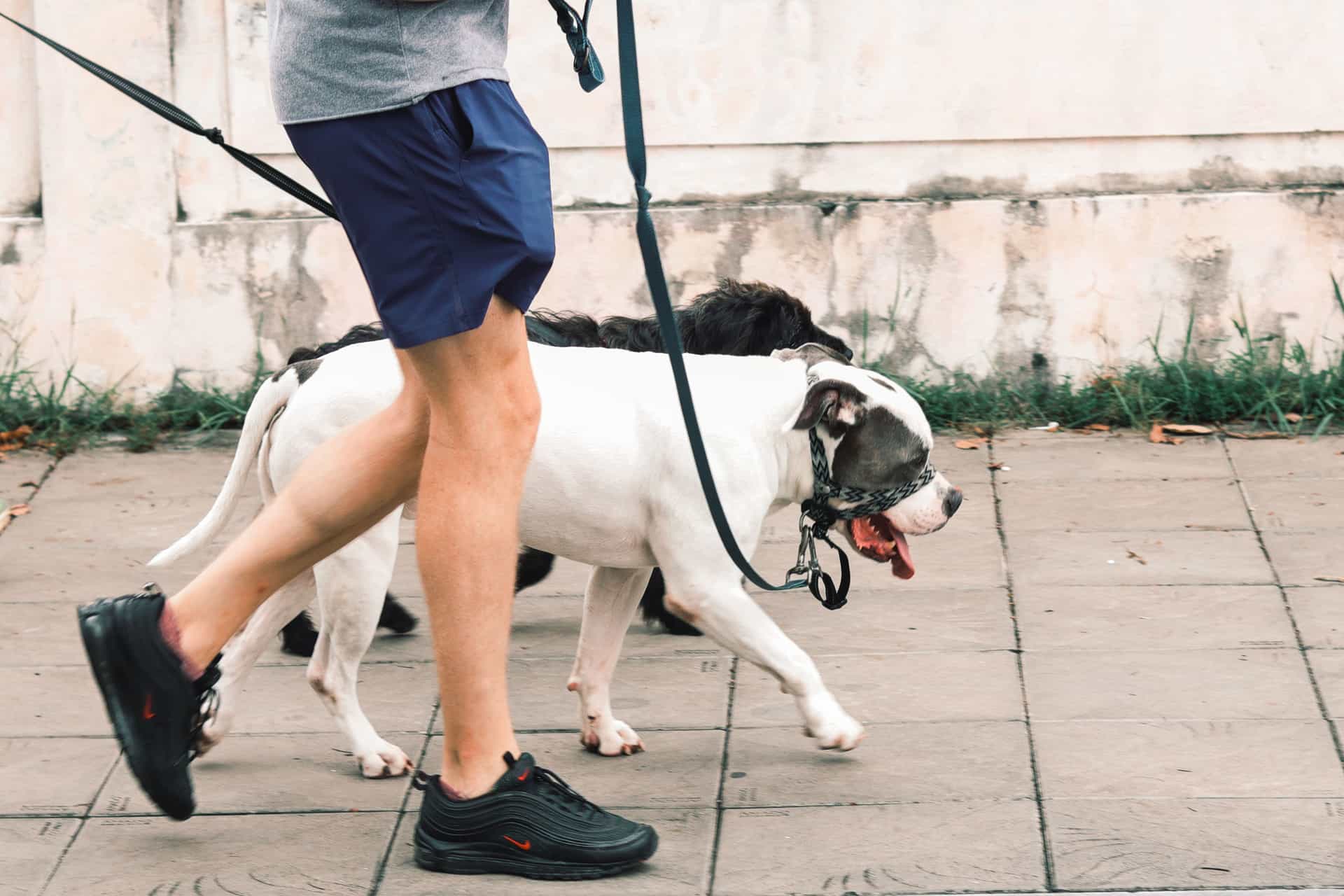
If you want another head halter: the Gentle Leader
These two are the category, and they are more alike than different: both loop the muzzle, both attach under the chin, both let a smaller person manage a dog that outweighs them, and neither tightens on the throat the way a collar does. The difference that matters is which one your dog will wear. The Halti’s nose band is padded, which is softer on some muzzles; the Gentle Leader’s is a thin, minimal nylon loop, which other dogs mind less because there is less of it on the face. The sizing is numbered differently too, so the fit chart is not interchangeable between them. We have seen no evidence that either is more effective than the other, and we are not going to invent any — our Gentle Leader vs Halti comparison lays the two side by side on exactly the published differences.
Two honest cautions on the swap. First, the Gentle Leader as sold does not include a backup link to the collar, which the Halti does; if your dog is the kind that works a halter loose, clip a short carabiner or a second leash to its collar yourself. Second, PetSafe explicitly steers short-nosed breeds away from the Gentle Leader and toward the Easy Walk harness, so if a flat face was your reason for shopping, the halter lane is a dead end and you want the harness picks below. If you are coming at this from the other direction, we cover Gentle Leader alternatives as its own page.
Whichever halter you land on, the introduction is the job: treats at the sight of it, treats for a nose poked through the loop, short sessions, and no walking until the dog stops noticing it is there. The step-by-step is in how to introduce a head halter, and if you are weighing whether to use one at all, do head halters hurt dogs is the evidence-based answer, including the no-jerking rule that applies to both brands.
If the face is out: two points of contact beat one
A head halter wins on leverage because it steers the head. No harness can replicate that, so the question becomes how much control a harness can give you — and the answer is more than most people think, if you stop clipping to one ring.
The 2 Hounds Design Freedom is the pick here because it has a chest ring and a back martingale loop. Run a double-ended leash to both and you can turn a dog’s shoulders while the martingale gently snugs on the surge, which is genuinely enough to redirect most lunges without going near the face. It is sized by exact chest girth rather than S/M/L, so the chest ring actually sits center-chest where it can do its work, and the velvet-lined belly strap keeps it comfortable when snug.
The trade-offs, stated plainly: it is less leverage than a halter on a very big, determined lunger, and two points of control means learning to handle a double-ended leash without wrapping it around your legs — double-ended leash training covers the handling. It is also the harness we point to most often for reactivity in general, which is why it leads front-clip harnesses for reactive dogs. If you want the direct head-to-head, Halti vs Freedom is the page.
The simplest step down: the Easy Walk
If the Freedom sounds like more equipment than you want to manage, the PetSafe Easy Walk is the front-clip baseline, and it is the harness PetSafe itself steers short-nosed breeds to when a head halter is out. One martingale ring on the chest, two buckles, nothing to learn: clipping at the chest turns a lunge sideways and buys you the half-second to get distance and reward. It is the easiest of the four for a dog to accept, and the fastest to get on a dog that is already worked up at the door.
Its limits are real. There is less leverage than a head halter on a big, determined lunger, and no back ring at all, so there is no relaxed-walk option and no second point of contact to add later. On a deep-chested dog the two-strap chest piece can also rotate out of position, which is the complaint that sends people to Easy Walk alternatives. Fit it low on the breastbone and check it mid-walk. Halti vs Easy Walk compares the halter and the harness on the one axis that matters, which is how much control you need versus how much your dog will tolerate.
If the same harness also has to do everything else
The Ruffwear Front Range is on this page for the owner whose dog will not wear anything on its face and who does not want a second harness for hikes, car trips and ordinary walks. It is a padded vest with foam-lined chest and belly panels, four adjustment points, a reinforced front chest ring for the walks that need redirecting and an aluminum back V-ring for the ones that do not.
Be clear about the control gap: one front ring is less leverage than a halter and less than the Freedom’s two points, and the Front Range is a comfort harness first rather than a dedicated control tool. It costs the most of the four. What you get for that is a harness that is genuinely pleasant for a dog to wear all day and built to last — see Halti vs Front Range for the direct comparison, and Front Range alternatives if the price is the sticking point.
How to choose between these four
- Your dog tolerated the Halti but the fit was wrong: PetSafe Gentle Leader. Same mechanism, different nose geometry, lowest cost to try.
- Your dog fights anything on its nose: 2 Hounds Design Freedom with a double-ended leash. The most control available off the face.
- You want the least complicated thing that still redirects: PetSafe Easy Walk.
- Your dog is short-nosed or brachycephalic:a harness, not a halter — start with the Easy Walk or the Front Range, and see harnesses for French Bulldogs for the fit rules.
- One harness for walks, hikes and the car: Ruffwear Front Range.
A head halter is not a muzzle, and neither is a harness a plan
Two things worth separating before you buy. First, people on the sidewalk will read a Halti as a muzzle, and it is not one: a head halter steers, a basket muzzle prevents a bite, and they are not interchangeable in either direction — head halter vs muzzle sets out which job each tool does, and if the thing you actually need is bite safety, our basket muzzle roundup is the right page.
Second, none of these four changes why your dog reacts. Equipment buys you distance and a half-second of control; the change comes from managing the environment and rewarding the behavior you want, which is the position every mainstream veterinary-behavior body takes on training method. The practical version is in how to stop leash lunging and how to stop a dog pulling toward other dogs, and the whole gear lane sits at gear for reactive dogs. If your dog is big enough that handling is the problem rather than training, my dog is stronger than me is the honest page about leverage.