LEASH LOAM

Ruffwear Front Range Alternatives: What to Buy Instead

The Front Range is the harness people replace with the same harness — padded panels, four adjustment points, two leash rings. These are the four that beat it on price, on pulling, or on holding a dog that backs out.

By Stephen V.Last verified How we pick

The closest alternative is the Kurgo Tru-Fit — it keeps the two things people actually buy a Ruffwear Front Range for, a front chest ring for no-pull walks and enough adjustment to fit an awkward dog, then adds a steel nesting buckle and a seat-belt tether, for a bracket less money. If the reason you are looking is that your dog still pulls in the Front Range, the answer is not a different padded vest — it is the 2 Hounds Design Freedom, the only pick here with a chest ring and a back martingale loop. If your dog backs out of it, go to the Ruffwear Web Master. And the budget pick is the rabbitgoo No-Pull — the cheapest way to get a front clip, a back clip and a grab handle on one harness.

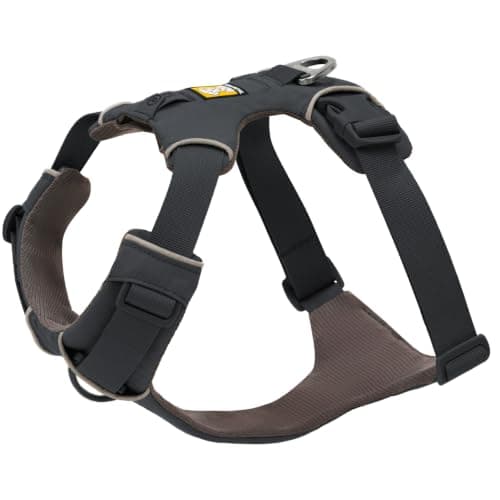
First, the honest part: the Front Range is a good harness, and the most common reason an owner replaces one is that the old one finally wore out. Ruffwear publishes a padded, foam-lined chest and belly panel, four points of adjustment, a reinforced front chest ring, an aluminum V-ring on the back and reflective trim, and the build is the part people come back for. Nothing below is an argument that the Front Range is bad. It is a shortlist for the three specific complaints that send people looking: it costs a premium-bracket price, it is a comfort harness first rather than a dedicated anti-pull tool, and it has no escape-security feature at all— no third strap, no martingale. Match your complaint to the pick that fixes it.

We do not print prices in the text of a page, because a number typed into a sentence goes stale the week after it is written and we would rather be useful than confident. The figure inside each buy button is pulled from the live listing with the date it was taken, so you can see for yourself which of these sits below the Front Range and by how much. In prose we stick to brackets: the Front Range and the Web Master are the two premium picks here, the Tru-Fit and the Freedom sit in the middle, and the rabbitgoo is the budget end.

How this is funded:we earn a commission if you buy through our links, at no extra cost to you. It never changes which product we recommend, and we’ll tell you plainly when we’d skip one. Full disclosure.

Quick picks

Ranked on design, published specs and buyer fit. Select a row to jump to the full write-up. We have not hand-tested these — here is exactly what we do instead.

#ProductBest forPrice
1
Kurgo Enhanced Strength Tru-Fit Harness

Kurgo Enhanced Strength Tru-Fit Harness

A rare crossover: a strong five-point harness with a front no-pull ring for walks AND a steel nesting buckle plus a seat-belt tether for the car. Kurgo crash-tested it themselves to FMVSS 213 — a real test, but not the same as an independent CPS certification.

Closest alternative overall
$39.95 · View on Amazon

Price as of November 12, 2026. #ad How we’re funded

2
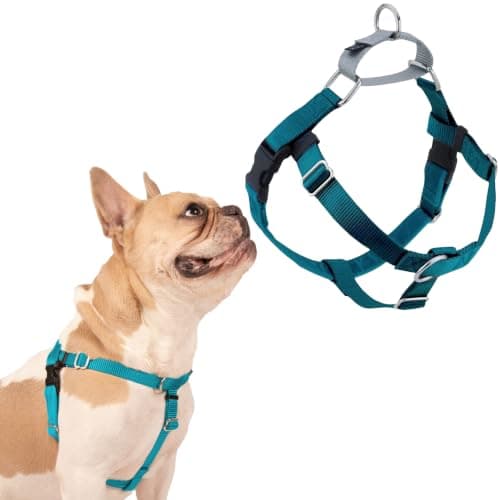
2 Hounds Design Freedom No-Pull Harness

2 Hounds Design Freedom No-Pull Harness

The most complete no-pull design here: two attachment points plus a patented martingale loop on the back that gently tightens when the dog surges, so it redirects without choking. Pair it with a double-ended leash and it does more than a plain front-clip.

Best if your dog still pulls
$34.98 · View on Amazon

Price as of November 12, 2026. #ad How we’re funded

3
Ruffwear Web Master Harness

Ruffwear Web Master Harness

The harness to buy when your dog backs out of everything else. A third strap behind the ribcage closes the gap a two-strap harness leaves, so there is no shape for the dog to reverse out of — and a padded top handle lets you hold on or lift.

Best if your dog backs out
$79.99 · View on Amazon

Price as of November 12, 2026. #ad How we’re funded

4
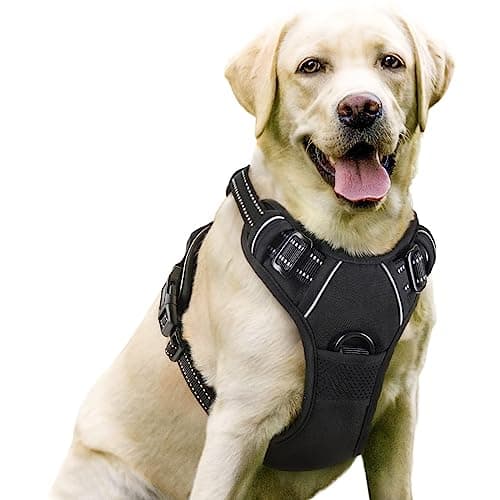
rabbitgoo No-Pull Dog Harness

rabbitgoo No-Pull Dog Harness

The best cheap no-pull harness: a padded vest with both a front and back clip and a top control handle, for a fraction of the premium brands. It won't last as long as a Ruffwear, but it does the same two jobs on day one.

Budget pick
$17.98 · View on Amazon

$20.9814% off

Price as of November 12, 2026. #ad How we’re funded

The picks in full

#1Closest alternative overall

Kurgo Enhanced Strength Tru-Fit Harness

A rare crossover: a strong five-point harness with a front no-pull ring for walks AND a steel nesting buckle plus a seat-belt tether for the car. Kurgo crash-tested it themselves to FMVSS 213 — a real test, but not the same as an independent CPS certification.

Strengths

  • Front-clip no-pull ring for walks, plus a car seat-belt tether included
  • Five adjustment points and a steel nesting buckle for strong dogs
  • Manufacturer crash-tested to the FMVSS 213 child-restraint standard

Trade-offs

  • Crash-tested by the brand, not certified by the independent Center for Pet Safety
  • Heavier and fiddlier to fit than a simple walking harness
TypeDual-purpose no-pull + car harness
AttachmentFront (chest) & back (D-ring)
FitsXS–XL
MaterialNylon webbing, steel nesting buckle
Crash testBrand crash-tested (FMVSS 213, Calspan, dogs to 75 lb) — not CPS-certified
Best forMedium–large, strong dogs

Specs read from the product listing, on July 22, 2026. “Not published” means the brand does not state that figure.

#2Best if your dog still pulls

2 Hounds Design Freedom No-Pull Harness

The most complete no-pull design here: two attachment points plus a patented martingale loop on the back that gently tightens when the dog surges, so it redirects without choking. Pair it with a double-ended leash and it does more than a plain front-clip.

Strengths

  • Front chest ring AND a back martingale loop — two ways to redirect one pull
  • Velvet-lined belly strap reduces the chafing that stops most dogs escaping mid-walk
  • Sized by exact chest girth, so the fit is precise rather than S/M/L guesswork

Trade-offs

  • Costs more than a basic front-clip harness
  • Gets the most out of a double-ended leash, which is an extra purchase
TypeDual-clip no-pull harness with martingale
AttachmentFront (chest) & back (martingale loop)
FitsXS–XL · sized by chest girth
MaterialNylon webbing, velvet-lined belly strap
Escape securityMartingale loop cinches gently on a surge
Best forAll sizes, especially strong pullers

Specs read from the product listing, on July 22, 2026. “Not published” means the brand does not state that figure.

#3Best if your dog backs out

Ruffwear Web Master Harness

The harness to buy when your dog backs out of everything else. A third strap behind the ribcage closes the gap a two-strap harness leaves, so there is no shape for the dog to reverse out of — and a padded top handle lets you hold on or lift.

Strengths

  • Three straps instead of two — removes the loop a dog backs out through
  • Padded top handle for close control or lifting over obstacles
  • Foam-lined, secure, and genuinely hard to escape when fitted snugly

Trade-offs

  • A security harness first — the chest loop redirects a pull, but a dedicated front-clip harness does it better
  • Premium price, and overkill for a dog that has never escaped
Type3-strap escape-proof harness with handle
AttachmentThree — back aluminum V-ring, back webbing loop, chest loop
FitsXXS–XL · sized by girth
MaterialFoam-lined nylon, three-strap body
Escape securityThird strap behind the ribs closes the escape gap
Best forAll sizes; the go-to for determined escapers

Specs read from the product listing, on July 22, 2026. “Not published” means the brand does not state that figure.

#4Budget pick

rabbitgoo No-Pull Dog Harness

The best cheap no-pull harness: a padded vest with both a front and back clip and a top control handle, for a fraction of the premium brands. It won't last as long as a Ruffwear, but it does the same two jobs on day one.

Strengths

  • Front and back clips plus a grab handle at a budget price
  • Four adjustment straps and a padded vest for an easy fit
  • Reflective stitching for low-light walks

Trade-offs

  • Buckles and webbing aren't as durable as premium harnesses
  • Strong, determined pullers can work the fit loose over time
TypeBudget dual-clip padded harness
AttachmentFront (chest) & back (D-ring)
FitsS–XL · adjustable, sized by girth
MaterialPadded nylon oxford, reflective stitching
Best forAll sizes; check the girth chart for toy breeds

Specs read from the product listing, on July 22, 2026. “Not published” means the brand does not state that figure.

What you are actually giving up

Before you switch, it is worth being precise about what the Front Range does well, because two of its three strengths are easy to replace and one is not.

Padding and pressure spreading.The foam-lined chest and belly panels are the reason a Front Range is comfortable on a long day, and they are also the reason it is forgiving of a slightly imperfect fit — a wide padded panel spreads load where a thin strap concentrates it. The rabbitgoo is the pick that comes closest on this for the least money, because it is also a padded vest rather than a webbing frame; what it gives up is longevity, not comfort on day one. If padding is the specific reason you are shopping, our padded harness roundup ranks on exactly that.

Adjustment range.Four adjustment points let you tune a harness to a dog whose chest and waist disagree with a size chart. This is the strength the Tru-Fit matches and then raises: Kurgo publishes five adjustment points, which is one more place to close a gap. For a barrel-chested or oddly proportioned dog, more adjustment beats more padding every time — see harnesses for deep-chested dogs for why.

Hardware you can trust.The aluminum back V-ring is the Front Range’s quiet advantage, and among the harnesses we rank it only appears on Ruffwear's own premium designs. The Tru-Fit answers it differently, with a steel nesting buckle rather than a plastic side-release at the load point — a different solution to the same worry. The rabbitgoo is the honest compromise here: it has the rings and the handle, and its buckles and webbing are not built to the same standard. That is the trade you are making, and it is a reasonable one for a moderate puller.

If the problem is the price

Go to the rabbitgoo. It is a padded vest with a front clip, a back D-ring, four adjustment straps, reflective stitching and a top control handle — which is to say it does the same two jobs the Front Range does, on day one, for a fraction of the outlay. Its weakness is predictable and worth stating: the buckles and webbing are not as durable, and a strong, determined puller can work the fit loose over time, so you will be re-tightening it more often and replacing it sooner.

The slightly cheaper option again is the PetSafe Easy Walk, which is a plain front-clip harness with a martingale chest ring and no back ring at all. It is the simplest thing that works and we recommend it often, but it is a step further from what a Front Range owner wants, because losing the back ring means losing the relaxed-walk option. If the Easy Walk is where you are headed anyway, read Easy Walk alternativesfirst — it is the same exercise run from the other end. For where each price bracket stops paying off at all, our guide to what a dog harness should cost lays the bands out, and no-pull harnesses under $50 is the shortlist that came in under that line at our last price check.

If the problem is that your dog still pulls

This is the complaint we take most seriously, because switching to another padded dual-clip harness will not fix it. The Front Range has onepoint of no-pull contact: a ring on the chest that rotates the dog’s shoulders back toward you when it surges. That mechanism works, and on a dog that leans its whole weight into the leash, one point of contact is sometimes not enough leverage.

The 2 Hounds Design Freedom adds a second. Its back strap is a martingale loopthat draws gently closed on the same surge, so the dog feels a consistent low-force cue from the chest and the back at once; clip a double-ended leash to both rings and you have steering instead of braking. It is also sized by exact chest girth rather than S/M/L, which matters more than it sounds — a front ring sitting two inches off-center does not redirect anything. The trade-offs are real: it is less padded than a Front Range apart from the velvet-lined belly strap, and it gets the most out of a double-ended leash, which is a second purchase. We compare the two head to head in Front Range vs Freedom, and double-ended leash training covers handling two clips without tangling yourself.

One caveat we will keep repeating: no harness trains a dog. A front clip or a martingale manages pulling so today’s walk is survivable; the fix is reward-based loose-leash training, and if you have tried a no-pull harness and seen nothing change, work through what to do when a no-pull harness is not working before you spend again. Nine times in ten it is fit, not the harness.

If the problem is that your dog backs out of it

Then you are not shopping for a no-pull harness at all, and this is the one complaint the Front Range genuinely cannot answer: it is a two-strap design with no escape feature, which means there is a loop a determined dog can reverse through. Padding does not help. More adjustment helps a little. A different geometry helps a lot.

The Web Master is Ruffwear’s own answer and the pick we stand behind for a committed escaper: a third strap behind the ribcage closes the gap a two-strap harness leaves, so there is no shape to back out of, and the padded top handle gives you something to hold when a dog is already half out. Being straight about its weakness: it is a security harness first, its chest loop redirects a pull less effectively than a dedicated front clip, and it is the most expensive pick on this page. If your dog pulls andescapes — the combination is more common than either alone — read harnesses for dogs that pull and escape, which ranks the designs that do both jobs at once. The whole category sits at escape-proof harnesses, and Front Range vs Web Master settles the in-brand question directly.

If you want one harness for walks and the car

This is the Tru-Fit’s strongest argument and the reason it leads this page. Kurgo crash-tested it to the FMVSS 213 child-restraint standard (at Calspan, with dogs to 75 lb) and includes a seat-belt tether in the box, so the harness that redirects a pull on the sidewalk is also the one that restrains the dog on the drive home. Be clear about what that claim is and is not: it is a manufacturer crash test, not an independent certification from the Center for Pet Safety, and the only CPS-certified harness we rank is the Sleepypod Clickit Sport. The Front Range makes no crash claim at all, which is the honest comparison.

The cost of the crossover is weight and fiddle: five adjustment points and a steel buckle make for a heavier harness and a longer first fitting than a simple walking vest. If the car is genuinely half of what you need, harnesses for walking and driving is the dedicated roundup, and Ruffwear vs Kurgocompares the two brands’ philosophies rather than two models.

How to choose between these four

  • You liked the Front Range and want the same job done for less: Kurgo Tru-Fit. More adjustment, stronger buckle, car tether included.
  • Your dog pulls hard and the chest ring is not enough: 2 Hounds Design Freedom, ideally with a double-ended leash.
  • Your dog has backed out of a harness, ever: Ruffwear Web Master. Security first, and a handle.
  • You want to spend as little as possible: rabbitgoo. Padded vest, both rings, a handle, and a shorter life.
  • You want the Front Range:buy the Front Range. If the build quality is the thing you value and the price is not the obstacle, there is no clever reason to talk yourself out of it — read our full review and be done.

Whatever you switch to, fit decides it

A harness you measured for and tightened properly outperforms a more expensive one fitted by eye, and the single most common reason an owner concludes a harness “doesn’t work” is a chest strap sitting too high, too low or too slack. Measure the girth behind the front legs, use the brand’s published chart rather than its S/M/L label, and tighten to a two-finger fit at every strap — our harness sizing guide walks through it with the numbers, and how tight a dog harness should be covers the two-finger check specifically. Then watch your dog walk in it: a free, even gait means the straps are clear of the shoulder joints, and a shortened stride means they are not — Y-shaped vs H-shaped harnesses explains which geometry gives you a head start on that.

Narrow it down

Frequently asked questions

What is the best alternative to the Ruffwear Front Range?

For most people, the Kurgo Enhanced Strength Tru-Fit. It keeps the front chest ring and the generous adjustment range that make a Front Range worth owning — Kurgo publishes five adjustment points — and adds a steel nesting buckle plus a seat-belt tether, below the Front Range's price bracket. If your specific complaint is that your dog still pulls, the 2 Hounds Design Freedom is the better answer, because it adds a second point of contact rather than a different vest.

Is there a cheaper harness that does what the Front Range does?

The rabbitgoo No-Pull is the closest cheap equivalent: a padded vest with a front clip, a back D-ring, four adjustment straps and a top handle, which is the same feature list at the budget end. What you give up is durability — its buckles and webbing are not built to the same standard, and a strong puller can work the fit loose over time. For a moderate puller it is a sensible trade; for a 70 lb dog that leans into the leash, it is not.

Does the Ruffwear Front Range stop a dog pulling?

It helps, but it is a comfort harness with a front clip rather than a dedicated anti-pull tool. The front chest ring redirects a surge from one point of contact, which is enough for many dogs and not enough for a determined one. A harness with two points — a chest ring plus a back martingale loop, like the 2 Hounds Design Freedom — gives you more leverage, and reward-based loose-leash training is the only thing that changes the behavior itself.

Which Front Range alternative is best for a dog that escapes?

The Ruffwear Web Master. The Front Range is a two-strap harness with no escape feature, so a dog that reverses out has a loop to reverse through; the Web Master adds a third strap behind the ribcage that removes that shape, plus a padded handle for when a dog is already half out. If your dog pulls as well as escaping, our roundup of harnesses for dogs that pull and escape ranks the designs that do both.

Is the Ruffwear Front Range worth the money?

If you want one hard-wearing harness for an active dog and the premium price is not the obstacle, yes — the padded panels, four-point adjustment and aluminum back V-ring are why owners replace a worn Front Range with another Front Range. It is worth less to you if your dog pulls hard enough to need two points of contact, if it backs out of harnesses, or if you need a crash-tested restraint for the car, because those are three jobs it was not built for.

Sources

Keep reading