The Gentle Leader gives you more control per dollar than anything else in dog walking — and plenty of dogs will not accept a strap over the nose. These are the harnesses and halters that come closest without one.
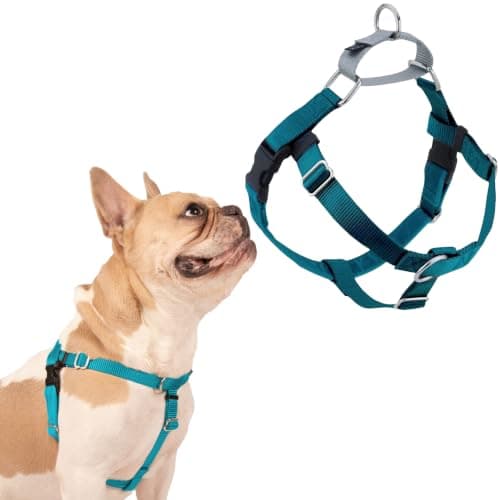
The closest alternative is the 2 Hounds Design Freedom — it is for the owner who wants Gentle-Leader-level control but whose dog will not tolerate anything across its muzzle, because the front chest ring plus the back martingale loop redirect a surge from two points at once rather than one. If the problem is the fit of the nose loop rather than the idea of a halter, stay with a halter and try the Halti Headcollar, which runs a padded nose band and a different strap geometry. The budget pick among the alternatives is the rabbitgoo No-Pull — the cheapest harness here with a genuine front clip, a padded vest and a top handle.
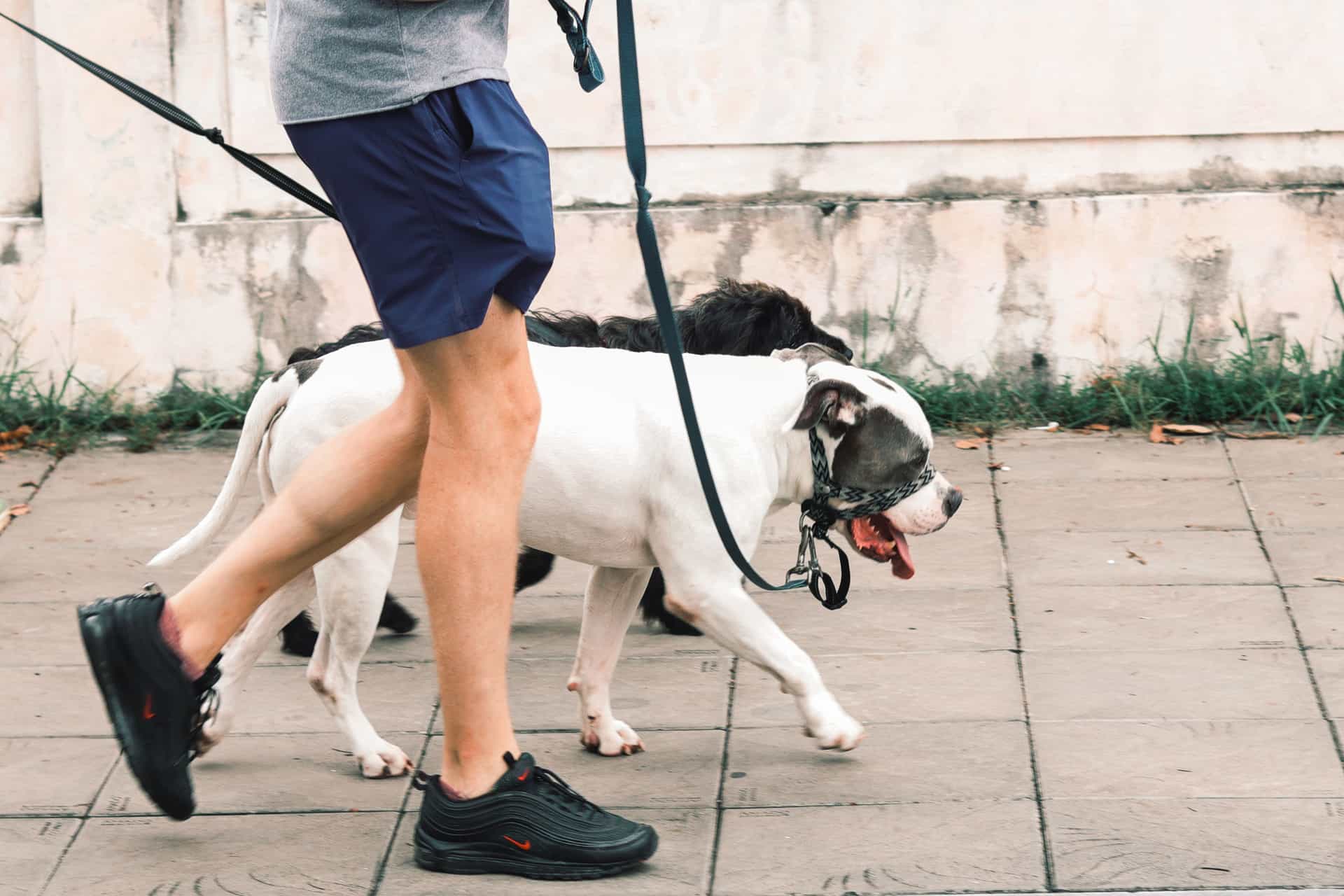
First, what the Gentle Leader is actually known for, because the alternatives have to be measured against it rather than against a straw man. It is a head halter: a strap behind the ears and a loop over the muzzle, with the leash clipping under the chin. PetSafe’s own product support documentation describes it as working on the principle that where the head goes, the body follows, and that is not marketing — steering a dog by the head takes a fraction of the force that steering it by the chest does. For a 90 lb dog that lunges at other dogs, there is nothing in this category that gives a physically smaller handler more control for the money. That is the bar.
So why do people search for an alternative? Almost never because it fails to work. Usually because the dog paws at the nose loop, rubs it along the ground, or shuts down and refuses to walk; sometimes because the owner dislikes how it looks or gets asked whether it is a muzzle (it is not — the dog can open its mouth, pant, eat and drink freely in it). Occasionally because the dog is brachycephalic and there is simply not enough muzzle for the loop to sit on. Each of those points at a different replacement, which is what the rest of this page sorts out. If you have not given the halter a proper introduction yet, do that first — our head halter introduction guide covers the desensitizing sequence, and a lot of “my dog hates it” is really “it went on too fast.”
How this is funded:we earn a commission if you buy through our links, at no extra cost to you. It never changes which product we recommend, and we’ll tell you plainly when we’d skip one. Full disclosure.
Quick picks
Ranked on design, published specs and buyer fit. Select a row to jump to the full write-up. We have not hand-tested these — here is exactly what we do instead.
#
Product
Best for
Price
1
2 Hounds Design Freedom No-Pull Harness
The most complete no-pull design here: two attachment points plus a patented martingale loop on the back that gently tightens when the dog surges, so it redirects without choking. Pair it with a double-ended leash and it does more than a plain front-clip.
The main alternative to the Gentle Leader, with a padded nose band some dogs tolerate better and a safety link that clips to the collar as a backup. Same head-steering principle; the difference is fit and which one your dog will accept.
The simplest front-clip harness that works: the leash clips to a martingale ring on the chest, so a pull turns the dog back toward you instead of letting it lean into the weight. Cheap, everywhere, and easy to fit — the honest starting point.
The best cheap no-pull harness: a padded vest with both a front and back clip and a top control handle, for a fraction of the premium brands. It won't last as long as a Ruffwear, but it does the same two jobs on day one.
The most complete no-pull design here: two attachment points plus a patented martingale loop on the back that gently tightens when the dog surges, so it redirects without choking. Pair it with a double-ended leash and it does more than a plain front-clip.
Strengths
+Front chest ring AND a back martingale loop — two ways to redirect one pull
+Velvet-lined belly strap reduces the chafing that stops most dogs escaping mid-walk
+Sized by exact chest girth, so the fit is precise rather than S/M/L guesswork
Trade-offs
−Costs more than a basic front-clip harness
−Gets the most out of a double-ended leash, which is an extra purchase
Type
Dual-clip no-pull harness with martingale
Attachment
Front (chest) & back (martingale loop)
Fits
XS–XL · sized by chest girth
Material
Nylon webbing, velvet-lined belly strap
Escape security
Martingale loop cinches gently on a surge
Best for
All sizes, especially strong pullers
Specs read from the product listing, on July 22, 2026. “Not published” means the brand does not state that figure.
#2Best if you want a different head halter
The Company of Animals Halti Headcollar
The main alternative to the Gentle Leader, with a padded nose band some dogs tolerate better and a safety link that clips to the collar as a backup. Same head-steering principle; the difference is fit and which one your dog will accept.
Strengths
+Padded nose band is more comfortable for some dogs
+Includes a safety link to the collar as a backup connection
+Same head-control leverage as other halters
Trade-offs
−Needs the same patient introduction as any head halter
−Fit varies by muzzle shape — some dogs do better on the Gentle Leader
Type
Head halter (padded nose band)
Attachment
Under-chin ring + collar safety link
Fits
Sizes 0–5
Material
Nylon straps, padded nose band
Best for
Medium–large lungers; not brachycephalic breeds
Specs read from the product listing, on July 22, 2026. “Not published” means the brand does not state that figure.
#3Simplest switch, same maker
PetSafe Easy Walk Harness
The simplest front-clip harness that works: the leash clips to a martingale ring on the chest, so a pull turns the dog back toward you instead of letting it lean into the weight. Cheap, everywhere, and easy to fit — the honest starting point.
Strengths
+Front chest ring redirects pulling with no training curve
+Inexpensive and stocked almost everywhere
+Quick-snap shoulder and belly buckles make it fast to put on
Trade-offs
−Sits across the shoulders, which can loosen and rotate on deep-chested dogs
−Back has no attachment point — it is a front-clip-only tool
Type
Front-clip no-pull harness (chest ring)
Attachment
Front (chest martingale ring)
Fits
Petite–XL
Material
Nylon webbing
Best for
All sizes; best on average-build dogs
Specs read from the product listing, on July 22, 2026. “Not published” means the brand does not state that figure.
#4Budget pick
rabbitgoo No-Pull Dog Harness
The best cheap no-pull harness: a padded vest with both a front and back clip and a top control handle, for a fraction of the premium brands. It won't last as long as a Ruffwear, but it does the same two jobs on day one.
Strengths
+Front and back clips plus a grab handle at a budget price
+Four adjustment straps and a padded vest for an easy fit
+Reflective stitching for low-light walks
Trade-offs
−Buckles and webbing aren't as durable as premium harnesses
−Strong, determined pullers can work the fit loose over time
Type
Budget dual-clip padded harness
Attachment
Front (chest) & back (D-ring)
Fits
S–XL · adjustable, sized by girth
Material
Padded nylon oxford, reflective stitching
Best for
All sizes; check the girth chart for toy breeds
Specs read from the product listing, on July 22, 2026. “Not published” means the brand does not state that figure.
Match the alternative to your actual reason
“My dog paws at it constantly.” Go to a harness. The 2 Hounds Freedom is the one that loses the least control in the swap, because two attachment points partly make up for the lost leverage of the head.
“The nose loop rides into his eyes / slips off.”That is a fit problem, and a different halter can solve it. The Halti’s padded nose band and strap layout sit differently on a long or a blocky muzzle.
“I want the simplest possible replacement.”The PetSafe Easy Walk — same manufacturer, same no-pull principle, but the martingale ring sits on the chest. Most dogs accept it on the first walk with no introduction at all.
“My dog is a pug, bulldog or other flat-faced breed.”A head halter is the wrong tool and so is anything that loads the throat. Use a well-padded front-clip vest — see harnesses for bulldogs and harnesses for pugs.
“I just want to spend less.” rabbitgoo. Be clear-eyed that you are trading control for price: a budget front-clip vest manages a moderate puller well and a committed lunger less well.
What you give up when you drop the head halter
Leverage, and it is worth being honest about the size of it. A halter acts on the head, which is the lightest and most steerable part of the dog; a harness acts on the chest, which is where the dog’s strength is. On a dog that is genuinely stronger than its handler, no harness fully replaces a halter — our my dog is stronger than me guide takes that case seriously rather than pretending gear solves it.
What you gain is tolerance, and tolerance is not a small thing. Gear the dog fights is gear that comes off after a week, and a front-clip harness used on every walk beats a head halter abandoned in a drawer. If you want both, the common middle ground is a two-point harness with a double-ended leash: it gives you a steering response much closer to a halter than a single-clip harness does, which is exactly why the 2 Hounds Freedom is our first pick here. Our head halter vs harness guide works the comparison through properly, and do head halters hurt dogsaddresses the safety question honestly, including the AVSAB’s position on low-aversive equipment.
If the real problem is reactivity, not pulling
A lot of Gentle Leader searches start with a dog that barks and lunges at other dogs rather than one that simply tows you to the park. Those need a different page: a halter or two-point harness is the control layer, but the gear that matters is whatever lets you create distance quickly and keep the dog under threshold. Start with reactive-dog gear, and if the dog also lunges at people, head halters for reactive dogs compares the Gentle Leader and the Halti on that specific job.
For the dog that leans its whole weight into the leash every walk — the harnesses with the most redirection, the strongest hardware and a fit that won't creep under load.
The Easy Walk is the cheapest front-clip that works, and its two-strap chest piece is also the one most likely to rotate. The harnesses that fix that, cheaper and dearer.
The two tools for a strong puller or a reactive dog, compared on control, acceptance and safety — when a head halter earns its keep and when a harness is the better call.
A Gentle Leader or Halti steers the head, which makes owners worry it's harsh. What a head halter really does, the real risks, and how to use one so it never hurts.
What is the closest thing to a Gentle Leader without a nose loop?+
A two-point harness used with a double-ended leash — the 2 Hounds Design Freedom is the pick. Clipping to both the front chest ring and the back martingale loop gives you a steering response, not just a braking one, which is the part of head-halter control a single-clip harness loses. It will still take more hand strength than the halter did.
Is the Halti the same thing as a Gentle Leader?+
Both are head halters that clip under the chin and work on the same principle, but the strap geometry and nose band differ — the Halti uses a padded nose band and a different fit path. If your dog rejected the Gentle Leader because of how the loop sat rather than because it was a halter at all, the Halti is the sensible second try.
Why does my dog hate the Gentle Leader?+
Most often because it went on too quickly. A head halter needs a few short sessions pairing the loop with food before any walking happens; put straight on and attached to a leash, almost any dog paws and rubs. Work through our head halter introduction guide first — and if the dog still objects after a patient introduction, switch to a two-point harness.
Is a Gentle Leader a muzzle?+
No. The loop sits over the muzzle but does not hold the mouth closed — a dog in a head halter can open its mouth, pant, drink, eat treats and bark. It provides no bite protection at all, which is why a dog that needs a bite guard needs a basket muzzle instead; those are a different category of equipment.