LEASH LOAM

Best No-Pull Harnesses for Strong, Determined Pullers

Some dogs don't tug at the leash — they lean their whole weight into it, every single walk. These are the no-pull harnesses with the most redirection, the strongest hardware and a fit that won't creep loose under a hard, sustained pull.

By Stephen V.Last verified How we pick

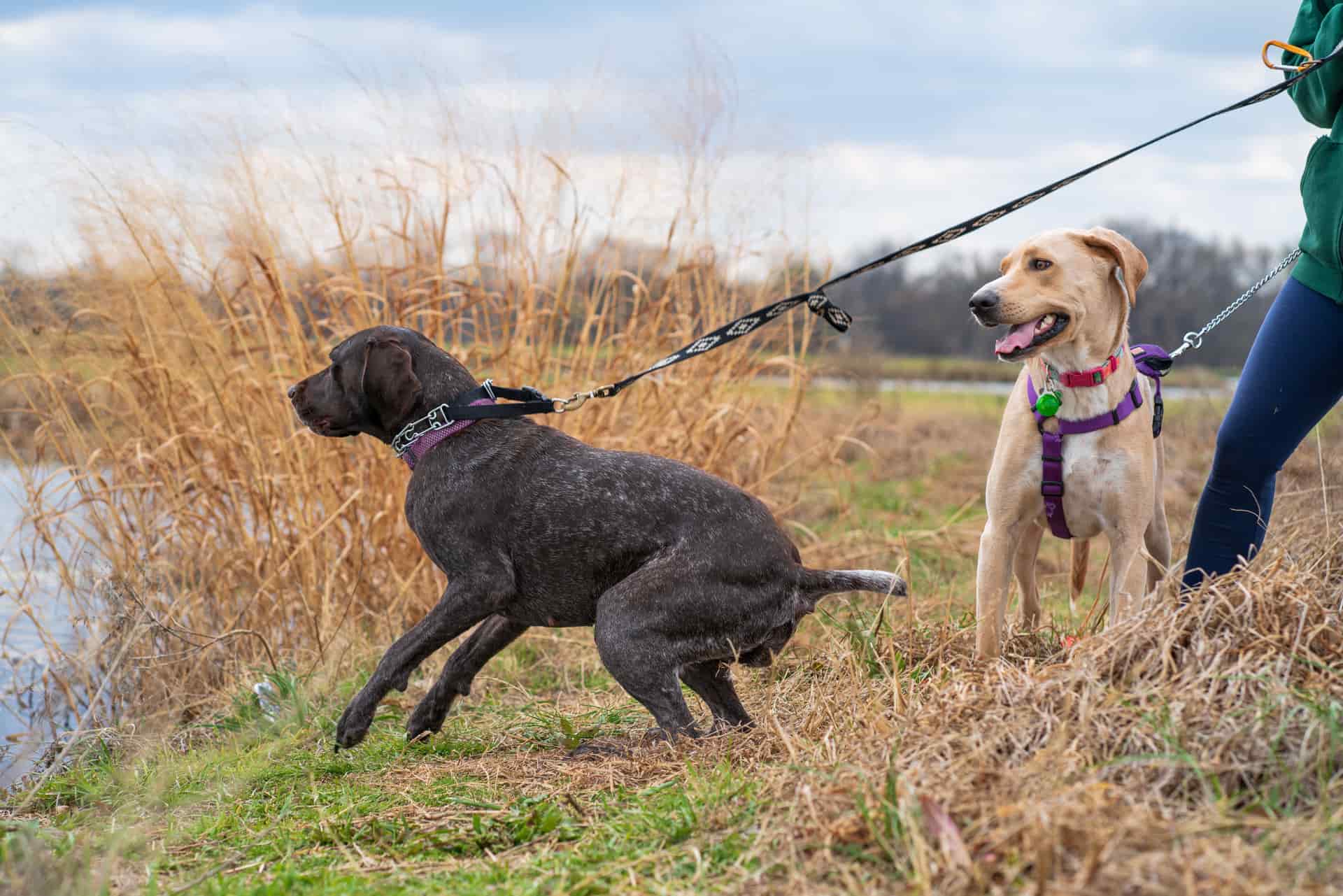
There’s a difference between a dog that tugs and a dog that pulls. A tugger tests the leash and eases off. A determined puller sets its shoulders, drops its weight, and tows you down the block like a sled dog — and it does it whether it’s a 90-pound shepherd or a 25-pound terrier with something to prove. Strength here isn’t about the dog’s size; it’s about how committed the lean is. On a dog like that, the wrong harness fails in two predictable ways: a back-clip design just gives the dog a better handle to haul against, and a loose or lightweight harness creeps and rotates until the fit is gone and the dog is pulling freely again halfway through the walk.

So we rank these on the three things that actually matter for a hard puller: where the leash redirects from (a chest ring, ideally with a second point of control), how strong the hardware is(buckles and webbing that won’t flex or pop under a sustained load), and how well the fit stays put(adjustment points and shape that resist the slow creep loose). A front clip catches the surge early and turns it into a turn instead of forward progress; a martingale loop or a five-point build adds the muscle to hold that up walk after walk. We haven’t hauled on these in a lab — we read the published specs and the buckle and strap details, and reasoned from how each design behaves when a dog throws its full weight forward.

How this is funded:we earn a commission if you buy through our links, at no extra cost to you. It never changes which product we recommend, and we’ll tell you plainly when we’d skip one. Full disclosure.

Quick picks

Ranked on design, published specs and buyer fit. Select a row to jump to the full write-up. We have not hand-tested these — here is exactly what we do instead.

#ProductBest forPrice
1
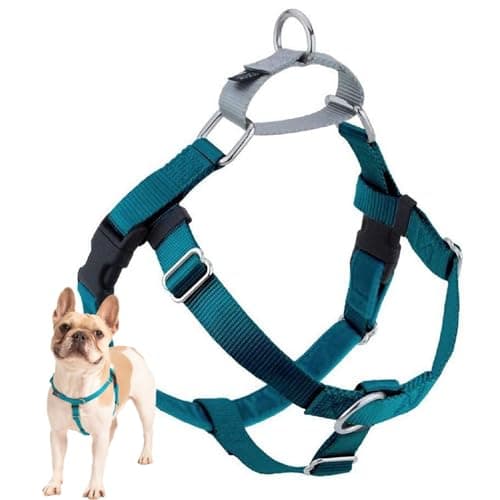
2 Hounds Design Freedom No-Pull Harness

2 Hounds Design Freedom No-Pull Harness

The most complete no-pull design here: two attachment points plus a patented martingale loop on the back that gently tightens when the dog surges, so it redirects without choking. Pair it with a double-ended leash and it does more than a plain front-clip.

Best overall for a hard puller
$34.98 · View on Amazon

Price as of August 5, 2026. #ad How we’re funded

2
Kurgo Enhanced Strength Tru-Fit Harness

Kurgo Enhanced Strength Tru-Fit Harness

A rare crossover: a strong five-point harness with a front no-pull ring for walks AND a steel nesting buckle plus a seat-belt tether for the car. Kurgo crash-tested it themselves to FMVSS 213 — a real test, but not the same as an independent CPS certification.

Strongest hardware (and car crossover)
$26.99 · View on Amazon

Price as of August 5, 2026. #ad How we’re funded

3
Ruffwear Front Range Harness

Ruffwear Front Range Harness

The everyday harness to buy if your dog is active: a padded vest with a reinforced front chest clip for no-pull walks and an aluminum back V-ring for relaxed ones. Not the cheapest, but the build quality is the reason people replace it with the same thing.

Best build and non-rotating fit
$59.99 · View on Amazon

Price as of August 5, 2026. #ad How we’re funded

4
rabbitgoo No-Pull Dog Harness

rabbitgoo No-Pull Dog Harness

The best cheap no-pull harness: a padded vest with both a front and back clip and a top control handle, for a fraction of the premium brands. It won't last as long as a Ruffwear, but it does the same two jobs on day one.

Best on a budget
$15.97 · View on Amazon

$20.9824% off

Price as of August 5, 2026. #ad How we’re funded

The picks in full

#1Best overall for a hard puller

2 Hounds Design Freedom No-Pull Harness

The most complete no-pull design here: two attachment points plus a patented martingale loop on the back that gently tightens when the dog surges, so it redirects without choking. Pair it with a double-ended leash and it does more than a plain front-clip.

Strengths

  • Front chest ring AND a back martingale loop — two ways to redirect one pull
  • Velvet-lined belly strap reduces the chafing that stops most dogs escaping mid-walk
  • Sized by exact chest girth, so the fit is precise rather than S/M/L guesswork

Trade-offs

  • Costs more than a basic front-clip harness
  • Gets the most out of a double-ended leash, which is an extra purchase
TypeDual-clip no-pull harness with martingale
AttachmentFront (chest) & back (martingale loop)
FitsXS–XL · sized by chest girth
MaterialNylon webbing, velvet-lined belly strap
Escape securityMartingale loop cinches gently on a surge
Best forAll sizes, especially strong pullers

Specs read from the product listing, on July 22, 2026. “Not published” means the brand does not state that figure.

#2Strongest hardware (and car crossover)

Kurgo Enhanced Strength Tru-Fit Harness

A rare crossover: a strong five-point harness with a front no-pull ring for walks AND a steel nesting buckle plus a seat-belt tether for the car. Kurgo crash-tested it themselves to FMVSS 213 — a real test, but not the same as an independent CPS certification.

Strengths

  • Front-clip no-pull ring for walks, plus a car seat-belt tether included
  • Five adjustment points and a steel nesting buckle for strong dogs
  • Manufacturer crash-tested to the FMVSS 213 child-restraint standard

Trade-offs

  • Crash-tested by the brand, not certified by the independent Center for Pet Safety
  • Heavier and fiddlier to fit than a simple walking harness
TypeDual-purpose no-pull + car harness
AttachmentFront (chest) & back (D-ring)
FitsXS–XL
MaterialNylon webbing, steel nesting buckle
Crash testBrand crash-tested (FMVSS 213, Calspan) — not CPS-certified
Best forMedium–large, strong dogs

Specs read from the product listing, on July 22, 2026. “Not published” means the brand does not state that figure.

#3Best build and non-rotating fit

Ruffwear Front Range Harness

The everyday harness to buy if your dog is active: a padded vest with a reinforced front chest clip for no-pull walks and an aluminum back V-ring for relaxed ones. Not the cheapest, but the build quality is the reason people replace it with the same thing.

Strengths

  • Front and back clips — no-pull when you need it, back-clip when you don't
  • Padded, foam-lined chest and belly panels spread pressure comfortably
  • Four adjustment points and reflective trim; genuinely hard-wearing

Trade-offs

  • Priced well above budget harnesses
  • The front clip helps but this is a comfort harness first, not a dedicated anti-pull tool
TypeEveryday dual-clip padded harness
AttachmentFront (chest) & back (aluminum V-ring)
FitsXXS–XL · sized by girth
MaterialPadded nylon, foam-lined panels, reflective trim
Best forAll sizes; a favorite for active medium–large dogs

Specs read from the product listing, on July 22, 2026. “Not published” means the brand does not state that figure.

#4Best on a budget

rabbitgoo No-Pull Dog Harness

The best cheap no-pull harness: a padded vest with both a front and back clip and a top control handle, for a fraction of the premium brands. It won't last as long as a Ruffwear, but it does the same two jobs on day one.

Strengths

  • Front and back clips plus a grab handle at a budget price
  • Four adjustment straps and a padded vest for an easy fit
  • Reflective stitching for low-light walks

Trade-offs

  • Buckles and webbing aren't as durable as premium harnesses
  • Strong, determined pullers can work the fit loose over time
TypeBudget dual-clip padded harness
AttachmentFront (chest) & back (D-ring)
FitsS–XL · adjustable, sized by girth
MaterialPadded nylon oxford, reflective stitching
Best forAll sizes; check the girth chart for toy breeds

Specs read from the product listing, on July 22, 2026. “Not published” means the brand does not state that figure.

Two points of control beat one

A single front clip redirects a pull, but a genuinely strong dog can still power sideways and drag on. That’s why our top pick for a determined puller is the 2 Hounds Freedom: it pairs a front chest ring with a patented martingale loop on the back that gently cinches when the dog surges, so it redirects the motion instead of merely resisting it. Run a double-ended leashto both points and you get real steering — the setup that interrupts a lean before it builds into a full haul. The honest trade-offs: it’s mid-priced rather than budget, and it gets the most out of a double-ended leash that’s an extra purchase. It’s also sized by exact chest girth, which is exactly what you want on a strong dog — a precise fit is what keeps the harness from creeping. Whichever you choose, remember the harness manages the pull; reward-based training is what teaches the dog to stop leaning in the first place.

Hardware and a fit that won’t creep

A hard puller finds the weak point in cheap gear fast — a thin buckle, a strap that slips its adjuster, a panel that flexes. If your dog is hard on equipment or rides in the car too, the Kurgo Tru-Fit is the heavy-duty pick: five adjustment points and a steel nesting bucklebuilt for strong dogs, plus a seat-belt tether so it doubles as a car harness. Be precise on the wording, though — Kurgo crash-tested it themselves to the FMVSS 213 child-restraint standard, which is a real test but not an independent certification from the Center for Pet Safety; our car-safety guide covers the certified options. For everyday walks where you want the fit to stay honest, the Ruffwear Front Rangeis the build pick: four adjustment points let you lock it to the dog’s shape so it doesn’t rotate, and padded, foam-lined panels spread the force of a lean across the body instead of concentrating it. Its honest caveat is that it’s a comfort harness first — the front clip helps, but the very hardest pullers get more dedicated leverage from the Freedom’s martingale.

Which pick for which puller

If your dog leans its full weight into every walk, start with the Freedom and a double-ended leash — two points of control is the thing that actually interrupts a committed haul. If it’s tough on gear or spends real time in the car, the Kurgo’s steel buckle and five-point build are the durable crossover — just buy it clear-eyed about the brand-tested-not-certified distinction. If you want a harness whose fit won’t drifton a strong, active dog, the Front Range’s multi-point adjustment and padded panels are the everyday buy. And if budget is tight, the rabbitgoogives you a front-and-back harness with a grab handle for very little — it does the job on day one, but expect a powerful dog to work the fit looser over time and to need replacing sooner than a premium vest. Whatever you pick, measure the chest girth at the widest point behind the front legs and buy to the chart, then get the two-finger fit right with our harness sizing guide— on a strong dog, a snug fit is half the harness’s job. And if the harness you already own keeps letting the dog pull, our guide to why a no-pull harness isn’t working walks through the usual culprits.

More for a powerful dog

Frequently asked questions

What's the best no-pull harness for a really strong dog?

For most strong, determined pullers the 2 Hounds Freedom is the top pick: a front chest ring plus a back martingale loop gives two points of redirection on a double-ended leash, which catches a hard lean early and turns it into a turn. If your dog is also hard on gear or rides in the car, the Kurgo Tru-Fit's steel buckle and five-point build are a tougher crossover. Pair either with reward-based training rather than relying on the harness alone.

Why does my dog still pull with a no-pull harness on?

Usually one of three things: the leash is on the back ring instead of the chest, the fit has crept loose so the harness rotates, or there's no training behind the gear. A strong dog especially will work a loose fit until it can lean freely again. Clip to the front ring, re-check the two-finger fit every walk, and pair the harness with reward-based loose-leash work. Our guide to why a no-pull harness isn't working covers each cause.

Does a bigger dog need a stronger harness?

It needs stronger hardware and a fit that won't creep, but strength of pull matters more than raw size — a committed 30-pound puller can loosen a cheap harness as fast as a big one. Look for reinforced buckles (a steel nesting buckle on the Kurgo, for instance), several adjustment points to lock the fit, and a chest or dual-clip attachment so the dog's weight is redirected rather than handed a straight-line handle to haul against.

Is a front-clip or dual-clip harness better for a hard puller?

Dual-clip, if the dog really leans in. A front clip alone redirects the pull, but a dual-clip harness like the Freedom adds a back martingale loop so you can run a double-ended leash to both points and steer from two places at once. That's more control than a single ring gives, which is exactly what a determined puller needs while you do the loose-leash training that actually stops the pulling.

Sources

Keep reading