Why the coat drives the choice
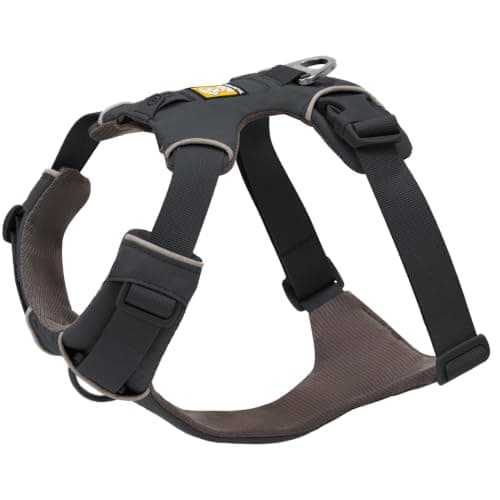
For a Doodle, the harness that prevents matting is the one you’ll actually keep using, so our top pick is the Ruffwear Front Range: its padded, foam-lined chest and belly panelsare wide and smooth, spreading contact over a broad area rather than pressing a thin strap into the curls, and its four adjustment points let you tune the fit so it sits still instead of sawing back and forth. It gives you a front chest clip for no-pull walks and a back ring for relaxed ones. The honest caveats are that it’s priced well above budget vests and it’s a comfort harness first — the front clip helps a moderate puller, but a truly relentless one may want more dedicated leverage. Whatever you buy, brush out the chest and armpits after walks and take the harness off at home; a coat that mats does it fastest under a strap left on all day, which our can a dog wear a harness all day guide gets into.
If your Doodle is a real puller
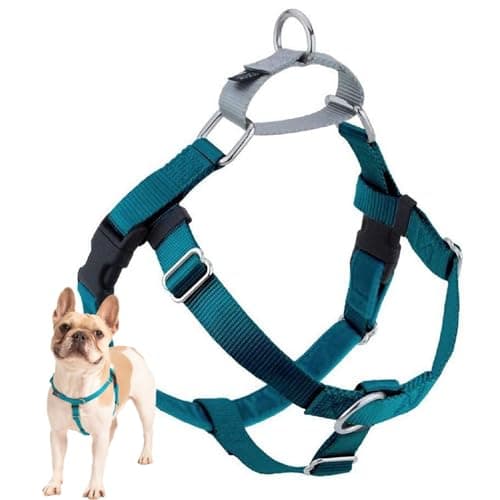
Plenty of Doodles pull hard — the retriever and poodle behind them are both driven, trainable and strong. For the committed puller, the 2 Hounds Freedom is the most complete anti-pull design here: a front chest ring plus a back martingale loop that cinches gently on a surge, giving two points of redirection on a double-ended leash. It’s sized by exact chest girth — useful on a Doodle, whose fluffy coat makes eyeballing a size hopeless — and its belly strap is velvet-lined, which is kinder to a coat than bare webbing. The trade-offs: it’s mid-priced and works best with a double-ended leash you may need to buy. On a tighter budget, the rabbitgoogives you a padded front-and-back vest with a grab handle for a fraction of the price; it does the two jobs on day one, though a strong dog can work its fit loose over time and its webbing isn’t premium-grade. The simplest option, the PetSafe Easy Walk, is a straightforward front-clip that buckles on without going over the head — just note its narrower straps sit across the shoulders and can rub a curly coat more than a padded vest.
Getting the fit right on a fluffy dog
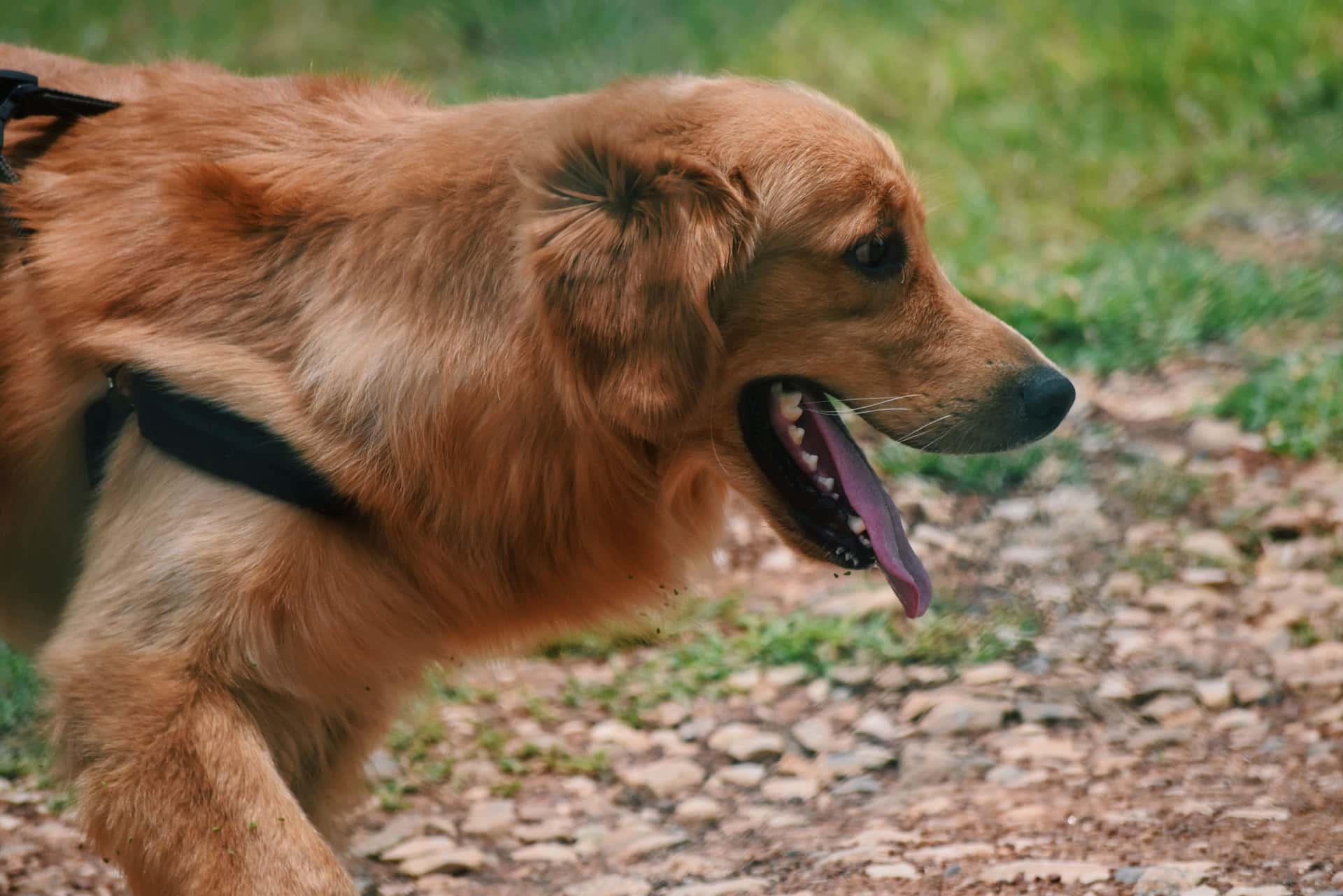
A coat this thick hides the fit, which is the single most common mistake with a Doodle harness. Owners size up because the dog looks big, then the harness rides loose on the actual body underneath and the dog pulls freely (and, on an escaper, can back out). Measure the chest girth against the skinat the widest point just behind the front legs, parting the coat if you have to, and buy to the brand’s chart by that number rather than by weight or by how floofy the dog looks. Once it’s on, you should still be able to slide two flat fingers under any strap — snug on the body, not snug on the coat. Our harness sizing guide walks through the measurement, and our rubbing and chafing guidecovers where each strap should sit to keep a coat matt-free. And remember the harness only manages the walk — reward-based training is what teaches a friendly Doodle to greet without towing you there.