LEASH LOAM

Best No-Pull Harnesses for Border Collies

The smartest, most tireless herding breed is also sensitive to pressure and quick to spook. These are the no-pull harnesses that redirect gently, fit securely, and suit a Border Collie's athletic, reactive-to-motion nature.

By Stephen V.Last verified How we pick

The Border Collie is the sharpest, most driven working dog there is, and that intelligence cuts both ways on a leash. A bored or under-exercised Collie invents a job— stalking a jogger, fixating on a car, towing you toward the next thing to control — and because the breed is medium-sized but startlingly strong and quick, that pull arrives faster than you expect. The harness’s core job is the usual one: redirect a surge from the chest so it turns the dog back toward you instead of feeding the forward drive. But two things about this breed change how we rank the options.

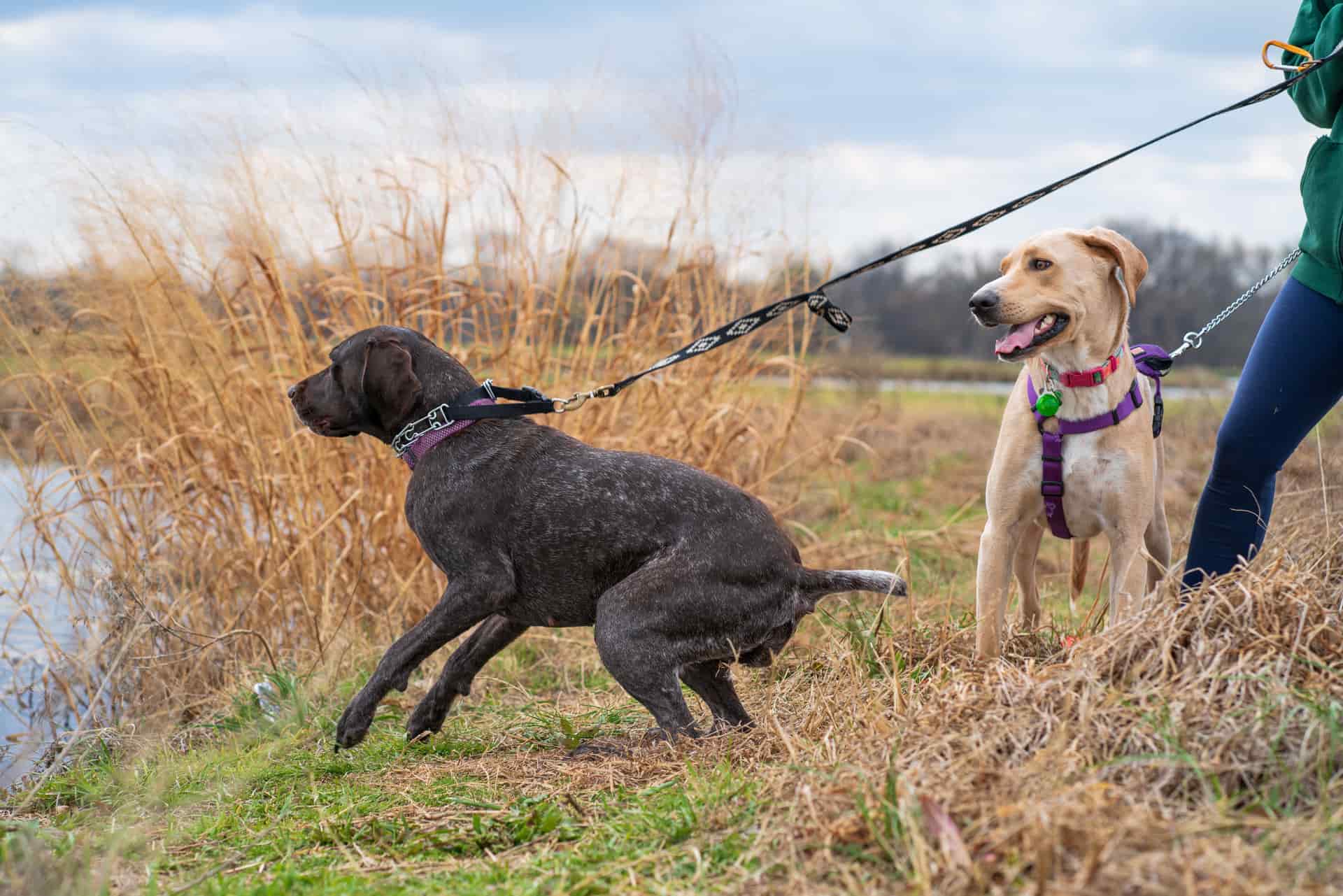
First, a Border Collie is sensitive to pressure and quick to spook. A sudden noise or a strange dog can trigger a hard, panicked lunge — and a dog that throws itself sideways can back out of a loose harness and bolt, which is a real danger for a breed this reactive to motion. So a secure, non-rotating fit matters more here than on a placid dog; if your Collie has ever reversed out, read our escape-proof harnesses too. Second, a pressure-sensitive dog does better with gentle redirection than blunt force— a martingale loop that cinches softly beats anything that clamps. We weight this list toward gentle chest redirection, a snug secure fit and long-day comfort for an athletic dog. We haven’t trialed these on a herding field; we read the published specs and reasoned from how each design holds a fast, sensitive, spook-prone dog.

How this is funded:we earn a commission if you buy through our links, at no extra cost to you. It never changes which product we recommend, and we’ll tell you plainly when we’d skip one. Full disclosure.

Quick picks

Ranked on design, published specs and buyer fit. Select a row to jump to the full write-up. We have not hand-tested these — here is exactly what we do instead.

#ProductBest forPrice
1
2 Hounds Design Freedom No-Pull Harness

2 Hounds Design Freedom No-Pull Harness

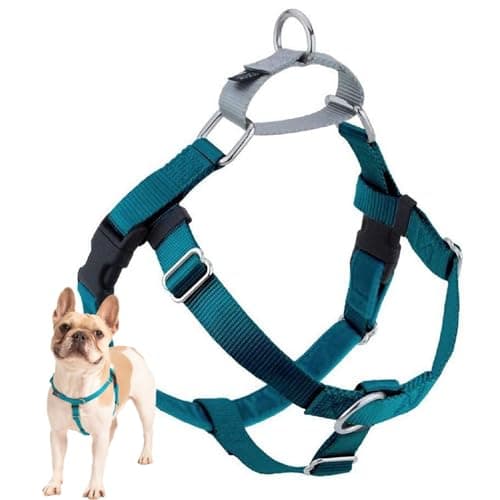
The most complete no-pull design here: two attachment points plus a patented martingale loop on the back that gently tightens when the dog surges, so it redirects without choking. Pair it with a double-ended leash and it does more than a plain front-clip.

Best overall
$34.98 · View on Amazon

Price as of August 5, 2026. #ad How we’re funded

2
Ruffwear Front Range Harness

Ruffwear Front Range Harness

The everyday harness to buy if your dog is active: a padded vest with a reinforced front chest clip for no-pull walks and an aluminum back V-ring for relaxed ones. Not the cheapest, but the build quality is the reason people replace it with the same thing.

Best for active days
$59.99 · View on Amazon

Price as of August 5, 2026. #ad How we’re funded

3
PetSafe Easy Walk Harness

PetSafe Easy Walk Harness

The simplest front-clip harness that works: the leash clips to a martingale ring on the chest, so a pull turns the dog back toward you instead of letting it lean into the weight. Cheap, everywhere, and easy to fit — the honest starting point.

Best simple front-clip
$22.99 · View on Amazon

Price as of August 5, 2026. #ad How we’re funded

4
rabbitgoo No-Pull Dog Harness

rabbitgoo No-Pull Dog Harness

The best cheap no-pull harness: a padded vest with both a front and back clip and a top control handle, for a fraction of the premium brands. It won't last as long as a Ruffwear, but it does the same two jobs on day one.

Best on a budget
$15.97 · View on Amazon

$20.9824% off

Price as of August 5, 2026. #ad How we’re funded

The picks in full

#1Best overall

2 Hounds Design Freedom No-Pull Harness

The most complete no-pull design here: two attachment points plus a patented martingale loop on the back that gently tightens when the dog surges, so it redirects without choking. Pair it with a double-ended leash and it does more than a plain front-clip.

Strengths

  • Front chest ring AND a back martingale loop — two ways to redirect one pull
  • Velvet-lined belly strap reduces the chafing that stops most dogs escaping mid-walk
  • Sized by exact chest girth, so the fit is precise rather than S/M/L guesswork

Trade-offs

  • Costs more than a basic front-clip harness
  • Gets the most out of a double-ended leash, which is an extra purchase
TypeDual-clip no-pull harness with martingale
AttachmentFront (chest) & back (martingale loop)
FitsXS–XL · sized by chest girth
MaterialNylon webbing, velvet-lined belly strap
Escape securityMartingale loop cinches gently on a surge
Best forAll sizes, especially strong pullers

Specs read from the product listing, on July 22, 2026. “Not published” means the brand does not state that figure.

#2Best for active days

Ruffwear Front Range Harness

The everyday harness to buy if your dog is active: a padded vest with a reinforced front chest clip for no-pull walks and an aluminum back V-ring for relaxed ones. Not the cheapest, but the build quality is the reason people replace it with the same thing.

Strengths

  • Front and back clips — no-pull when you need it, back-clip when you don't
  • Padded, foam-lined chest and belly panels spread pressure comfortably
  • Four adjustment points and reflective trim; genuinely hard-wearing

Trade-offs

  • Priced well above budget harnesses
  • The front clip helps but this is a comfort harness first, not a dedicated anti-pull tool
TypeEveryday dual-clip padded harness
AttachmentFront (chest) & back (aluminum V-ring)
FitsXXS–XL · sized by girth
MaterialPadded nylon, foam-lined panels, reflective trim
Best forAll sizes; a favorite for active medium–large dogs

Specs read from the product listing, on July 22, 2026. “Not published” means the brand does not state that figure.

#3Best simple front-clip

PetSafe Easy Walk Harness

The simplest front-clip harness that works: the leash clips to a martingale ring on the chest, so a pull turns the dog back toward you instead of letting it lean into the weight. Cheap, everywhere, and easy to fit — the honest starting point.

Strengths

  • Front chest ring redirects pulling with no training curve
  • Inexpensive and stocked almost everywhere
  • Quick-snap shoulder and belly buckles make it fast to put on

Trade-offs

  • Sits across the shoulders, which can loosen and rotate on deep-chested dogs
  • Back has no attachment point — it is a front-clip-only tool
TypeFront-clip no-pull harness (chest ring)
AttachmentFront (chest martingale ring)
FitsPetite–XL
MaterialNylon webbing
Best forAll sizes; best on average-build dogs

Specs read from the product listing, on July 22, 2026. “Not published” means the brand does not state that figure.

#4Best on a budget

rabbitgoo No-Pull Dog Harness

The best cheap no-pull harness: a padded vest with both a front and back clip and a top control handle, for a fraction of the premium brands. It won't last as long as a Ruffwear, but it does the same two jobs on day one.

Strengths

  • Front and back clips plus a grab handle at a budget price
  • Four adjustment straps and a padded vest for an easy fit
  • Reflective stitching for low-light walks

Trade-offs

  • Buckles and webbing aren't as durable as premium harnesses
  • Strong, determined pullers can work the fit loose over time
TypeBudget dual-clip padded harness
AttachmentFront (chest) & back (D-ring)
FitsS–XL · adjustable, sized by girth
MaterialPadded nylon oxford, reflective stitching
Best forAll sizes; check the girth chart for toy breeds

Specs read from the product listing, on July 22, 2026. “Not published” means the brand does not state that figure.

Gentle redirection for a sensitive dog

Our top pick for a Border Collie is the 2 Hounds Freedom, and the reason is the martingale loop: when the dog surges, the back loop cinches gentlyand the front chest ring turns the motion back toward you — it redirects rather than corrects, which is exactly what a pressure-sensitive dog needs. The martingale action has a second benefit that suits a spook-prone Collie: it snugs down on a surge rather than opening up, so it’s harder to back out of than a plain two-strap vest. It’s sized by exact chest girth for a precise, non-rotating fit, and paired with a double-ended leashit gives you two points of control to steer a fast dog. The honest trade-offs: it’s mid-priced, and it gets the most out of a double-ended leash that’s an extra buy. Because this breed is so trainable, the gear pays off fast alongside reward-based training— a Border Collie with a real job to do pulls far less than a bored one.

Comfort, simplicity and budget

For an athletic Collie that hikes and runs, the Ruffwear Front Rangeis the comfort pick: padded foam-lined panels, four adjustment points for a secure shoulder-free fit, and reflective trim for low-light outings. Its honest caveat is that it’s a comfort harness first and priced above budget vests — the front clip helps a moderate puller, but a hard-leaning one gets more leverage from the Freedom. If you want the simplest thing that works, the PetSafe Easy Walkis a straightforward front-clip martingale that buckles on without going over a face-shy dog’s head; just note it sits across the shoulders and can rotate on a fast dog that throws itself sideways, so watch the fit. On a budget, the rabbitgoogives you a padded front-and-back vest with a grab handle — useful for holding a spooky dog close — for very little, with the trade-off that a strong dog can loosen its fit over time.

Fit is the safety issue for this breed

On a spook-prone dog, fit isn’t just about no-pull performance — it’s about whether the dog can escape when something frightens it. Measure the chest girth to the skin at the widest point behind the front legs and buy to the brand’s chart by that number; a Border Collie’s coat can hide a loose fit. Once it’s on, you should be able to slide two flat fingers under any strap and no more — snug enough that a sudden reverse can’t pull the harness over the shoulders. Our harness sizing guide covers the measurement and the two-finger check, and our guide to a dog backing out of a harness explains why a snug martingale design is the safest call for a dog that panics. If your Collie fixates and lunges at bikes, cars or joggers — classic herding-instinct reactivity — the harness manages the moment, but the fix is distance and counter-conditioning; start with our reactive gear for medium dogs.

Fit, comfort and control

Frequently asked questions

What's the best no-pull harness for a Border Collie?

The 2 Hounds Freedom is our top pick: its martingale loop redirects a surge gently rather than correcting it, which suits a pressure-sensitive breed, and it snugs down on a lunge so it's harder for a spook-prone dog to back out of. For an athletic Collie that hikes, the Ruffwear Front Range is the comfortable everyday choice. Pair either with reward-based training and, above all, enough mental and physical exercise.

Can a Border Collie back out of its harness?

Yes — Border Collies are quick to spook, and a dog that throws itself sideways can reverse out of a loose or two-strap harness and bolt, which is dangerous for a breed this reactive to motion. The fix is a snug, non-rotating fit and a design that resists backing out: a martingale like the Freedom that cinches on a surge, or a three-strap escape-proof harness. Always keep the two-finger fit and check it every walk.

Why does my Border Collie pull so hard?

Usually because its herding drive has no outlet. A Border Collie is bred to work all day, and a slow walk leaves that energy to come out as fixating and towing. A front or dual-clip harness redirects the pull, but the real answer is a job — more exercise, training games and mental work — plus reward-based loose-leash training. This breed is highly trainable, so the loose-leash habit sticks fast once the dog is properly exercised.

Is a head halter or a harness better for a reactive Border Collie?

Start with a front-clip or dual-clip harness — most Collies accept it immediately and it gives enough control to turn the dog and create distance. A head halter offers more leverage for a strong lunger but needs slow, positive introduction. Whichever you use, gear only manages the reaction; distance from triggers and reward-based counter-conditioning reduce it. See our reactive gear for medium dogs and involve a qualified trainer.

Sources

Keep reading