LEASH LOAM

Best No-Pull Harnesses for Huskies

A Husky was bred to pull a sled, so a plain back-clip harness is the worst choice you can make. These are the no-pull harnesses that redirect the pull and resist a Husky's talent for backing out.

By Stephen V.Last verified How we pick

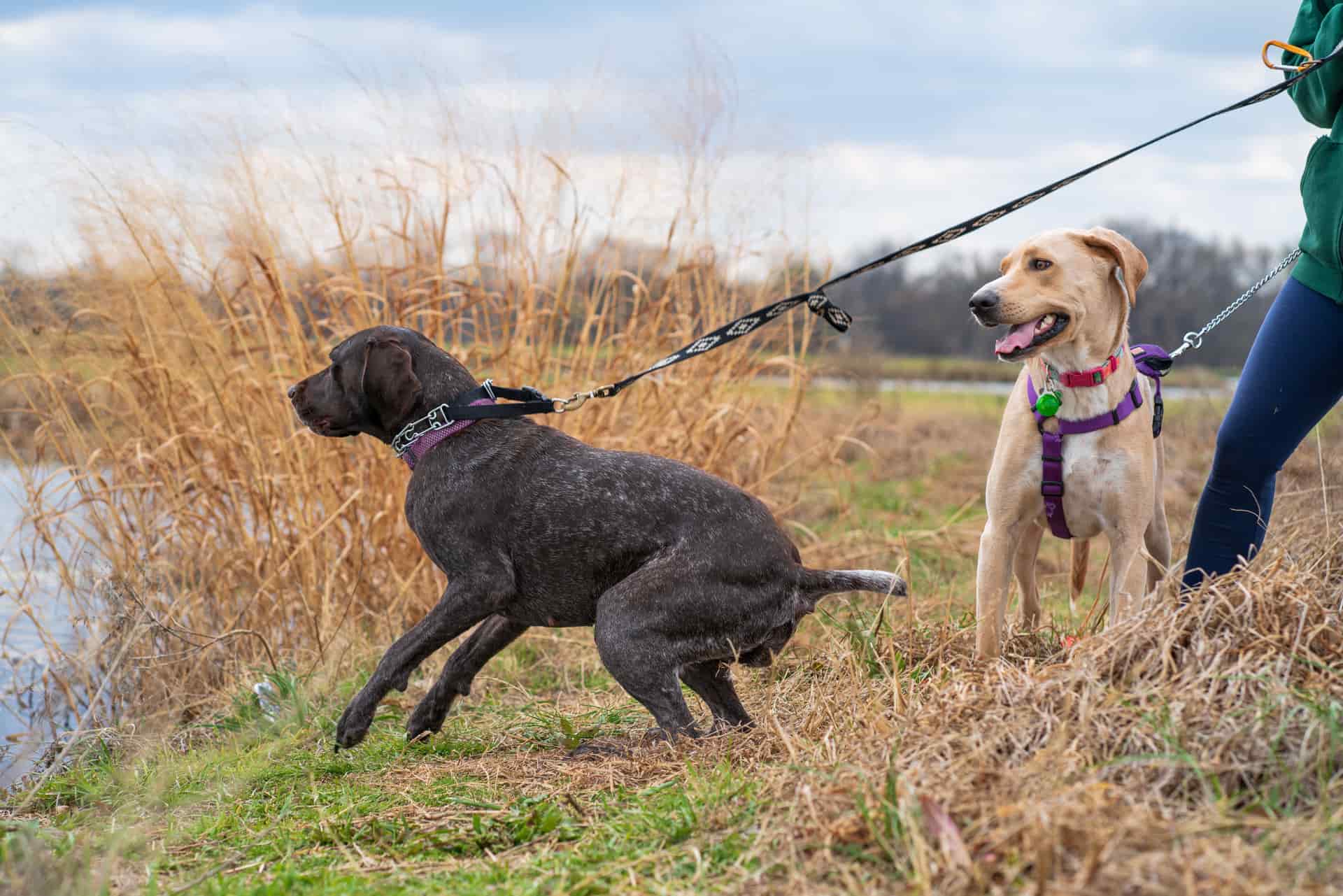
A Husky pulls because that is literally what the breed was built to do. Siberian Huskies were developed to haul a sled across snow for hours, and a dog that leans hard into a harness and keeps driving forward is a working sled dog doing its job well. That history is exactly why the usual advice backfires here: a plain back-clip “pulling harness”is the single worst thing you can strap onto a Husky, because it gives the dog the one thing it was bred to love — something solid to lean into and tow. The fix isn’t a stronger arm. It’s moving the attachment to the chest so a surge turns the dog back toward you instead of rewarding the pull.

Huskies bring a second problem most breeds don’t: they are escape artists. A bored or panicked Husky will plant its feet, drop a shoulder and reverse straight out of a loose two-strap harness, and then it’s a fast, independent dog loose in the neighborhood. That makes a design that resists backing out just as important as one that redirects the pull. Their thick double coatadds one more wrinkle: the fit that’s perfect in winter can be loose after a heavy shed, so a Husky harness has to be re-checked seasonally. We rank these on clip position, escape resistance and a fit you can dial in on a coated, athletic dog. We haven’t bench-tested them; we read the specs and reasoned from how each layout holds and redirects a strong, wriggly dog.

How this is funded:we earn a commission if you buy through our links, at no extra cost to you. It never changes which product we recommend, and we’ll tell you plainly when we’d skip one. Full disclosure.

Quick picks

Ranked on design, published specs and buyer fit. Select a row to jump to the full write-up. We have not hand-tested these — here is exactly what we do instead.

#ProductBest forPrice
1
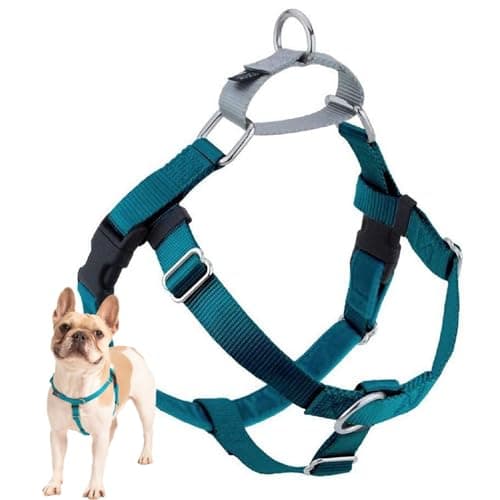
2 Hounds Design Freedom No-Pull Harness

2 Hounds Design Freedom No-Pull Harness

The most complete no-pull design here: two attachment points plus a patented martingale loop on the back that gently tightens when the dog surges, so it redirects without choking. Pair it with a double-ended leash and it does more than a plain front-clip.

Best overall
$34.98 · View on Amazon

Price as of August 5, 2026. #ad How we’re funded

2
Kurgo Enhanced Strength Tru-Fit Harness

Kurgo Enhanced Strength Tru-Fit Harness

A rare crossover: a strong five-point harness with a front no-pull ring for walks AND a steel nesting buckle plus a seat-belt tether for the car. Kurgo crash-tested it themselves to FMVSS 213 — a real test, but not the same as an independent CPS certification.

Best heavy-duty build
$26.99 · View on Amazon

Price as of August 5, 2026. #ad How we’re funded

3
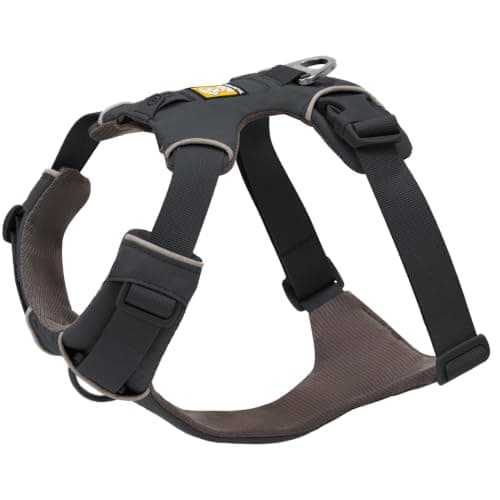
Ruffwear Front Range Harness

Ruffwear Front Range Harness

The everyday harness to buy if your dog is active: a padded vest with a reinforced front chest clip for no-pull walks and an aluminum back V-ring for relaxed ones. Not the cheapest, but the build quality is the reason people replace it with the same thing.

Best for active/hiking huskies
$59.99 · View on Amazon

Price as of August 5, 2026. #ad How we’re funded

4
rabbitgoo No-Pull Dog Harness

rabbitgoo No-Pull Dog Harness

The best cheap no-pull harness: a padded vest with both a front and back clip and a top control handle, for a fraction of the premium brands. It won't last as long as a Ruffwear, but it does the same two jobs on day one.

Best on a budget
$15.97 · View on Amazon

$20.9824% off

Price as of August 5, 2026. #ad How we’re funded

The picks in full

#1Best overall

2 Hounds Design Freedom No-Pull Harness

The most complete no-pull design here: two attachment points plus a patented martingale loop on the back that gently tightens when the dog surges, so it redirects without choking. Pair it with a double-ended leash and it does more than a plain front-clip.

Strengths

  • Front chest ring AND a back martingale loop — two ways to redirect one pull
  • Velvet-lined belly strap reduces the chafing that stops most dogs escaping mid-walk
  • Sized by exact chest girth, so the fit is precise rather than S/M/L guesswork

Trade-offs

  • Costs more than a basic front-clip harness
  • Gets the most out of a double-ended leash, which is an extra purchase
TypeDual-clip no-pull harness with martingale
AttachmentFront (chest) & back (martingale loop)
FitsXS–XL · sized by chest girth
MaterialNylon webbing, velvet-lined belly strap
Escape securityMartingale loop cinches gently on a surge
Best forAll sizes, especially strong pullers

Specs read from the product listing, on July 22, 2026. “Not published” means the brand does not state that figure.

#2Best heavy-duty build

Kurgo Enhanced Strength Tru-Fit Harness

A rare crossover: a strong five-point harness with a front no-pull ring for walks AND a steel nesting buckle plus a seat-belt tether for the car. Kurgo crash-tested it themselves to FMVSS 213 — a real test, but not the same as an independent CPS certification.

Strengths

  • Front-clip no-pull ring for walks, plus a car seat-belt tether included
  • Five adjustment points and a steel nesting buckle for strong dogs
  • Manufacturer crash-tested to the FMVSS 213 child-restraint standard

Trade-offs

  • Crash-tested by the brand, not certified by the independent Center for Pet Safety
  • Heavier and fiddlier to fit than a simple walking harness
TypeDual-purpose no-pull + car harness
AttachmentFront (chest) & back (D-ring)
FitsXS–XL
MaterialNylon webbing, steel nesting buckle
Crash testBrand crash-tested (FMVSS 213, Calspan) — not CPS-certified
Best forMedium–large, strong dogs

Specs read from the product listing, on July 22, 2026. “Not published” means the brand does not state that figure.

#3Best for active/hiking huskies

Ruffwear Front Range Harness

The everyday harness to buy if your dog is active: a padded vest with a reinforced front chest clip for no-pull walks and an aluminum back V-ring for relaxed ones. Not the cheapest, but the build quality is the reason people replace it with the same thing.

Strengths

  • Front and back clips — no-pull when you need it, back-clip when you don't
  • Padded, foam-lined chest and belly panels spread pressure comfortably
  • Four adjustment points and reflective trim; genuinely hard-wearing

Trade-offs

  • Priced well above budget harnesses
  • The front clip helps but this is a comfort harness first, not a dedicated anti-pull tool
TypeEveryday dual-clip padded harness
AttachmentFront (chest) & back (aluminum V-ring)
FitsXXS–XL · sized by girth
MaterialPadded nylon, foam-lined panels, reflective trim
Best forAll sizes; a favorite for active medium–large dogs

Specs read from the product listing, on July 22, 2026. “Not published” means the brand does not state that figure.

#4Best on a budget

rabbitgoo No-Pull Dog Harness

The best cheap no-pull harness: a padded vest with both a front and back clip and a top control handle, for a fraction of the premium brands. It won't last as long as a Ruffwear, but it does the same two jobs on day one.

Strengths

  • Front and back clips plus a grab handle at a budget price
  • Four adjustment straps and a padded vest for an easy fit
  • Reflective stitching for low-light walks

Trade-offs

  • Buckles and webbing aren't as durable as premium harnesses
  • Strong, determined pullers can work the fit loose over time
TypeBudget dual-clip padded harness
AttachmentFront (chest) & back (D-ring)
FitsS–XL · adjustable, sized by girth
MaterialPadded nylon oxford, reflective stitching
Best forAll sizes; check the girth chart for toy breeds

Specs read from the product listing, on July 22, 2026. “Not published” means the brand does not state that figure.

Why a Husky pulls — and why the clip position matters most

Understand the drive and the gear choice makes itself. A Husky isn’t pulling to be difficult; it’s answering a bred-in urge to move forward against resistance. A back-only clip feeds that urge perfectly — the dog leans into the ring and tows, exactly as a sled dog should. So the most important decision isn’t how strong the harness is, it’s where the leash pulls from. A front chest ring takes the towing geometry away: a surge now rotates the shoulders back toward you rather than launching the dog ahead. Our top pick, the 2 Hounds Freedom, gives you two points at once — a front ring plus a back martingale loopthat cinches gently on a surge — so a double-ended leash gives you real steering on a strong dog. If your Husky is a serious hiking and adventure dog, the Ruffwear Front Range is the padded, hard-wearing everyday harness, and our hiking harness roundup covers that use in depth. The harness manages the walk; reward-based training is what actually teaches a Husky to walk on a loose leash.

The escape problem: Huskies back out

This is where a lot of Husky owners get caught out. A determined Husky doesn’t fight the harness head-on — it backs out of it, planting its feet and shrugging a shoulder through the gap a loose two-strap harness leaves. The Freedom helps here for a specific reason: its martingale loop tightens on a surge instead of loosening, so it fights the very motion an escaper uses. It isn’t a three-strap fortress, but it’s far harder to reverse out of than a plain vest. If your Husky is a committed Houdini that has already escaped, don’t rely on a walking harness alone — read our escape-proof harness guide, and for a mid-sized Husky the medium-dog escape-proof picks are the place to start. Our guide on what to do when a dog backs out of a harness covers the fit fixes that stop it happening in the first place — and with that thick double coat, remember to re-check the fit through the shedding seasons, because a harness snug in January can be loose enough to escape by summer. Our sizing guide shows how to take the measurement.

Which pick for which Husky

If your Husky is a classic hard puller, start with the Freedom and a double-ended leash — the two-point setup and the anti-backout martingale cover the two biggest Husky problems at once. If you want the toughest hardware for a dog that leans into everything, the Kurgo Tru-Fit brings five adjustment points and a steel nesting buckle that shrugs off a strong dog. If yours is an active, outdoorsy Husky that hikes and runs, the Front Range is the everyday adventure buy. And if budget is tight, the rabbitgoogives you a front-and-back harness with a control handle cheaply — just fit it carefully and expect a strong, wriggly Husky to test it, so keep an eye on the straps and replace it sooner than a premium harness.

For big, strong dogs

Frequently asked questions

What's the best no-pull harness for a Husky?

The 2 Hounds Freedom is our top pick, because a Husky needs two things at once: a front chest ring to redirect the pull and something that resists backing out. Its front ring plus a back martingale loop that tightens on a surge covers both, and a double-ended leash gives you real steering. Pair it with reward-based training rather than relying on the harness alone.

Why is a back-clip pulling harness bad for a Husky?

Because a Husky was bred to pull a sled, and a back-clip harness gives it exactly what it wants: something solid to lean into and tow. That geometry rewards pulling. A front or dual-clip harness moves the attachment to the chest so a surge turns the dog back toward you instead of letting it dig in and haul forward.

How do I stop my Husky backing out of its harness?

Fit is the first fix: measure the chest girth and keep the harness snug enough that two fingers just slide under any strap, and re-check it through shedding season because a thick coat changes the fit. A martingale design like the Freedom tightens on a surge rather than loosening. For a committed escaper, step up to a dedicated escape-proof harness.

Does a Husky's thick coat affect harness fit?

Yes. A double coat is much thicker in winter than after a heavy summer shed, so a harness fitted snugly over a full coat can become loose enough to escape once the dog blows its coat. Re-check the fit seasonally and adjust the straps so you always keep the same two-finger snugness against the body, not just the fur.

Sources

Keep reading