Why a medium dog backs out
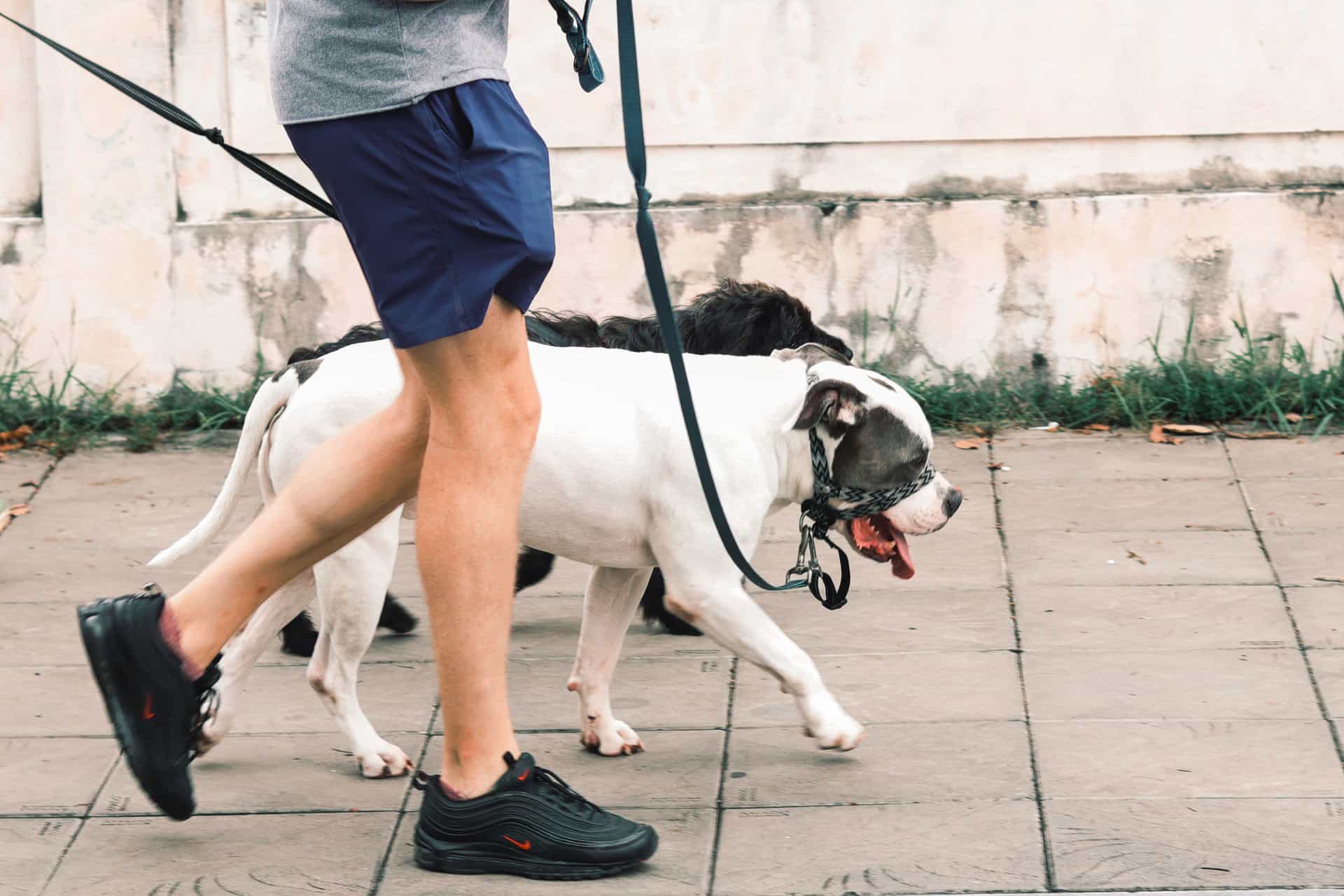
Backing out is panic, not disobedience. When a mid-size dog spooks — a bus, a firework, a dog across the street — it wants distance immediately, and reversing is the fastest way to make some. A medium dog is the worst-case body for this: it has the strength to throw itself backward hard and the flexibility to duck its head and collapse its shoulders, so a two-strap harness that fits a stocky dog fine just slides off a bendier one. The chest is often deeper than the neck too, which means a harness sized to clear the head can sit loose at the ribs — the exact slack an escaper exploits. The answer isn’t a tighter grip on the leash; it’s a harness whose geometryleaves nothing to reverse through, fitted so there’s no spare room to begin with.
Three-strap vs martingale
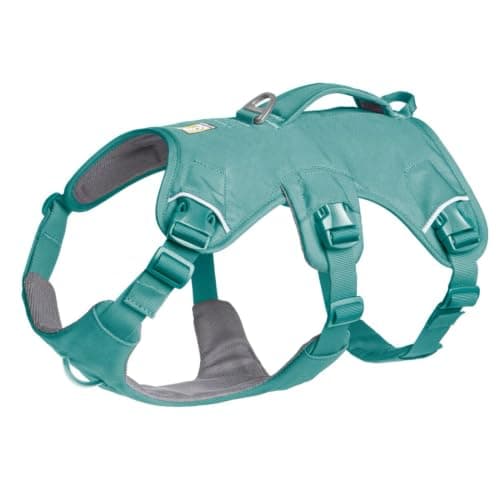
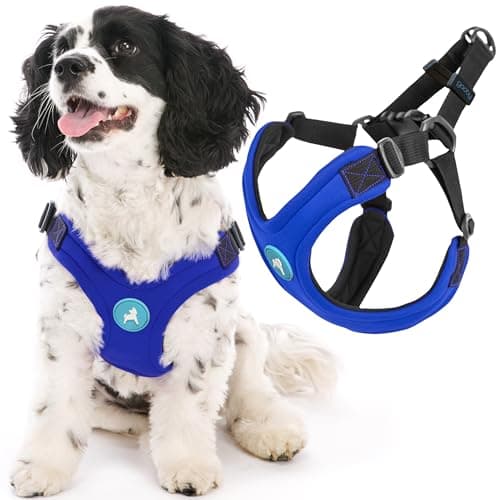
There are two proven ways to close the gap, and the right one depends on what your dog does. A three-strap harness like the Ruffwear Web Masteradds a strap behind the ribcage, so the harness simply has nowhere to slide forward to — and its padded top handle lets you grab or steady the dog at a trigger. It’s our overall pick for a medium escaper. A martingale design like the 2 Hounds Freedom takes the opposite approach: when the dog surges backward the loop cinches, fighting the exact motion an escaper uses, and it doubles as one of the best no-pull harnesses you can buy — so it’s the pick for the dog that pulls hard and backs out. Our Web Master vs Freedom comparison walks through which mechanism fits which dog. For the lighter end of medium— a small beagle, a mini poodle mix — the Gooby Escape Freeis built around small-dog escape geometry with an extra rear strap; just size up carefully, because it’s designed for small breeds and isn’t the pick for a stocky, powerful medium dog.
Fit is half the battle — and the collar backup
The most escape-proof harness on the market still fails if it’s loose. You should be able to slip two fingersunder a strap and no more — any looser and a determined dog finds the slack, ducks, and reverses out. Measure the chest girth, buy to the chart, and re-check the fit every few weeks, because webbing stretches and a dog’s coat changes with the seasons. Our guide to stopping a dog backing out and our harness sizing guide walk through the fit check step by step. For a dog that has already escaped once, add the belt-and-braces move: run your leash to the harness andclip a short backup connection to a well-fitted collar, so a slipped harness never becomes a loose dog near traffic. The Web Master includes a safety loop for exactly this. It’s cheap insurance for a genuinely dangerous failure mode.