Why a Husky both pulls and backs out
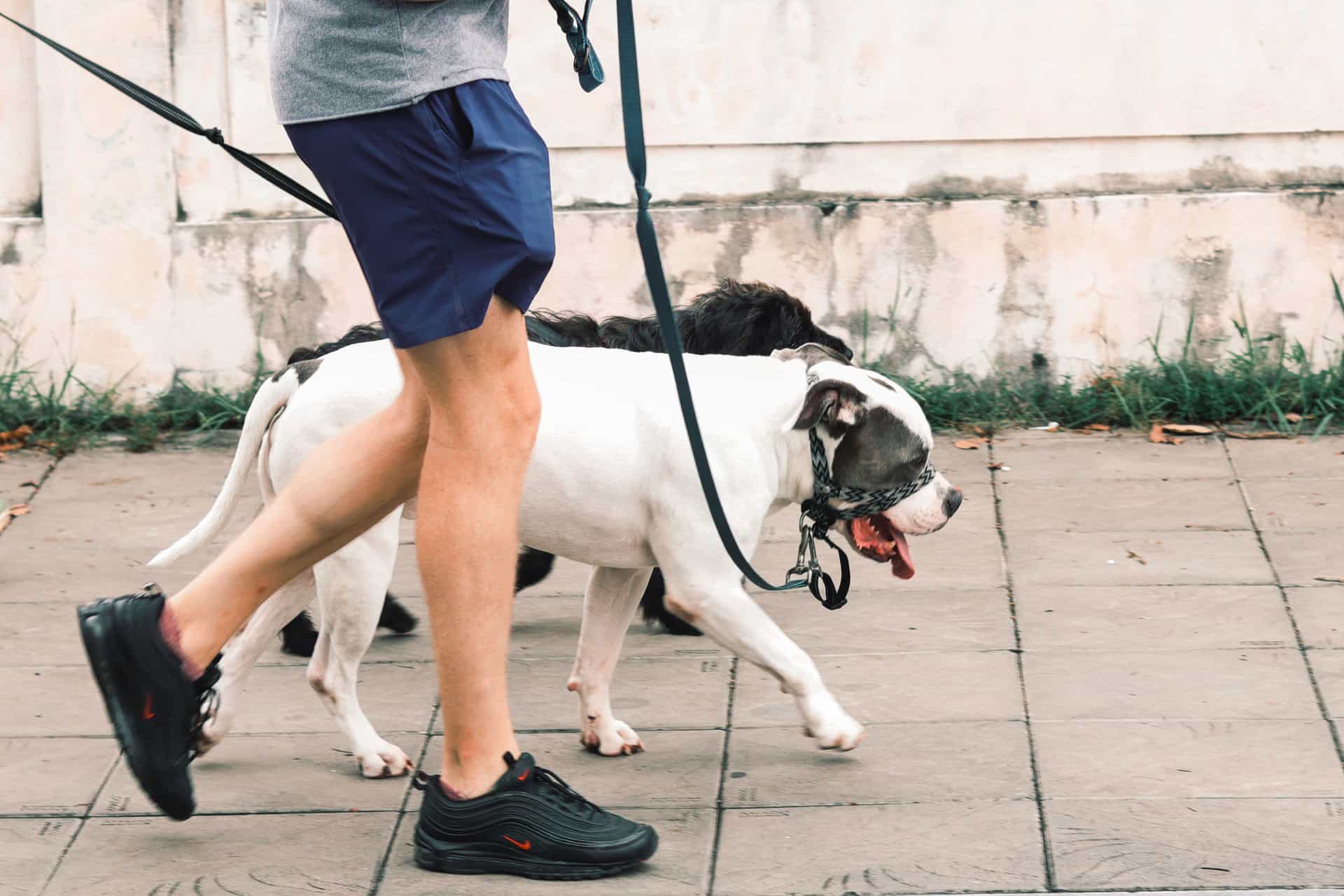
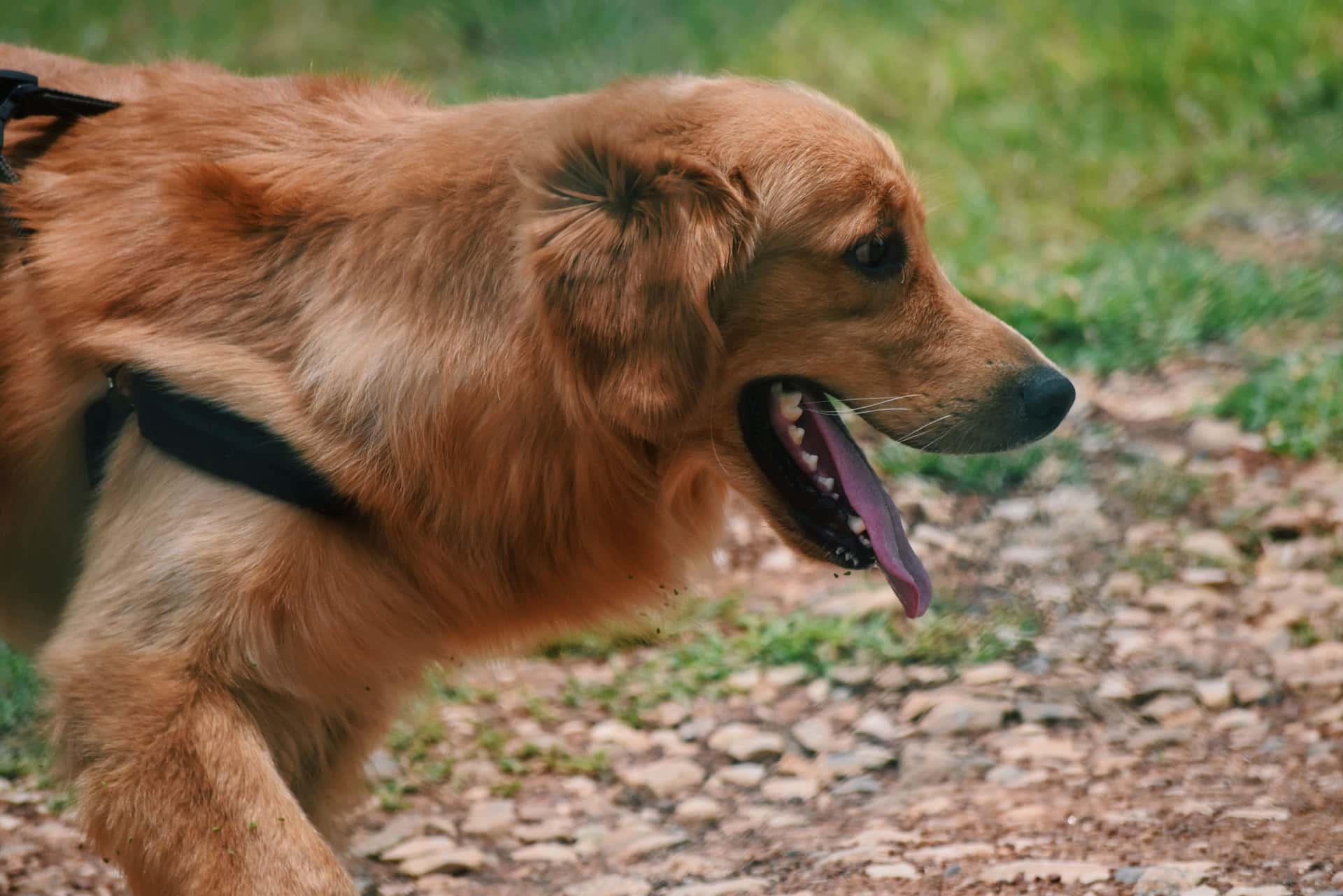
The reason Huskies are famous escape artists is that their two strongest instincts point in opposite directions. The breed pulls forward hard because that is quite literally what it was bred to do, and it backs out because a spooked dog wants distance and reversing is the fastest way to get some. A Husky has the muscle to throw itself backward with force and the flexibility to collapse its shoulders and duck its head through the gap a two-strap harness leaves behind the front legs — the same triangle of slack that lets any dog reverse out, only worked by a stronger, more determined animal. A dense double coat makes it worse: it hides how loose the webbing actually sits, so a harness that looks snug on the surface can be riding on fur with real slack against the body underneath. The fix is not a tighter grip on the leash; it is a harness whose geometry leaves nothing to reverse through, fitted so there is no spare room to begin with.
The three-strap fortress vs the cinching martingale
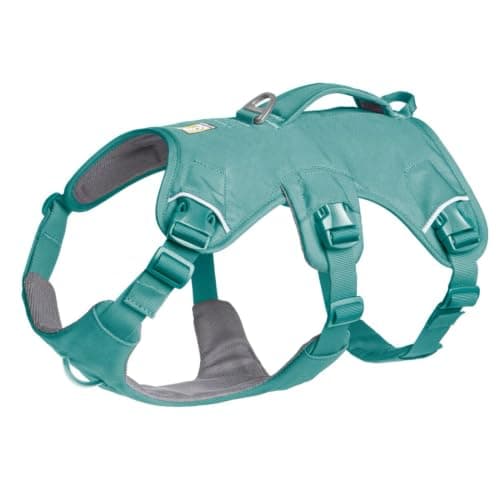
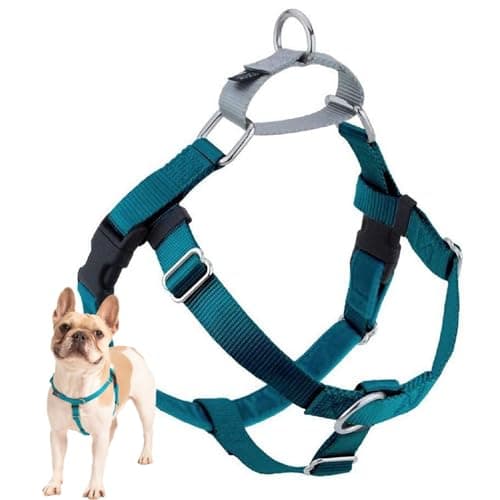
There are two proven ways to close the gap, and the right one depends on what your Husky does most. A three-strap harness like the Ruffwear Web Masteradds a strap behind the ribcage, so the harness simply has no shape to slide forward through — and its padded top handle lets you grab or steady the dog at the exact moment it panics. It is foam-lined and genuinely hard to escape when fitted snugly, which is why it is our overall pick for a determined Husky, though it is a back-clip security harness rather than a dedicated no-pull tool. A martingale design like the 2 Hounds Freedom takes the opposite approach: when the dog surges the back loop cinches downinstead of opening up, fighting the very motion an escaper uses, and it doubles as one of the best no-pull harnesses you can buy — so it is the pick for the Husky that pulls hard and tries to reverse. Our Web Master vs Freedom comparison walks through which mechanism fits which dog, and if the self-cinching idea is new to you our explainer on how a martingale harness works shows why the loop tightens on the exact backward motion a Husky uses to escape. One honest size caveat: for a small Husky mix or a puppy, the Gooby Escape Freeis built around small-dog escape geometry with an extra rear strap — but it is designed for small and toy breeds and will not fit a full-size adult Husky. Do not size it up in the hope it stretches to a standard Husky; for a full-grown dog it is the wrong tool, and the Web Master or Freedom is the pick.
Fit is what makes a harness escape-proof — plus the collar backup
The most escape-proof harness on the market still fails if it is loose, and on a coated breed that is the trap. You should be able to slip two fingers under a strap and no more — and on a Husky you have to feel for the fit against the body, not the fur, because a thick coat hides real slack. Measure the chest girth, buy to the chart, and re-check every few weeks, since webbing stretches and a Husky’s coat changes dramatically with the seasons. Our harness sizing guide walks the two-finger check step by step. For a dog that has already escaped once, add the belt-and-braces move: run your leash to the harness andclip a short backup connection to a well-fitted collar, so a slipped harness never becomes a loose dog near traffic — the Web Master includes a safety loop for exactly this. And because the pulling is what starts the whole reverse-and-bolt cycle, it is worth pairing the harness with a plan for the pulling itself; our large-dog escape picks cover the same mechanisms for a broader, stockier build if your Husky is on the heavier end. And once the harness holds, keep chipping away at the pulling itself with reward-based loose-leash work, because a dog that isn’t hurling itself to the end of the leash has far fewer chances to trip the reverse-and-bolt in the first place — the escape and the pull really are one problem.