Buy for the puppy you have today, not the dog it’ll become
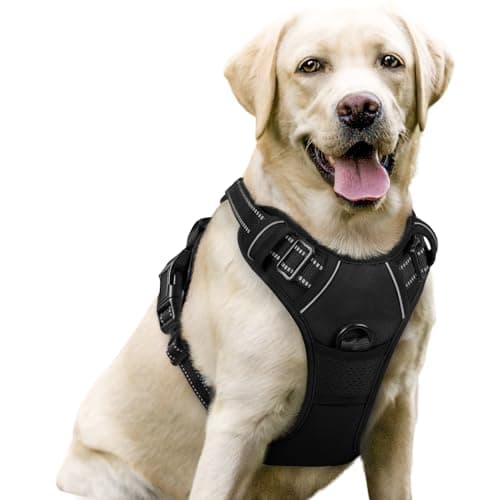
The most common puppy-harness mistake is buying big to “save money” as the dog grows. A harness sized for the adult is loose now, and a loose harness is one a startled puppy backs straight out of — which is exactly when a young dog is most likely to bolt into trouble. It’s safer and, over the life of the dog, no more expensive to buy an inexpensive, well-fittingharness with lots of adjustment for the current stage, re-measure every few weeks during fast growth, and size up when the straps hit the end of their range. That’s the whole reason the budget-friendly, highly adjustable rabbitgoo leads this list.
Gentle and light, with a front ring for later
For a young dog, comfort is training: a harness that pinches or chafes teaches the puppy to hate the whole ritual. Look for a padded vest, soft webbing, and as little weight as the size allows. The PetSafe Easy Walkis the simplest possible front-clip — cheap, quick to fit, and it comes in a petite size for the littlest puppies — while the Ruffwear Front Rangeis the one to grow into if you want a single durable harness that’ll still be going strong in adulthood, with a front ring for the pulling phase and a back ring for relaxed walks. Whatever you choose, the front clip is the feature that pays off once the puppy discovers it can pull.
Fit, and the two puppy safety rules
Fit a puppy harness the same way you’d fit any harness — measure the chest girth, match it to the brand’s chart, and confirm you can slide two fingers under any strap (our sizing guidehas the detail) — then re-check it often, because a puppy’s girth changes week to week and a coat change can shift the fit. Two rules matter more for puppies than for adults. First, never leave a harness on an unattended puppy— a teething dog will chew it, and a snagged strap on a crated or crawling puppy is a hazard. Second, keep those early walks short and positive; a puppy’s joints and attention span are both still developing, and a good first month on the leash is built on treats and patience, not distance.
The harness is only half of it. The other half is starting loose-leash mannersnow, while the slate is clean — it’s far easier to build a good habit than to break a bad one. And if you’re still deciding between a harness and a collar for a young dog, our harness vs collar guide covers why a harness is the gentler choice for a developing neck.