LEASH LOAM

Best No-Pull Harnesses for Running & Jogging With Your Dog

Running with a dog needs a secure, non-restrictive harness that won't chafe at pace and pairs with a hands-free leash. These are the picks for jogging and canicross — with no-pull control for the dog that still surges.

By Stephen V.Last verified How we pick

Running with your dog is one of the best things you can do for both of you, but it asks more of a harness than a stroll does. At a jog, a harness is in constant motion against the body for miles, so anything that rubs at walking pace will chafe raw at running pace. It also needs to move with the dog— a design that restricts the shoulders is a problem when the front legs are reaching at full stride — and it has to stay secureso a sudden swerve after a squirrel doesn’t pop it loose. The best running harness is a snug, Y-front shape that clears the shoulders, with smooth or padded panels and, for the early-morning and after-work runs most people fit in, reflective trim.

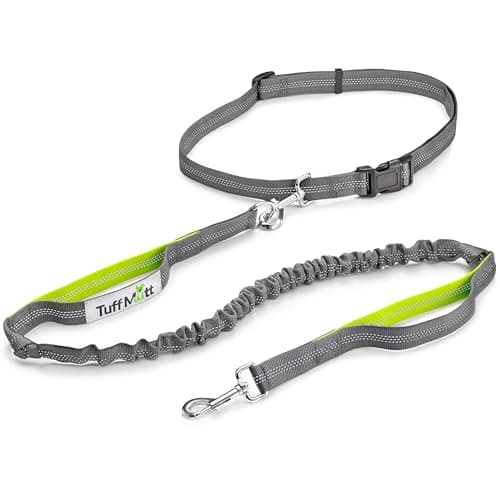
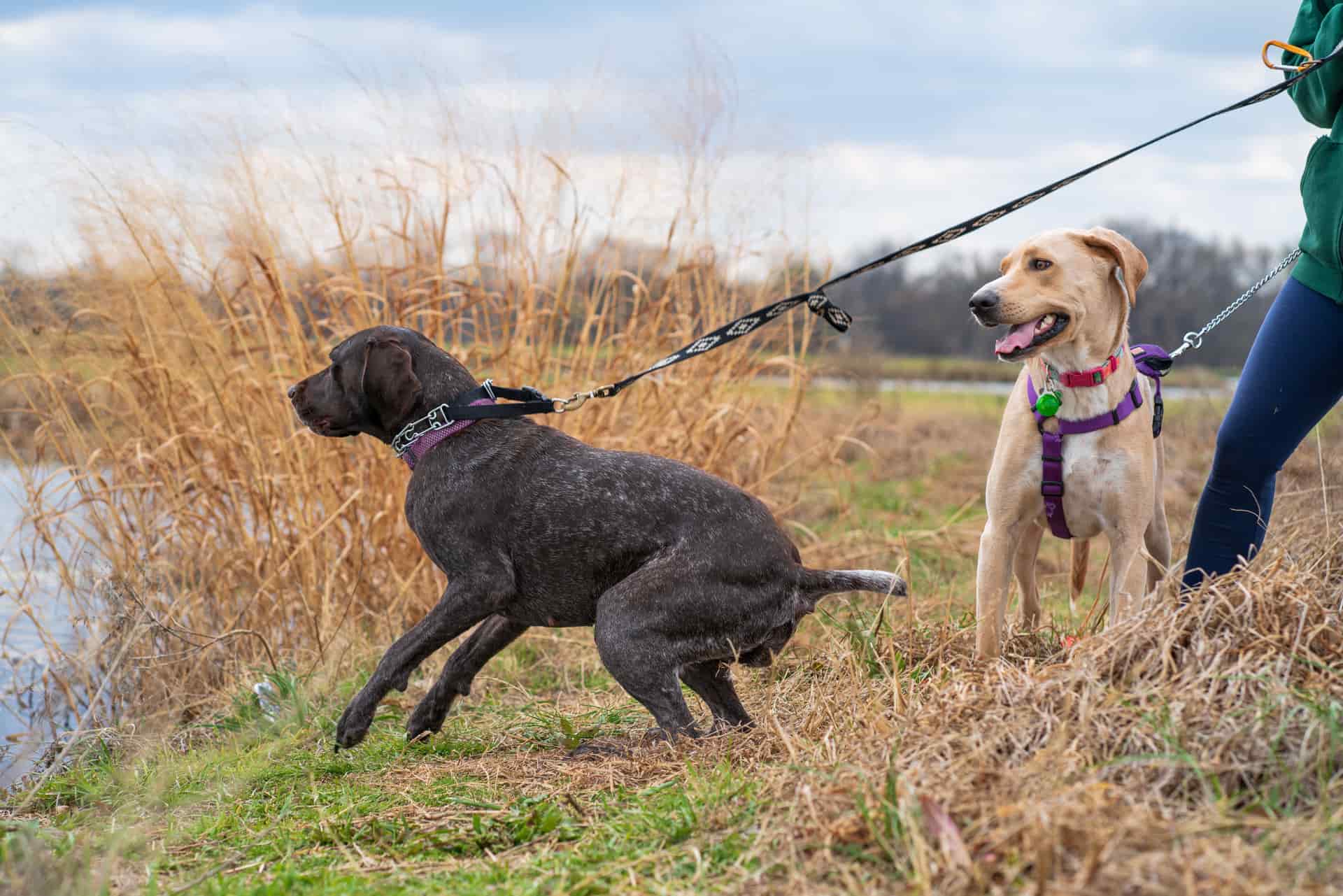
The other half of the setup is the leash: for running you want a hands-free leasharound your waist with a bungee section to absorb the jolt of a surge, so your hands and balance stay your own. One honest caveat up front — a hands-free bungee can hide a pulling problem, so if your dog still hauls at pace, choose a harness with a front no-pull ring and do the training too. We rank these on a non-restrictive, chafe-resistant fit and security at speed, then the redirection a front clip adds. We haven’t run these on a dog ourselves; we read the published specs and reasoned from how each design moves and holds at pace.

How this is funded:we earn a commission if you buy through our links, at no extra cost to you. It never changes which product we recommend, and we’ll tell you plainly when we’d skip one. Full disclosure.

Quick picks

Ranked on design, published specs and buyer fit. Select a row to jump to the full write-up. We have not hand-tested these — here is exactly what we do instead.

#ProductBest forPrice
1
Ruffwear Front Range Harness

Ruffwear Front Range Harness

The everyday harness to buy if your dog is active: a padded vest with a reinforced front chest clip for no-pull walks and an aluminum back V-ring for relaxed ones. Not the cheapest, but the build quality is the reason people replace it with the same thing.

Best overall for running
$59.99 · View on Amazon

Price as of August 5, 2026. #ad How we’re funded

2
2 Hounds Design Freedom No-Pull Harness

2 Hounds Design Freedom No-Pull Harness

The most complete no-pull design here: two attachment points plus a patented martingale loop on the back that gently tightens when the dog surges, so it redirects without choking. Pair it with a double-ended leash and it does more than a plain front-clip.

Best for a dog that surges at pace
$34.98 · View on Amazon

Price as of August 5, 2026. #ad How we’re funded

3
rabbitgoo No-Pull Dog Harness

rabbitgoo No-Pull Dog Harness

The best cheap no-pull harness: a padded vest with both a front and back clip and a top control handle, for a fraction of the premium brands. It won't last as long as a Ruffwear, but it does the same two jobs on day one.

Best on a budget
$15.97 · View on Amazon

$20.9824% off

Price as of August 5, 2026. #ad How we’re funded

The picks in full

#1Best overall for running

Ruffwear Front Range Harness

The everyday harness to buy if your dog is active: a padded vest with a reinforced front chest clip for no-pull walks and an aluminum back V-ring for relaxed ones. Not the cheapest, but the build quality is the reason people replace it with the same thing.

Strengths

  • Front and back clips — no-pull when you need it, back-clip when you don't
  • Padded, foam-lined chest and belly panels spread pressure comfortably
  • Four adjustment points and reflective trim; genuinely hard-wearing

Trade-offs

  • Priced well above budget harnesses
  • The front clip helps but this is a comfort harness first, not a dedicated anti-pull tool
TypeEveryday dual-clip padded harness
AttachmentFront (chest) & back (aluminum V-ring)
FitsXXS–XL · sized by girth
MaterialPadded nylon, foam-lined panels, reflective trim
Best forAll sizes; a favorite for active medium–large dogs

Specs read from the product listing, on July 22, 2026. “Not published” means the brand does not state that figure.

#2Best for a dog that surges at pace

2 Hounds Design Freedom No-Pull Harness

The most complete no-pull design here: two attachment points plus a patented martingale loop on the back that gently tightens when the dog surges, so it redirects without choking. Pair it with a double-ended leash and it does more than a plain front-clip.

Strengths

  • Front chest ring AND a back martingale loop — two ways to redirect one pull
  • Velvet-lined belly strap reduces the chafing that stops most dogs escaping mid-walk
  • Sized by exact chest girth, so the fit is precise rather than S/M/L guesswork

Trade-offs

  • Costs more than a basic front-clip harness
  • Gets the most out of a double-ended leash, which is an extra purchase
TypeDual-clip no-pull harness with martingale
AttachmentFront (chest) & back (martingale loop)
FitsXS–XL · sized by chest girth
MaterialNylon webbing, velvet-lined belly strap
Escape securityMartingale loop cinches gently on a surge
Best forAll sizes, especially strong pullers

Specs read from the product listing, on July 22, 2026. “Not published” means the brand does not state that figure.

#3Best on a budget

rabbitgoo No-Pull Dog Harness

The best cheap no-pull harness: a padded vest with both a front and back clip and a top control handle, for a fraction of the premium brands. It won't last as long as a Ruffwear, but it does the same two jobs on day one.

Strengths

  • Front and back clips plus a grab handle at a budget price
  • Four adjustment straps and a padded vest for an easy fit
  • Reflective stitching for low-light walks

Trade-offs

  • Buckles and webbing aren't as durable as premium harnesses
  • Strong, determined pullers can work the fit loose over time
TypeBudget dual-clip padded harness
AttachmentFront (chest) & back (D-ring)
FitsS–XL · adjustable, sized by girth
MaterialPadded nylon oxford, reflective stitching
Best forAll sizes; check the girth chart for toy breeds

Specs read from the product listing, on July 22, 2026. “Not published” means the brand does not state that figure.

The running harness to beat

The Ruffwear Front Rangeis our top pick for running, and it’s no accident it’s the harness you see on trail dogs. Its Y-front shape clears the shouldersso it doesn’t restrict the reach of the front legs at a stride, the padded, foam-lined panels resist the chafing that miles of motion cause, and four adjustment points lock it snug so it won’t shift or pop loose on a swerve. It has reflective trimfor low-light runs and a back ring for relaxed cool-downs plus a front ring for a dog that surges. Its honest caveat is the price and that it’s a comfort harness first — the front clip helps, but a truly hard puller gets more dedicated redirection from a martingale design. Clip your hands-free leash to it and you have the classic running setup.

For the dog that still pulls, and the budget pick

If your dog surges hard at pace— and a bungee leash makes it easy to ignore, which is the trap — the 2 Hounds Freedom is the better choice: run a double-ended leashor clip your hands-free lead to its front ring and the martingale loop redirects the surge instead of letting the dog tow you down the road. It’s girth-sized for a secure fit and its velvet-lined belly strap resists chafe. On a budget, the rabbitgoo’s padded vest with a front and back clip works for lighter runs and easy jogs, though its budget webbing will wear faster under the constant motion of regular running than a premium harness will. Whichever you pick, keep the fit snug and check the armpits and chest for rubbing after your first few runs — our rubbing and chafing guide covers heading off a sore spot before it starts.

A few running safety notes

Gear is only part of running with a dog safely. Don’t run a young, still-growing dogat distance until its growth plates have closed — ask your vet when that is for your breed — and don’t run any dog hard in heat, since dogs shed heat far less efficiently than we do. Build distance gradually, carry water, and watch the pads on hot or rough ground. On the gear side, a hands-free bungee that absorbs shock protects both your back and your dog’s neck, but it manages the pull rather than fixing it — pair it with reward-based loose-leash work so your dog learns to run beside you rather than ahead. For the leash side of the setup, our hands-free leash picks cover the waist belts and bungees that suit a runner.

Complete the running setup

Frequently asked questions

What's the best no-pull harness for running with my dog?

The Ruffwear Front Range is our top pick: its Y-front shape clears the shoulders so it doesn't restrict the stride, its padded panels resist the chafing that miles of motion cause, and it has reflective trim for early runs and a front no-pull ring for a dog that surges. Pair it with a hands-free bungee leash. For a hard puller, the 2 Hounds Freedom's martingale gives more redirection at pace.

Should I use a hands-free leash for running?

Yes — a waist-worn hands-free leash with a bungee section keeps your hands and balance free and absorbs the jolt of a surge, which protects both your back and your dog's neck. The one caveat is that the bungee can hide a pulling problem, so if your dog hauls at pace, pair it with a front-clip no-pull harness and do the loose-leash training too. See our hands-free leash picks.

Will a harness restrict my dog's gait when running?

A badly-shaped one can. A harness with a strap straight across the front of the shoulders can limit how far the front legs reach at a stride. A Y-front design like the Ruffwear Front Range sits below the throat and clears the shoulder joints, so the legs move freely. Fit matters too — snug enough not to shift, loose enough for two fingers under any strap.

Is it safe to run with any dog?

Not without a couple of checks. Don't run a young, still-growing dog at distance until its growth plates have closed — ask your vet when that is for your breed — and don't run any dog hard in heat, since dogs cool themselves far less efficiently than people. Build distance gradually, carry water, watch the paw pads on hot or rough ground, and check with your vet if your dog has any joint or breathing issues.

Sources

Keep reading