“Everyday wear” means every day — not around the clock
This needs saying before the picks get used. A harness is walking equipment, and the right pattern is on for the walk and off at the door. Left on continuously it traps moisture against the skin, rubs the same two lines in the coat until they thin, and becomes a snag hazard on furniture and crates. Our guide on whether a dog can wear a harness all day covers the exceptions and the warning signs; the short version is that no harness on this page is designed to be worn while the dog is unsupervised.
The reason this page exists anyway is that a harness clipped on and off roughly 700 times a year is a genuinely different product requirement from one used for six weeks of training. Buckles get cycled thousands of times. Webbing gets soaked and dried hundreds of times. That is what we are ranking.
How to choose between these four
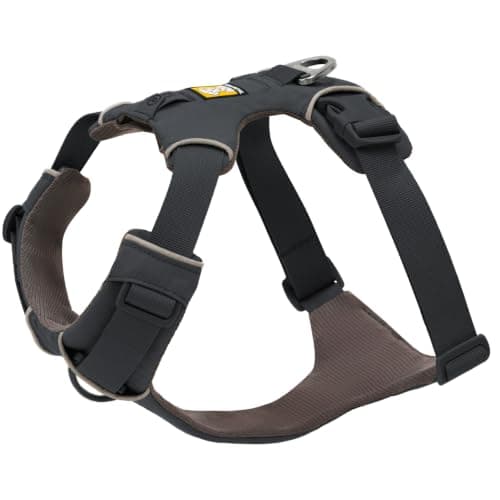
- One harness, most dogs, several years: Ruffwear Front Range. The padding and the four adjustment points are the two things that matter most for daily use, and the front chest ring is there on the days your dog is a handful without making the harness a training tool the rest of the time.
- A dog that is rough on equipment, or that backs out: Ruffwear Web Master. Three straps rather than two, a foam-lined body, a padded top handle and three attachment points. It is the most harness here and it is priced that way.
- A dog that rides in the car most days: Kurgo Tru-Fit. It is the one pick whose maker publishes crash testing — to the FMVSS 213 child-restraint standard — and it ships with a seat-belt tether, so one harness covers the walk and the drive. Read harnesses for walking and driving for how far that genuinely goes, because the answer is “further than most people think, but not all the way”.
- A new dog, a second harness, or a tight budget: rabbitgoo. Front ring, back ring, padded vest, grab handle. It will show wear sooner than the Ruffwears and it does the daily job properly in the meantime.
Three things worth more than the brand on an everyday harness
Fit, first and always. The harness that rubs is almost never the wrong harness; it is the right harness two inches off position. Measure the girth behind the front legs, use the brand’s chart rather than its S/M/L label, and tighten to a two-finger fit. The AKC’s own fit guidance is the one we follow, and our sizing guide turns it into measurements. If your dog already has a bald patch or a pink line under a strap, go straight to harness rubbing and chafing — that is a fit problem with a fit answer, and a new purchase will reproduce it.
Visibility, because every day includes the dark half of the year. From November to February, most twice-a-day walking happens at dusk or later. Three of the four picks here publish reflective material; if that matters to you, our reflective harness roundup ranks on it specifically, and walking a dog at night covers what else is worth having.
A cleaning habit the harness can survive. Nylon and foam-lined panels come clean with warm water, a little mild soap and a soft brush, and they need to dry fully before they go back on — a damp harness against skin is the fastest route to a sore. Our guide on cleaning a harness and leash has the method, and when to replace a harness has the wear signs that mean the cleaning no longer matters.
If pulling is still the main event
Then buy for that instead. This page assumes the walk is basically civilised and you want the gear to disappear into the routine. If your dog genuinely drags you, start at the no-pull hub or, for a hard puller, harnesses for strong pullers, and treat the everyday question as the one you answer in six months. If comfort is the whole issue — a thin-skinned, short-coated or senior dog — our padded harness roundup ranks on cushioning and load spread rather than on daily durability, and it is the better page for you.