What to buy, in order
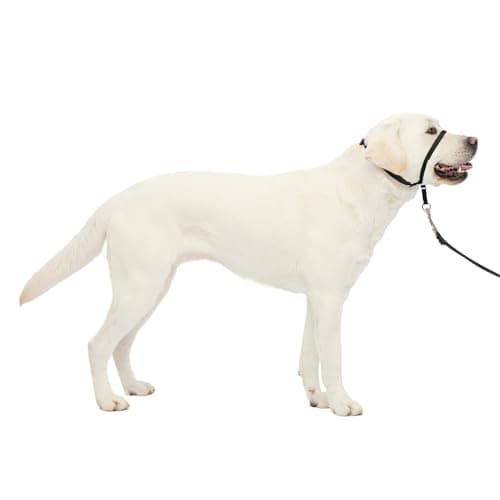
First: a control tool. For a medium or large dog, a head halter. For a dog that will not accept a nose loop, a two-point harness on a double-ended leash. Do not buy both at once — buy the one that suits your dog and your willingness to do the introduction work, and give it three weeks before you decide it has failed. VCA Animal Hospitals publishes the halter introduction process, and our guide on introducing a head halter turns it into a schedule. Most head-halter failures are introduction failures, not fit failures.
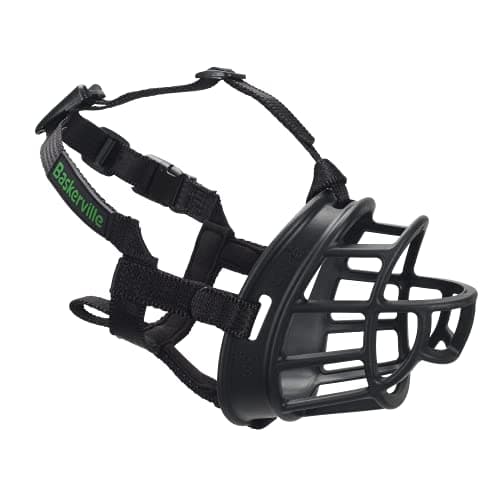
Second, and only if it applies: a basket muzzle. If your dog has bitten, snapped, or you genuinely do not know its history, a muzzle belongs in the kit — and it belongs there before you need it, because muzzle training takes weeks and cannot be done in the moment. A basket muzzle lets a dog pant, drink and take treats, which is what makes it humane and what separates it from the fabric sleeve muzzles a vet uses for two minutes. Our muzzle roundup ranks them and how to muzzle train a dog has the process.
Third: the leash side. A traffic handle for crossings and a long line for decompression work in open space with long sightlines. Our leashes for reactive dogs page covers it, including why we advise against a hands-free waist belt for this specific dog: a belt ties a lunging dog to your center of mass.
How to choose between the control tools
- Medium or large dog, strong, lunges hard: PetSafe Gentle Leader. The most control available at any price in this band, and the reason it leads our head halter roundup too.
- Dog refuses a nose loop, or is brachycephalic: 2 Hounds Freedom. Front chest ring plus a back martingale loop, so a double-ended leash gives you a turn rather than a stop.
- The Gentle Leader rubbed or sat wrong: Halti Headcollar. Same mechanism, padded nose band, different strap geometry, plus a collar safety link.
- Small dog, or you want the simplest thing to start: PetSafe Easy Walk. One chest ring, two buckles, nothing to learn — and no back ring, so a double-ended leash has nowhere to go.
What none of this does
Treat the reactivity. Every tool here is management: it makes a walk survivable today and buys you the room to do behavior work. The behavior work is distance and counter-conditioning — keeping the dog far enough from a trigger that it can still eat, and paying it for noticing the trigger calmly, over and over, as the distance slowly closes. Cornell’s Riney Canine Health Center sets out that approach, and our guides on leash lunging and pulling toward other dogs turn it into practice.
Two things we will not tell you. We will not tell you a muzzle makes a dog safe to approach — it lowers the consequence of a mistake, and the right answer to a reactive dog at close range is still distance. And we will not rank a tool that works by hurting or startling the dog: the AVSAB’s position statement on humane training is in our sources, and a reactive dog is reacting to something it already finds threatening, so adding pain to the picture reliably makes the association worse. If a prong or choke collar is what you were about to buy for control, read this instead.
Finally, fit. A head halter sitting too low on the nose slips; a harness with a slack girth strap rotates on the first lunge; a muzzle sized by guesswork will not be worn. Measure first — our harness sizing guide and the sizing notes in each pick above have the numbers — and if the dog is simply stronger than you are, read my dog is stronger than me before buying anything on this page.