LEASH LOAM

Best Dog Leashes for Medium Dogs

Beagle to border collie to lab-mix size: strong enough to move you, light enough that a big-dog lead is overkill. The widths, lengths and handles that fit that middle.

By Stephen V.Last verified How we pick

Buy the Max and Neo Double Handle — it is the leash for a medium dog on streets and pavements, because the second handle down near the clip lets you shorten the lead to inches at a kerb or a passing dog and release it again without swapping hands, and the registry lists it as suited to medium-to-large pullers. It is also the budget pick: the least expensive leash on this page. If you run or walk with your hands full, the Tuff Mutt Hands-Free is the shape to buy; for wet and muddy walks the Viper Biothane rinses clean; and for recall work in open space the Leashboss Long Trainer is a different tool rather than a longer version of the same one.

Why a medium dog gets its own page. The leash market is built around two extremes: thin, light leads for toy breeds and heavy, wide leads for giant ones. A 25–60 lb dog — beagle, border collie, cocker, staffie, most lab mixes, most shelter dogs — falls between them, and both ends are a bad fit. A small-dog lead on a 50 lb dog is hard to hold when it lunges and the stitching is not sized for the shock load. A large-dog lead on the same dog is heavy enough to drag its head down and stiff enough that you lose the feel of what the dog is doing. The useful answer for this size is a medium-width lead, four to six feet, with a second handle, and that specification does more for your walks than any brand choice.

The second thing worth knowing is that for this size range the leash is rarely the limit — what it clips to is. A medium dog is strong enough to pull you off balance but not so strong that the gear has to be heroic, which means moving the leash connection from the dog’s back to its chest usually solves the pulling outright. Our medium-dog harness roundup covers that side; this page assumes you have the harness sorted and are choosing the lead.

How this is funded:we earn a commission if you buy through our links, at no extra cost to you. It never changes which product we recommend, and we’ll tell you plainly when we’d skip one. Full disclosure.

Quick picks

Ranked on design, published specs and buyer fit. Select a row to jump to the full write-up. We have not hand-tested these — here is exactly what we do instead.

#ProductBest forPrice
1
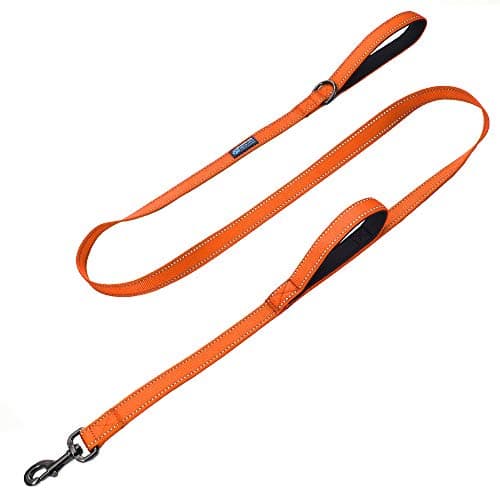
Max and Neo Reflective Double Handle Leash

Max and Neo Reflective Double Handle Leash

The leash that actually helps with a puller: a second handle down near the clip lets you choke up and keep the dog close past a distraction, then let out to full length again. Reflective, well-built, and the company donates one to a shelter for every leash sold.

Best overall (and the budget pick)
$16.99 · View on Amazon

Price as of November 12, 2026. #ad How we’re funded

2
Tuff Mutt Hands-Free Dog Leash

Tuff Mutt Hands-Free Dog Leash

A waist-worn bungee leash for running and hiking: the shock cord absorbs the jolt of a lunge instead of transmitting it to your back, and going hands-free keeps your balance your own. Best paired with a no-pull harness so the bungee isn't masking a pulling problem.

Best hands-free for running
$27.97 · View on Amazon

Price as of November 12, 2026. #ad How we’re funded

3
Viper Biothane Dog Leash

Viper Biothane Dog Leash

Biothane is coated webbing that shrugs off water, mud and dog slobber and wipes clean — the leash for swampy trails and dogs that like to chew a wet lead. It doesn't hold odor the way soaked nylon does, which is the whole reason to pay a little more.

Best all-weather lead
$26.99 · View on Amazon

Price as of November 12, 2026. #ad How we’re funded

4
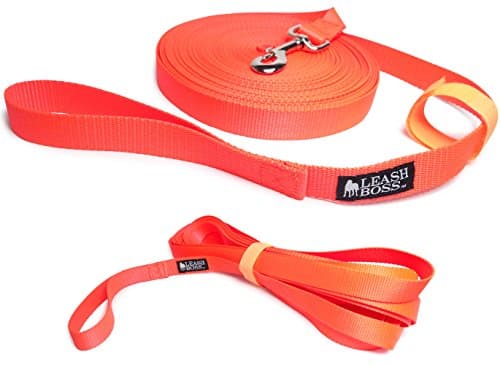
Leashboss Long Trainer (Long Line)

Leashboss Long Trainer (Long Line)

A long line is how you give a recall-in-progress dog real freedom without letting go, and this is a sturdy, no-frills one. Use it in open space to practice coming back from distance; do not use it as a everyday walking leash — that much slack near traffic is a hazard.

Best for recall and long-line work
$29.99 · View on Amazon

Price as of November 12, 2026. #ad How we’re funded

The picks in full

#1Best overall (and the budget pick)

Max and Neo Reflective Double Handle Leash

The leash that actually helps with a puller: a second handle down near the clip lets you choke up and keep the dog close past a distraction, then let out to full length again. Reflective, well-built, and the company donates one to a shelter for every leash sold.

Strengths

  • Traffic handle near the clip for instant close control
  • Reflective stitching along the whole length
  • Padded main handle and a genuinely tough clip

Trade-offs

  • A fixed-length lead, so it won't give a dog room to range on trails
  • The second handle is bulk you don't need on a non-puller
TypeDouble-handle traffic leash
AttachmentBolt snap
Fits6 ft · 4/5/6 ft widths available
MaterialReflective nylon webbing, padded handles
Best forMedium–large pullers

Specs read from the product listing, on July 22, 2026. “Not published” means the brand does not state that figure.

#2Best hands-free for running

Tuff Mutt Hands-Free Dog Leash

A waist-worn bungee leash for running and hiking: the shock cord absorbs the jolt of a lunge instead of transmitting it to your back, and going hands-free keeps your balance your own. Best paired with a no-pull harness so the bungee isn't masking a pulling problem.

Strengths

  • Waist belt frees both hands for running or trekking poles
  • Bungee section absorbs the shock of a sudden pull
  • Adjustable belt fits a wide waist range with two D-rings

Trade-offs

  • Hands-free means less instant control near a real trigger
  • Not the tool for teaching a hard puller to stop pulling
TypeWaist-worn bungee hands-free leash
AttachmentBolt snap on a bungee section
FitsAdjustable waist belt · extends ~4–5 ft
MaterialNylon webbing, elastic bungee, reflective stitching
Best forMedium–large active dogs

Specs read from the product listing, on July 22, 2026. “Not published” means the brand does not state that figure.

#3Best all-weather lead

Viper Biothane Dog Leash

Biothane is coated webbing that shrugs off water, mud and dog slobber and wipes clean — the leash for swampy trails and dogs that like to chew a wet lead. It doesn't hold odor the way soaked nylon does, which is the whole reason to pay a little more.

Strengths

  • Waterproof coated webbing wipes clean and won't hold smell
  • Stays supple in cold and doesn't stiffen when wet
  • Very hard-wearing for the price

Trade-offs

  • Can feel slick in the hand when soaking wet
  • Fewer soft-handle options than padded nylon leashes
TypeWaterproof biothane leash
AttachmentBolt snap
Fits4/6 ft · multiple widths
MaterialCoated biothane webbing
Best forAll sizes; match the width to the dog

Specs read from the product listing, on July 22, 2026. “Not published” means the brand does not state that figure.

#4Best for recall and long-line work

Leashboss Long Trainer (Long Line)

A long line is how you give a recall-in-progress dog real freedom without letting go, and this is a sturdy, no-frills one. Use it in open space to practice coming back from distance; do not use it as a everyday walking leash — that much slack near traffic is a hazard.

Strengths

  • Long length lets a dog range while you keep a physical connection
  • Tough webbing and a solid clip for a strong dog hitting the end
  • Leashboss publishes the line in 10 to 50 ft, so you can match the length to the training stage

Trade-offs

  • For open space only — dangerous slack near roads or crowds
  • Heavier than a standard leash; not for everyday walks
TypeLong-line training leash
AttachmentBolt snap
Fits50 ft on the listing we link · 10–50 ft across the line
MaterialNylon webbing
Best forAll sizes; match the width to the dog

Specs read from the product listing, on July 22, 2026. “Not published” means the brand does not state that figure.

The specification that actually fits a medium dog

  • Length: four to six feet for streets.Six feet gives a 40 lb dog enough slack to walk naturally and sniff without letting it reach the road; four feet is better on a busy pavement. Anything longer belongs in a field, not a street — see what length leash you need.
  • Width: medium, around three-quarters of an inch. Wide enough to hold comfortably when the dog lunges, narrow enough that the lead does not weigh on the collar or harness ring. Both extremes of the market get this wrong for this size.
  • A traffic handle. The highest-value feature at this size, because a medium dog is exactly big enough that you need instant close control and exactly small enough that you can get it. One grip for walking, one for the moment a cyclist appears.
  • Reflective stitching. Free on most leads at this price and the thing that matters if you walk before work or after dark. Our reflective roundup covers the rest of the night-walk kit.
  • A bolt snap you can work one-handed. Unremarkable until you are holding a wriggling dog, a bag and a set of keys.

Two leashes, not one

The honest recommendation for a medium dog is that you end up owning two leads, and they do different jobs. The short leadis for streets, kerbs and anywhere you need the dog within arm’s reach — that is the Max and Neo, or the Viper if your walks are wet. The long line is for recall practice, sniffing time and open space: fifteen to thirty feet of webbing that lets the dog range while you keep a physical connection. You cannot substitute either for the other, and trying to is how people end up with a retractable. Our training leash roundup explains how the two are used together, and long line training covers the technique.

A quick note on retractables, since they are marketed hardest at exactly this size. The thin cord gives you no braking control, the lock is the part that fails under load, and the constant tension teaches the dog that pulling extends the leash — the opposite of what you want from a medium dog that is already strong enough to be a problem. The long version is in why retractable leashes are bad, and the replacement setup in non-retractable leashes.

Match the lead to the walk, not the breed

Medium dogs cover an enormous range of behaviour, and the walk matters more than the weight on the scale. If your dog runs with you, go hands-free: the Tuff Mutt puts the leash on a waist belt with a bungee section that absorbs a lunge instead of transmitting it to your spine, and leashes for running covers that case properly. If your dog reacts to other dogs, the traffic handle is not optional and you should read leashes for reactive dogs. If your dog swims, or you walk in rain and mud, biothane is the upgrade worth paying for: it does not absorb water, it does not hold the smell, and it wipes clean — see biothane vs nylon. And if the dog still tows you regardless of which leash is in your hand, the leash is not the problem; how to stop a dog pulling and a front-clip harness are.

Narrow it down

Frequently asked questions

What length leash is best for a medium dog?

Four to six feet for street walking. Six feet lets a 40 lb dog walk naturally and sniff without reaching the road; four feet is better on a crowded pavement. Keep anything longer for open space — a long line of fifteen to thirty feet is a separate tool for recall work, not a replacement for the short lead.

What width leash does a medium dog need?

Around three-quarters of an inch is the sweet spot for a 25-60 lb dog: wide enough to hold comfortably when the dog lunges, narrow enough that the lead does not weigh on the harness ring or drag the dog's head down. Thin small-dog leads are hard to grip under load; heavy large-dog leads are overkill at this size.

Is a hands-free leash safe for a medium dog?

Yes, for running and hiking, and the bungee section is the reason — it absorbs a lunge instead of transmitting it straight to your back. Check the belt circumference before ordering and keep a hand near the leash in traffic. For busy pavements where you need instant close control, a traffic-handle lead is the better choice.

Will a different leash stop my medium dog pulling?

No. The leash is not the mechanism — the attachment point is. A dog clipped at the back of a harness or to a collar can lean into the weight and keep making progress; a front chest ring turns the same pull into a turn. Get the harness right first, then pick the leash for the kind of walk you do.

Sources

  • American Kennel Club — Dog Leashes 101: These Leashes Were Made for Walking — AKC (Harriet Meyers) on leash choice: "If you walk your dog at night close to a road, a leash with reflective material is a safer option. Thin retractable cords are difficult to see in the dark." Also covers the extra traffic handle for "walking in traffic or areas crowded with people and other dogs", 4-6 ft as the standard length, and long lines for recall work (accessed October 5, 2026)
  • American Kennel Club — How to Stop Your Dog From Pulling on the Leash — AKC reward-based loose-leash walking method (Stephanie Gibeault, CPDT) (accessed July 22, 2026)
  • American Kennel Club — Leash Training: How to Train a Dog or Puppy to Walk on a Leash — AKC (Sassafras Patterdale, CPDT-KA, CTDI, updated April 8, 2026) on the marker-based leash method: introduce a marker — a clicker or a word such as "yes" — in a quiet area and treat immediately, using it only when you can deliver a treat; mark and reward attention and eye contact with the leash attached, then mark and reward every few steps while moving; pair movement with a cue such as "Let's go" or "With me", say the dog's name before a turn, and teach an automatic lookback by marking the moment the dog turns back when the leash runs out; move outdoors only once the skill is solid indoors, with higher-value treats. On equipment: a harness is generally better because it puts no pressure on the neck and must fit so the dog cannot slip out, a front-clip harness is recommended for large puppies for easier steering, use a lightweight 6-foot leash, and avoid retractable leashes. Michele Miller, CPDT-KA, is quoted that the common failure is "not telling our dogs what we do want", and the article recommends regular sniffing walks where the dog chooses the route, several times a week (accessed October 17, 2026)

Keep reading