A traffic handle is the big-dog feature
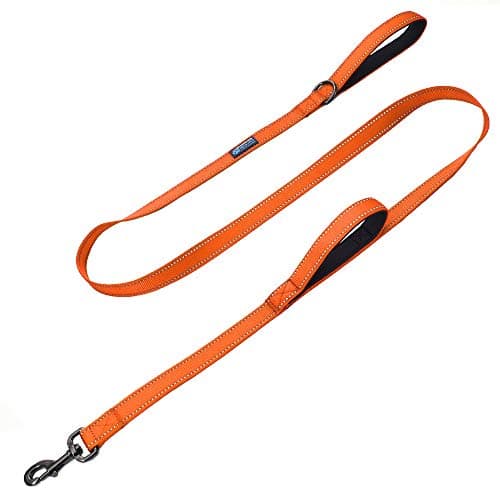
Our top pick for a large dog is the Max and Neo Double Handle Leash, and the reason is the second handle down near the clip. On a strong dog, the moment that matters is when a trigger appears and you need the dog tight to your side right now— the traffic handle lets you choke up and keep a big dog close past a car or another dog, then let out to full length again. The main handle is padded, the clip is genuinely tough, the reflective stitching runs the whole length, and the company donates a leash to a shelter for every one sold. The honest trade-off is that a fixed length won’t give a dog room to range on an open trail, and the second handle is bulk a calm non-puller doesn’t need. For a strong dog that pulls near roads, though, it’s the leash that gives you the most control for the money.
Tough materials and a hands-free option
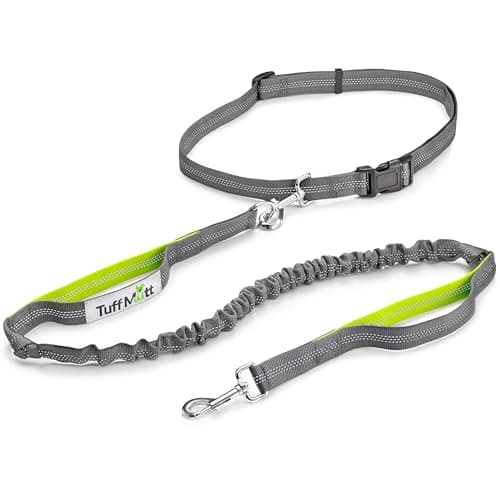
A big dog is also hard on a leash in wet, muddy, mouthy ways, which is where the Viper Biothane Leash comes in: biothane is coated webbing that shrugs off water, mud and slobber and wipes clean, so it doesn’t hold odor or stiffen when a big dog drags it through a swamp or mouths it wet. It’s very hard-wearing for the price; the trade-off is that it can feel slick in the hand when soaking and has fewer soft-handle options than padded nylon. If you run or hike with a strong dog, the Mighty Paw Hands-Free Bungee Leashis the sturdier hands-free pick: a heavier-duty belt and hardware than the budget sets, with a reflective bungee that absorbs the jolt of a big dog’s lunge instead of transmitting it to your back. Its honest limit is the one all hands-free leashes share — less instant control near a trigger — so pair it with a no-pull harness rather than letting the bungee mask the pulling. For more waist-worn options, see our hands-free leash picks.
The long line, and the setup that actually holds a big dog
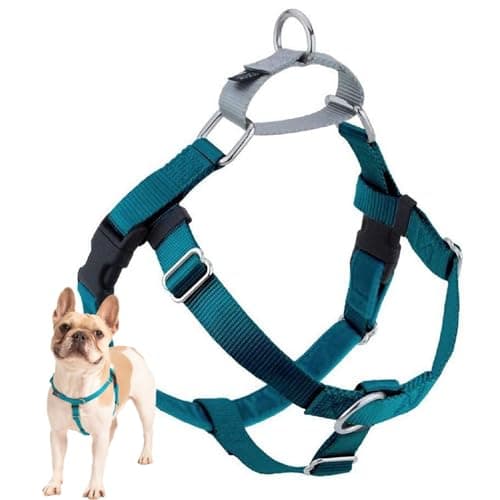
To give a big dog real freedom while you build a recall, a Leashboss Long Trainer is the heavy long line: tough webbing and a solid clipthat take a strong dog hitting the end from distance, in lengths for different training stages. Use it in open space only — that much slack near traffic is a hazard, and it’s heavier than an everyday leash, so it’s a training tool, not a walking one; our long-line training guidecovers the method and the safety rules. Whichever leash you buy, remember the big-dog rule: the leash won’t stop a strong dog pulling on its own. Run it to a no-pull harness sized for a large dog, work the loose-leash training, and the leash becomes what it should be — a strong, reliable connection rather than the only thing standing between you and a runaway. If you’re not sure which type fits your dog, our guide to choosing a leash walks through length, width and material.